RISK ASSESSMENT METHODSTATEMENT (RAMS)TEMPLATEA Risk Assessment Method Statement (RAMS) is a two-part safety document used in construction, maintenance, and engineering to plan site-based work safely. The risk assessment part identifies hazards, who could be harmed, and what controls are needed. The method statement part outlines, step by step, how the work will be carried out safely.This RAMS template covers the full scope of a site-based task, from hazard identification and equipment checks to emergency procedures and operative sign-off. A RAMS is a mandatory part of safe site management for the following reasons:01RISK ASSESSMENT METHOD STATEMENTIt is legally required in most jurisdictions for any site-based activity involving significant riskIt is recognised globally against CDM (Construction, Design and Management)Regulations 2015, ISO 45001, and equivalent local standardsSite access at projects depends on a submitted and approved RAMS before work startsAudit-proof documentation in the event of an HSE inspection, incident, or legal disputeIt strengthens tendering and pre-qualification submissions across industriesIt reduces incidents by addressing hazards and controls before work beginsIt keeps everyone informed with a single, briefed document covering procedures andemergency actionsThis Template Is Ideal ForContractors and subcontractors submitting RAMS for client approvalSite and project managers with CDM or equivalent regulatory responsibilitiesFacilities and maintenance teams carrying out site worksTrade contractors needing a ready-to-submit safety documentHealth and safety officers reviewing safe systems of workSafety consultants preparing RAMS on behalf of clientsNote: The templates/guides in our Content Library were created by the SDS Manager Team to help you manage site operations effectively. They are provided as reference tools and should be tailored to match your specific project needs, company policies, and industry standards. SDS Manager does not guarantee that these templates meet legal, regulatory, or contractual requirements. Users are responsible for reviewing and adapting each template to ensure compliance with their operational and legal obligations.RISK ASSESSMENT METHOD STATEMENT TEMPLATE02HOW TO USE THIS TEMPLATEEach section in this template serves a specific purpose and is designed to be completed sectionby section before any site work begins.SectionHow to Use It1. Project and Document InformationFill in the core details, name of the responsible person,and dates of issuing and review2. Scope of WorkDescribe the task clearly and tick everyone who may beinvolved in or around the work area3. Site Access, Welfare, and StorageRecord access routes, welfare locations, and any permitsthat need to be in place before operatives arrive4. Plant, Equipment, and Hazardous MaterialsList all equipment and hazardous substances; confirminspections and safety data sheets are in place5. Risk AssessmentUse the matrix to rate each hazard, then record the controlmeasures and residual risk for each one6. PPE RequirementsTick every item required, so operatives know exactlywhat to wear7. Method StatementWrite out each task step in plain language,including the key safety action that goes with it8. Working at HeightComplete only if work at height is involved;record equipment type, inspection status, and fall arrest details9. Emergency ProceduresFill in all contacts, locations, and response proceduresso every operative knows the plan before work starts10. Training and CompetencyList every operative, their relevant cards or certifications,and confirm site induction has been completed11. Operative Sign-OffBrief all operatives on this document and collect signaturesbefore work begins12. Review and Amendment LogUpdate this log every time the RAMS is revised,including the reason for the change
100%
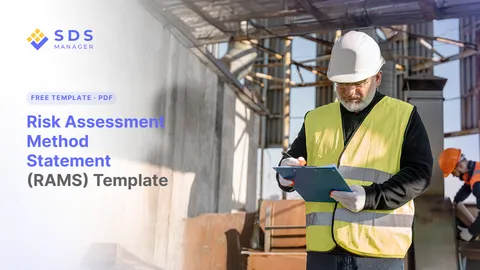
Risk Assessment Method Statement (RAMS) Template — cover

That’s the end of the preview

Download the PDF to read the full report.

Template · Free PDF

Risk Assessment Method Statement (RAMS) Template

12 pages · PDF

Free RAMS template (PDF) with 12 sections. Combine a risk assessment and a step-by-step method statement to plan construction, maintenance and engineering work safely.

What's inside

  • 12 sections covering the full RAMS document
  • A risk assessment: hazards, who's at risk, risk ratings and controls
  • A method statement: the sequence of work, step by step
  • Working at height, emergency procedures, and training and competency sections
  • Operative sign-off, so workers confirm they've read and understood the RAMS
  • A review and amendment log

Who it's for

  • Contractors and subcontractors
  • Site and project managers with CDM or similar duties
  • Facilities and maintenance teams
  • Trade contractors such as electricians, roofers and plumbers
  • Health and safety officers and consultants

What is a risk assessment method statement?

A risk assessment method statement (RAMS) is a two-part safety document for a specific job.

  • The risk assessment identifies the hazards of the work, who could be harmed and how the risks will be controlled.
  • The method statement describes how the work will be done safely, step by step, using those controls.

RAMS are standard practice in UK construction and maintenance, and widely used elsewhere under other names. In Australia, the equivalent is a Safe Work Method Statement (SWMS).

Are RAMS a legal requirement?

In the UK, the law requires employers to carry out suitable and sufficient risk assessments (Management of Health and Safety at Work Regulations 1999) and, on construction projects, to plan and manage the work under the Construction (Design and Management) Regulations 2015. The law doesn't name "RAMS" specifically, but they're the most common way to show you've met those duties, and principal contractors usually ask for them before work starts.

How to write a risk assessment and method statement

1. Describe the job

Give the project, location, client, start date, duration and the scope of work. Be specific: "Replacing four rooftop extract fans" rather than "roof work."

2. Assess the risks

List each hazard, who it affects, the risk rating and the controls. For chemicals such as adhesives, sealants or cleaning products, include the PPE and precautions from the safety data sheet.

3. Write the method statement

Set out the work in the order it happens:

  1. Site setup, access and exclusion zones
  2. Delivery and storage of materials
  3. Each task, with the controls that apply at that step
  4. Clearing up, waste removal and handover

4. Cover high-risk activities

Add the specific arrangements for work at height, hot work, confined spaces, lifting operations or live services, including any permits needed.

5. Emergencies and competence

Name the first aider, the nearest hospital and the emergency procedure. List the training and qualifications each worker needs.

6. Brief and sign off

Brief the workers on site before work starts, and have each person sign to confirm they understand it.

RAMS example: replacing rooftop fans

  • Hazard: Falls from the roof edge
  • Control: Edge protection installed before work starts; harnesses for any work outside the protected area
  • Method step: "Lift new fan units to the roof using a crane with an appointed person and a lift plan. Exclusion zone below the lift."
  • Emergency: Rescue plan for a suspended worker; nearest hospital listed

Keeping RAMS useful

RAMS fail when they're generic, written once and copied from job to job. Make each one specific to the site, keep it short enough to read, and update it if the method changes on site. If workers find a better or safer way to do a step, record the change and re-brief the team before continuing.

Download the free RAMS template to prepare your next job. For construction risk assessments without a method statement, see the Construction Risk Assessment Template.

Zarif Ahmed

Workplace and Environmental Safety Writer

An engineer and safety writer by profession, focusing on chemical management, regulatory development, and the patterns that shape workplace practice over time.