What is hazard identification?
Hazard identification is the process of finding anything at work that could cause harm: a chemical, a machine, a work method, a condition or an activity. It's the first step of every risk assessment. You can't control a hazard you haven't found.
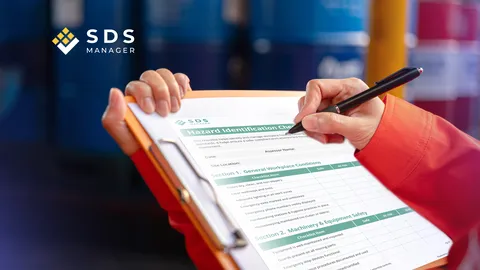
A hazard identification checklist makes the search systematic. Instead of relying on what an inspector happens to notice, it prompts them to check the same things every time.
Ways to identify hazards
OSHA's Recommended Practices for Safety and Health Programs suggests combining several sources:
- Workplace inspections using a checklist like this one
- Information you already have, such as safety data sheets, equipment manuals and injury records
- Worker input, because people doing the job see hazards that visitors miss
- Incident and near-miss investigations
- Changes, such as new equipment, chemicals or processes
Which is an example of a hazard identification system?
For chemicals, the main example is the Globally Harmonized System (GHS), which OSHA's Hazard Communication Standard uses for labels and safety data sheets. Other systems include the NFPA 704 "fire diamond" used on buildings and tanks, and the HMIS label system used by some employers. All three use standard symbols, colors or numbers so anyone can recognize the hazard quickly.
How to complete the checklist
Before you start
Pick the area and the time. Inspect while normal work is happening, so you see real conditions. Bring the area's risk assessments and a camera.
Work through each section
Mark each item Safe, At Risk or N/A. For every "At Risk" item, write down exactly what you saw and where. "Guard missing on conveyor 3, tail pulley" is useful. "Guarding issue" isn't.
Talk to workers
Ask the people working in the area what worries them, what has nearly gone wrong, and which tasks they find awkward or tiring.
Follow up
Assign every "At Risk" item to someone, with a deadline. Serious hazards, such as a missing machine guard, need action before the machine runs again.
Hazard identification examples
| Area | Item | Rating | Note |
|---|---|---|---|
| Walkways | Floors clear and dry | At Risk | Oil leak at press 2 creating a slip hazard |
| Machinery | Emergency stops tested | Safe | Tested this week, logged |
| Machinery | Lockout/tagout procedure posted | At Risk | No procedure for new packing machine |
| Emergency | Exits unobstructed | Safe | — |
Hazards that checklists often miss
Add prompts for hazards that don't show up on a routine walk-through:
- Non-routine tasks, such as maintenance, cleaning and clearing blockages
- Unlabeled secondary containers, such as spray bottles and buckets
- Repetitive or awkward work that causes strain over time
- Conditions that only occur on night shifts, at weekends or during changeovers, when a line is set up for a new product
How often to use the checklist
Inspect high-risk areas weekly or monthly and lower-risk areas quarterly. Inspect again whenever something changes, and after any incident.
Download the free hazard identification checklist template to start your next inspection. To rate and control the hazards you find, use it with the Risk Assessment and Control Template.