












Risk management software

Stop rebuilding your risk register before every audit

Risk assessment software that scores every risk on one matrix, records what you did about it, and brings each one back for review on its own.

Two workers assessing risk on a tablet in a warehouse
Scored the same way everywhere

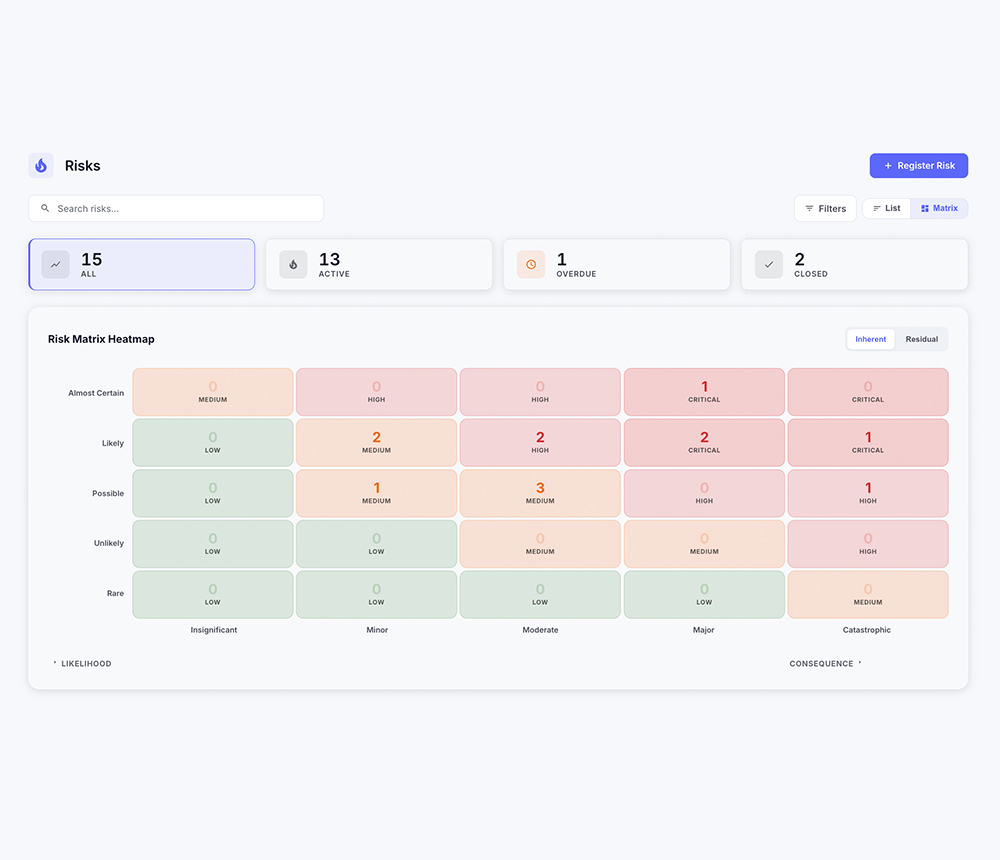
One risk matrix and one set of bands, so a comparison between sites is a real comparison.

Controls ranked, not just listed

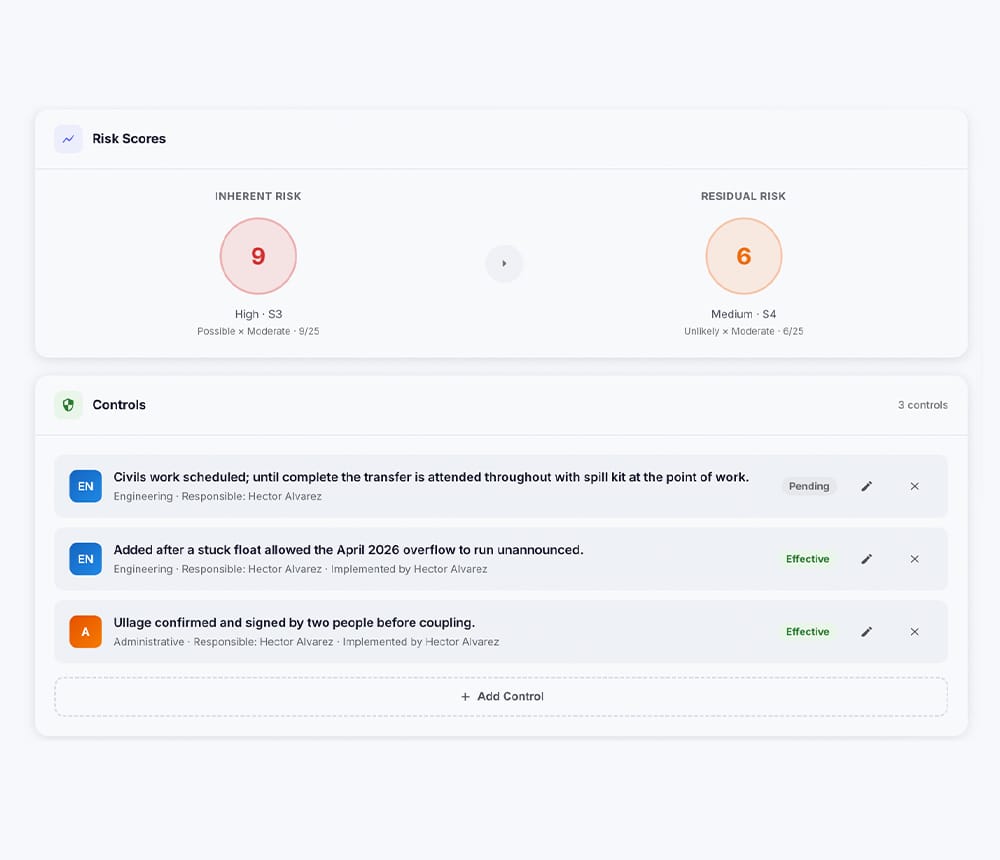
Elimination through to PPE, so a register leaning on training is visibly the weak kind.

Nothing goes stale quietly

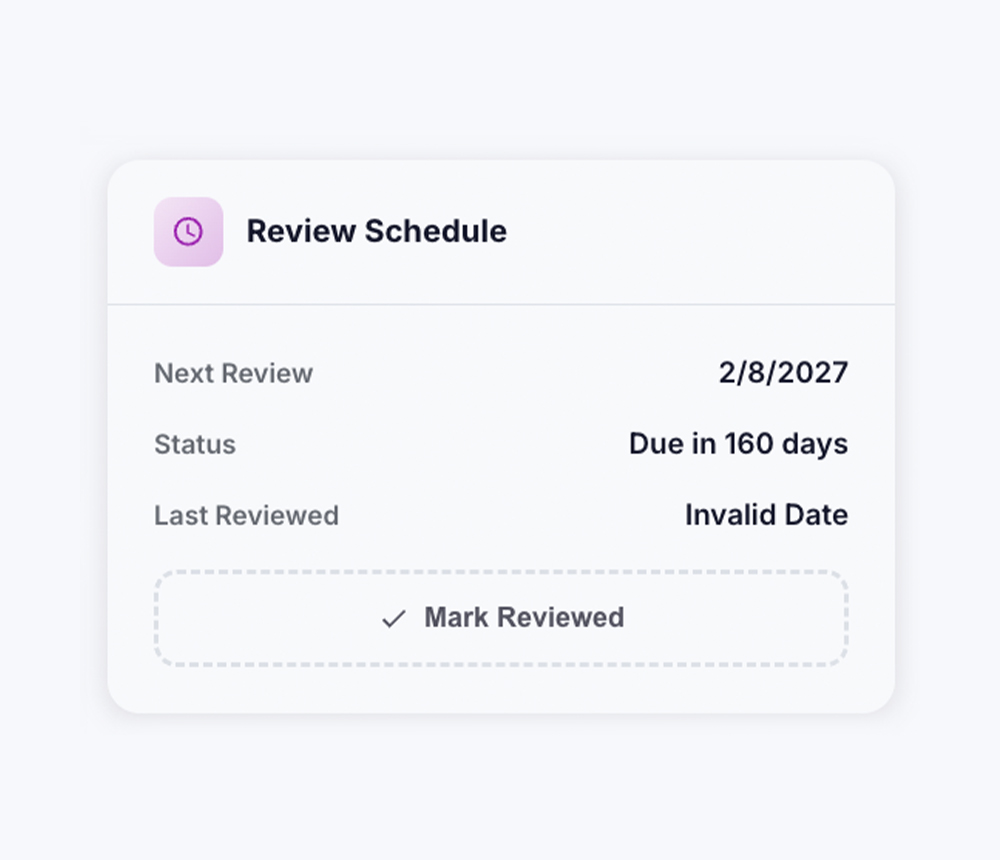
Every risk carries a review date and an owner, and overdue ones surface rather than pass.

Trusted by10,000+ Safety Managers

A register is only worth what it says on the day someone asks

Every system can store a list of risks with scores against them. The question is whether two people scoring the same hazard land on the same number, whether the score moved after you spent money, and whether anything brings it back before it goes stale.

Also called
Risk assessment software, risk register software
How scoring works
Likelihood by consequence on a 5×5 matrix, with the bands, wording and thresholds set to match how you already grade risk
Standards it supports
ISO 45001 clause 6.1.2, hazard identification and assessment, and clause 8.1.2, hierarchy of controls
The difference

What changes when one matrix holds the scoring.

Legacy EHS platforms compared with EHS Solutions by SDS Manager
SituationLegacy EHS platformsEHS Solutions by SDS Manager
Three supervisors assess the same hazardThree different scores, and a register that stops being comparable between sites.One likelihood-by-consequence matrix with your bands, so the number means the same thing everywhere.
You spend six months installing a controlThe register still shows the score you started with. The improvement is asserted, not shown.Scored again after controls, so a move from 20 to 6 is on the record, and a control that changed nothing is just as visible.
A review was due last quarterNobody notices until somebody opens the spreadsheet before an audit.The risk comes back on its own with its history attached, and overdue reviews sit in a queue rather than passing quietly.
See it running on your own register, not a demo dataset.Book a walkthrough
Capabilities

Assess it, control it, and score it again

How a risk gets scored the same way everywhere, what your controls actually did to the number, and how each one comes back before it goes stale.

Bring us your risk register

Send us the spreadsheet you have now and we'll show you what it looks like scored, controlled and on a review cycle.

Book a walkthrough

In practice

Two workers reviewing a risk assessment on a tablet in a warehouse
«The risk register is the part I use most. I can show our management review what our control work actually changed, rather than asserting it.»
Pavel UrbanBrno Precision Parts · Automotive, Czech RepublicVerified review · Trustpilot
What it costs

The software is the invoice

Legacy vendors quote a license, then bill the setup, the migration, the training days and every change afterwards. It's a relic of an era when software took a year to install.

You pay for the software, not the consultants.

Priced on headcount, however many sites you run. Under 200 people, start a free trial and go. Above that, ask us for a number and you'll get one.

On your invoice
  • The software
  • Every module
  • Your headcount
  • Setup of your rules
  • Reports built for you
  • Changes, whenever
  • Support
Never on your invoice
  • Implementation fee
  • Configuration project
  • Consulting hour blocks
  • Change requests
  • Professional services minimum
  • Data extraction on exit
  • No implementation fee
  • No professional services minimum
  • No hours to buy for changes
Frequently asked questions

Risk management, answered.

Still have questions? Our safety experts will answer them against your own register rather than generically.

Talk to our risk management experts
Risk assessment software records the hazards you've identified, scores how serious each one is, tracks the controls put in place against it, and brings each risk back for review on a cycle. In EHS Solutions by SDS Manager it sits in the same system as incidents, investigations, actions and inspections, so a risk that keeps producing incidents is visible and a control that came out of an investigation is linked to it.
The difference between inherent and residual risk is what you've done about it. Inherent risk is how bad something is before any controls are in place. Residual risk is the same assessment scored again after your controls are working. In EHS Solutions by SDS Manager both are held against the same risk, which is what lets you show a control actually worked and spot the ones where a lot of effort moved the number very little.
Risk is scored on a likelihood-by-consequence matrix, producing a number and a band. The matrix, the bands, the wording and what each level triggers are set up to match how your organization already grades risk, so existing assessments carry across rather than being re-rated from scratch.
When an inherent score crosses the threshold you set, the risk requires controls before it can sit in the register as it is. You define where the threshold sits and what crossing it demands, so scoring is the start of the work rather than the end of it.
Yes. Control measures are recorded as elimination, substitution, engineering, administrative or PPE, in that order. It makes a register leaning on PPE and training visibly weaker than one with engineering controls, which is the conversation the hierarchy exists to force.
To stop the risk register going stale, every risk carries a review date and an owner. Reviews advance on a cycle you set, and overdue ones surface in a queue rather than passing quietly. The register keeps asking for attention instead of waiting to be remembered before an audit.
Yes, and acceptance is recorded as a decision. Formal acceptance names who accepted it, when, and the written justification, so a tolerated risk is documented rather than an ambiguity somebody has to defend later.
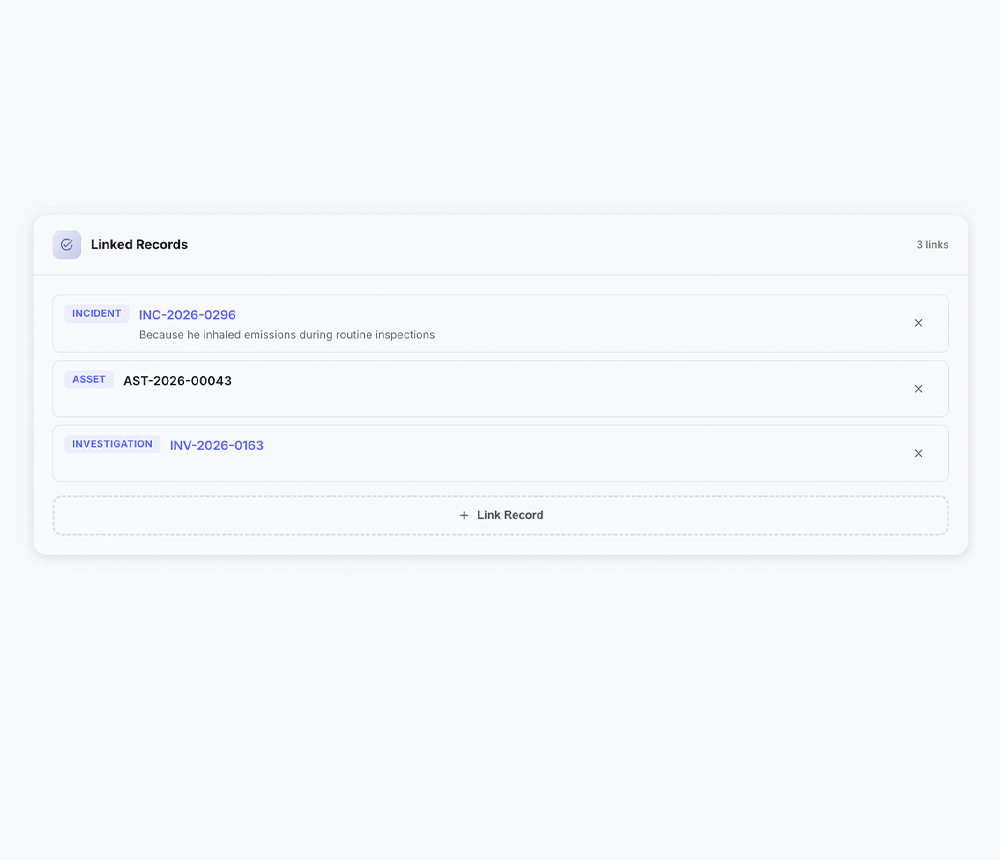
Yes, risks can be raised from incidents and inspections. A finding on an inspection round can open a risk directly, an incident's root cause feeds back into the score of the risk it relates to, and risks also link to the investigations, corrective actions and assets involved.
Yes. ISO 45001 clause 6.1.2 requires ongoing hazard identification and assessment of OH&S risks, and clause 8.1.2 requires you to eliminate hazards and reduce risks using the hierarchy of controls. In EHS Solutions by SDS Manager the assessment, the controls recorded in hierarchy order, the residual score and the review cycle are all held on the same record, which is the documented information the standard asks you to retain.
Yes, your existing risk register comes across at onboarding. A spreadsheet or an export from a previous system is brought in with scores, controls, owners and review dates intact, and because the matrix is set up to match your bands, existing assessments carry over rather than being re-rated.
Chemical risks sit in the same register as every other risk, scored on the same matrix so a solvent exposure and a guarding hazard are comparable. EHS Solutions by SDS Manager is built by SDS Manager, whose core product is a chemical and safety data sheet compliance database, so the safety data sheet for the substance is already in the system rather than in a separate library.
Setup takes days, and your team's part is sending us your existing register and matrix. In EHS Solutions by SDS Manager your matrix, bands, thresholds, control categories and review frequencies are configured before go-live, by our team. There's no implementation fee and no consulting hours to buy.

Bring us your risk register

Send us the spreadsheet you have now and we'll show you what it looks like scored, controlled and on a review cycle.
Set up around your own matrix, bands, thresholds and review frequencies.