What is a training SOP?
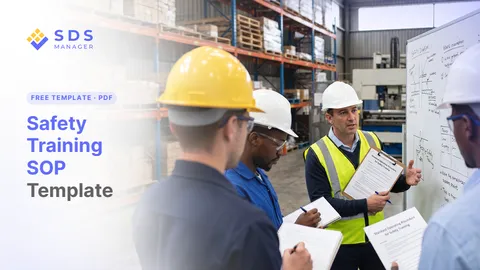
A training SOP (standard operating procedure) is a written document that sets out exactly how your organization runs training. A safety training SOP covers who must be trained, on which topics, how often, by whom, and how completion is recorded.
The SOP turns your training program into rules that work the same way across every site, shift and supervisor.
Why write a safety training SOP?
Without a written procedure, training depends on each manager's habits. One shift might give new starters a full induction while another gives a five-minute briefing, and records end up in different formats.
OSHA standards set many training duties, including training before exposure to hazards and annual refreshers for some topics. A training SOP shows an inspector or auditor that you have a system for meeting them.
Sections of a training SOP
Purpose and scope
State what the SOP is for and who it applies to: employees, temporary workers, contractors and visitors.
Responsibilities
Say who does what. For example, EHS sets the training requirements, supervisors make sure their teams are trained before starting work, trainers deliver and assess, and employees attend and apply what they learn.
Training requirements by role
List the required courses for each role. Link to a training matrix rather than repeating the whole list in the SOP.
Training schedule
Set when training happens: at induction, before a new task, at fixed refresher intervals, and after triggers such as new equipment, new chemicals, incidents or poor performance.
Delivery and assessment
Name who can deliver each type of training, and how competence is checked: a quiz, a practical demonstration or a supervised task.
Records
Define the training record format: trainee, topic, date, trainer, duration, assessment result and signatures. State where records are stored and how long they're kept.
Review
Set a review date for the SOP itself, at least once a year. Store the current version where every supervisor can find it, and remove old copies.
Training SOP example: new forklift operator
- Requirement: Powered industrial truck training under 29 CFR 1910.178(l)
- Timing: Before operating a forklift without supervision
- Content: Classroom training, practical training and a performance evaluation in the workplace
- Delivered by: A qualified in-house trainer
- Refresher: Performance evaluation at least every three years, and after an accident, a near miss or unsafe operation
- Record: Operator name, training date, evaluation date and trainer, as required by the standard
SOP training format tips
- Keep it short. The SOP explains the process. Put the details of each course in separate training plans.
- Use plain language. Supervisors need to follow it without help.
- Version control it. Include the version number, approval date and owner.
Sample training SOP record
A simple SOP training form needs columns for date, employee name, job title, topic, trainer, duration, assessment method, result and both signatures.
Download the free SOP for safety training procedures to set up your training system. For an overview of who needs training and why, see the Safety Training Procedure Overview.