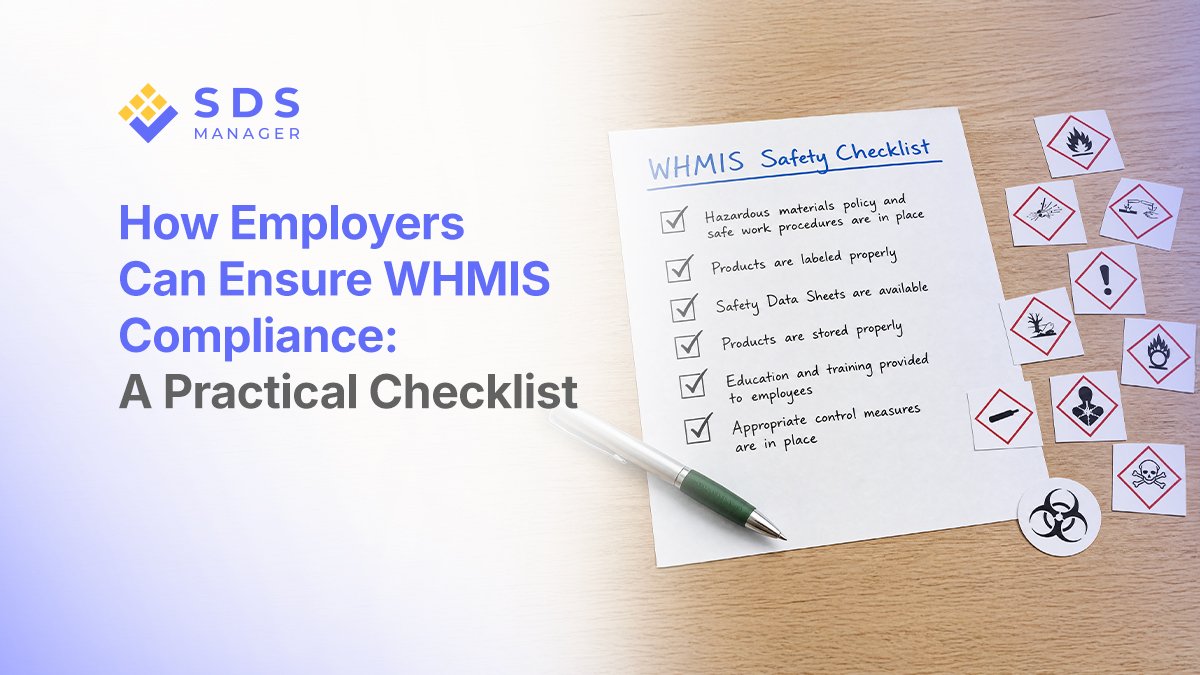
WHMIS compliance is an ongoing employer responsibility, covering hazardous product inventories, SDS management, container labeling, and documented worker training. With the December 2025 deadline now passed, all hazardous products used in Canadian workplaces must meet the updated Hazardous Products Regulations introduced in 2022. This makes it one of the most important moments to audit your programme and close any gaps before an inspector does it for you.
What Should Your WHMIS Compliance Checklist Cover?
A WHMIS compliance checklist covers every employer obligation under the Hazardous Products Act, from your SDS library and container labels to worker training and documentation. Here is what yours should include.
This checklist covers every step employers need to take to stay compliant in 2026.
1. Build and Maintain a Hazardous Product Inventory
The starting point for any WHMIS compliance programme is a complete, current list of every hazardous product used, stored, or handled in your workplace. This includes cleaning products, solvents, adhesives, lubricants, and any substance generated by your work processes such as welding fume or wood dust.
Without an accurate inventory, your SDS library, labeling programme, and training content have no foundation. An incomplete inventory is one of the most common findings during workplace inspections, and it exposes employers to enforcement action even when everything else is in order. Review your inventory whenever new products are introduced and at least annually as part of your compliance review cycle. Assign a specific person to own this list so it never falls through the cracks.
2. Keep Your SDS Library Current
Every hazardous product in your workplace must have a current Safety Data Sheet accessible to workers at all times, including during emergencies. SDSs must follow the standardised 16-section format and be no more than three years old. Digital systems are permitted, but they must remain accessible even during power or internet outages, meaning a backup plan is essential for full compliance.
When employers receive updated SDSs from their suppliers, they must train their workers on that updated information to ensure workers understand the hazards and know how to work safely with the hazardous materials in their workplace (WSPS, 2026). Receiving a new SDS and filing it without updating your training is a compliance gap, and inspectors know to look for exactly that.
3. Label Every Container Correctly
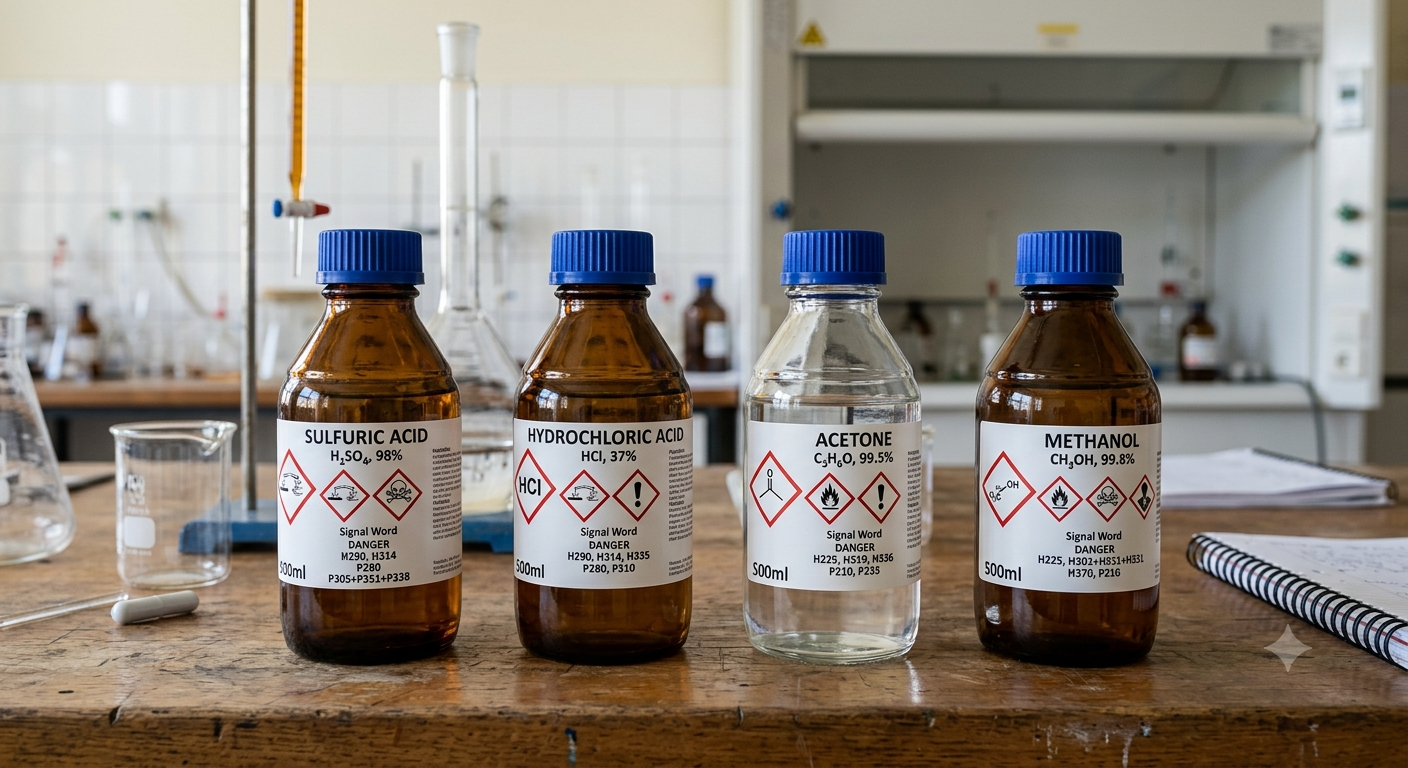
Every container of a hazardous product must carry a compliant WHMIS label, including original supplier containers and any product that has been decanted or transferred into a secondary container. A compliant label includes the product identifier, hazard pictograms, signal word, hazard statements, precautionary statements, and supplier contact information. Small containers and spray bottles are not exempt.
As of December 2025, the amended WHMIS requirements affect what appears on labels and what workers should be trained to recognise (Pickering Safety, 2026). If any products in your workplace have been reclassified under the new hazard classes introduced by the 2022 amendments, their labels must reflect those updates. Conducting a label audit across all sites is a practical and necessary first step.
Workplace labels for decanted or transferred products carry the same legal weight as supplier labels, and every container must be correctly identified. A free secondary label generator helps you build WHMIS-compliant labels in minutes, so no container in your workplace goes unlabeled.
4. Deliver Site-Specific Worker Training
Some employers assume generic WHMIS training, such as a one-hour video covering WHMIS symbols, SDSs, and labels, is sufficient for compliance. It is not. Employers must understand what hazardous materials workers are exposed to and put controls in place to prevent overexposure. They must develop safe work procedures and train workers on those specific procedures so workers understand the hazards and know how to protect themselves (WSPS, 2026).
Training must be reviewed at least annually and updated whenever new hazardous products are introduced or hazard information changes. Every session must be fully documented, including details of content covered, staff involved, and the date of completion. If it is not written down, it did not happen.
5. Update Training for the 2022 Amendments
Employers must ensure training reflects the WHMIS 2022 changes (HR Covered, 2025). Workers who completed training under the former WHMIS 2015 framework need updated training that covers the new hazard classes, revised pictogram meanings, and updated SDS content requirements that came into full effect in December 2025.
OHS policies also need to be revised to incorporate the WHMIS GHS 7 changes affecting hazardous products classification. Section 9 and Section 14 of all SDSs should be verified to confirm they list the hazard information required under the updated regulations (HR Insider, 2026). If your supplier has not yet provided updated documents, follow up in writing and keep a record of that request.
6. Document Everything
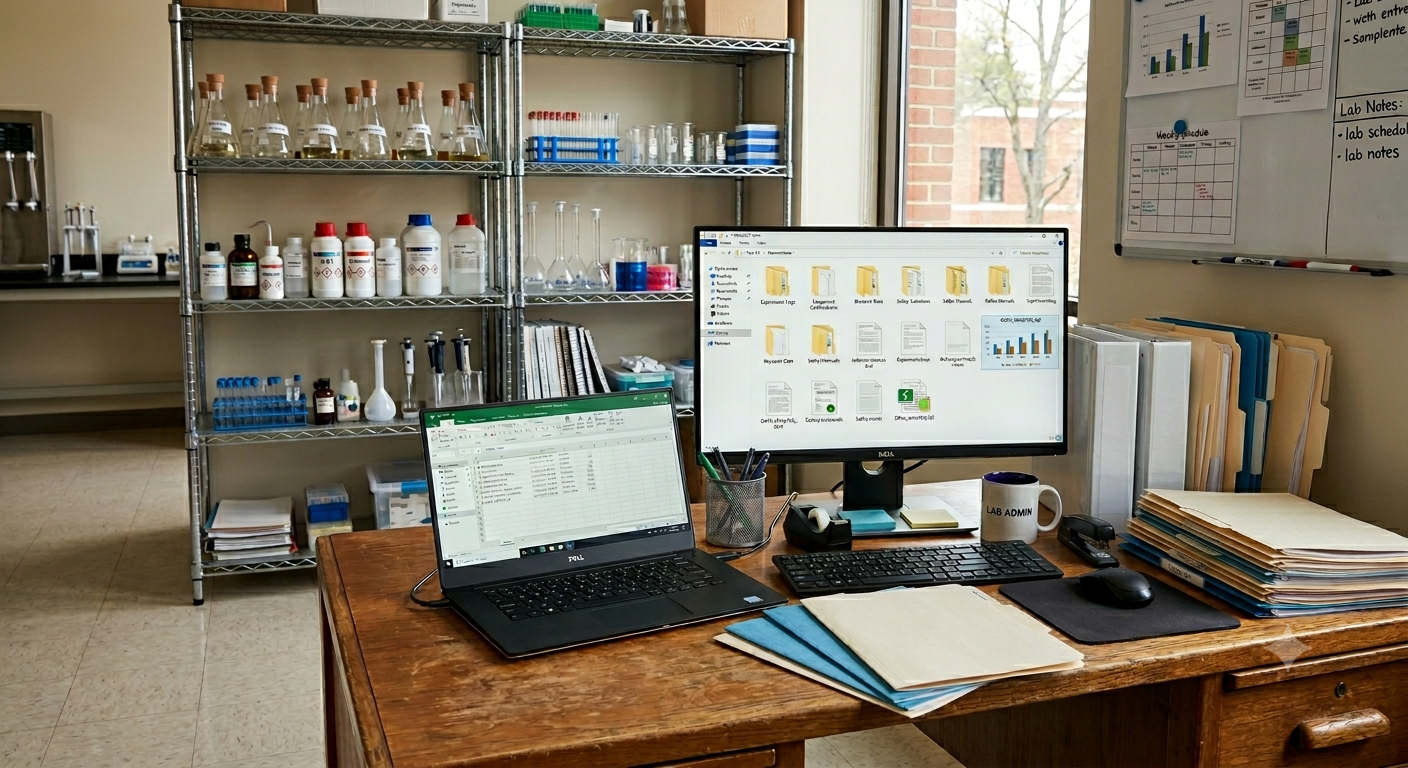
Compliance without documentation is not compliance. Every element of your WHMIS programme needs a paper trail: your hazardous product inventory, SDS access logs, container labeling checks, training records, and any updates made following supplier SDS revisions. Documentation also protects you if a worker injury or illness is later linked to a hazardous substance, since it demonstrates that your programme was active, current, and properly maintained.
If an inspector walked into your chemical storage area today, everything should look current, consistent, and understandable (Pickering Safety, 2026). Build your documentation habits now, before an inspection prompts you to.
7. Review Your Programme Regularly
WHMIS compliance is a living programme, not a one-time task. Build a structured review cycle into your workplace safety calendar: audit your inventory quarterly, check SDS currency at least annually, verify labels whenever new products arrive, and refresh training at least once a year. Assign a competent person to own the programme, ensure they have the time and authority to keep it current, and make compliance reviews a standing item on your health and safety agenda. For workplaces managing large chemical inventories or multiple sites, a centralised SDS management platform removes the manual burden and gives you confidence that every document, label, and training record is current and audit-ready.
Final Thoughts on WHMIS Compliance
Getting WHMIS compliance right means having your hazard information, controls, and documentation all in one place. Beyond centralising your SDS library and automating supplier updates, a WHMIS-compliant risk assessments is also important, so nothing gets missed and everything an inspector expects to see is ready when you need it.
Frequently Asked Questions
What are the main WHMIS obligations for employers?
Employers must maintain a hazardous product inventory, keep current SDSs accessible to all workers, label every container correctly, and deliver and document site-specific worker training.
Is generic WHMIS training enough to meet the legal standard?
No. Training must be specific to the hazardous products workers handle in their role and must be documented. A generic online course alone does not satisfy the regulatory requirement.
Do employers need to update their WHMIS programme after December 2025?
Yes. The 2022 amendments to the Hazardous Products Regulations became fully mandatory in December 2025. Employers must ensure their SDSs, labels, and worker training all reflect the updated requirements.
How long do employers need to keep WHMIS training records?
Retention requirements vary by province, but best practice is to keep training records for the duration of employment plus a minimum of two years after a worker leaves.

Mehreen Iqbal

Started with a Bachelors in Microbiology, then a Masters in Public Health; Currently a Workplace Safety Expert.