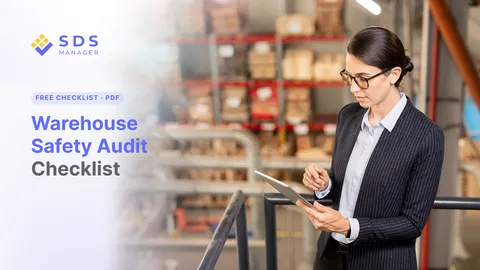
WAREHOUSE SAFETY
AUDIT CHECKLIST
02
A Warehouse Safety Audit Checklist is a structured tool used to systematically inspect a warehouse
environment for safety compliance, risks, hazards, and best-practice controls. It guides auditors through
key areas of safety, from housekeeping and equipment maintenance to emergency response protocols,
ensuring that nothing critical is overlooked.
It typically includes specific yes/no questions or prompts that help assess conditions, equipment,
behavior, documentation, and compliance with legal and internal safety standards.
Performing warehouse safety audits is crucial for several reasons:
01
01
WAREHOUSE SAFETY AUDIT CHECKLIST
Risk Identification & Hazard Control: Helps spot potential hazards before they result in
accidents or injuries.
Operational Efficiency: Reveals inefficiencies and unsafe practices that can slow
operations, damage goods, or interrupt workflow.
Regulatory Compliance: Ensures compliance with local and international safety regulations
and industry standards, reducing legal liability and fines.
Culture of Safety: Reinforces the importance of safety awareness among employees and
promotes accountability.
Cost Reduction: Prevents costly injuries, equipment damage, insurance claims, and lost workdays.
A warehouse safety audit checklist is useful for:
Warehouse managers and supervisors
Safety officers and EHS professionals
Internal auditors
External inspectors
Operations teams implementing safety programs
Maintenance and logistics staff
01
Note: The templates/guides in our Content Library were created by the SDS Manager Team to help you manage site
operations effectively. They are provided as reference tools and should be tailored to match your specific project
needs, company policies, and industry standards. SDS Manager does not guarantee that these templates meet legal,
regulatory, or contractual requirements. Users are responsible for reviewing and adapting each template to ensure
compliance with their operational and legal obligations.
WAREHOUSE SAFETY AUDIT CHECKLIST
02
A. GENERAL HOUSEKEEPING & FACILITY CONDITIONS
SL.
1.
Aisles, walkways, and exits are
clear and unobstructed
Floors are clean and free of oil, water,
or debris
Adequate lighting throughout the
warehouse
Trash and waste are removed regularly
Signage for hazards, exit routes, and
safety instructions is visible and readable
Floors are even, non-slippery, and in good repair
(no cracks, holes, or loose tiles)
Spills are cleaned immediately and spill response
materials are readily available
Stairways and platforms have secure handrails
and non-slip surfaces
Overhead areas are free from falling-object hazards
Doors open freely and are not blocked or locked
during operating hours
Windows, skylights, and vents are intact and clean
Weather protection measures are in place at
loading docks
Adequate ventilation is provided to control
dust, fumes, and odors
2.
3.
4.
5.
6.
7.
8.
9.
10.
11.
12.
13.
Item
Checkbox
Notes
Yes
No
Yes
No
Yes
No
Yes
No
Yes
No
Yes
No
Yes
No
Yes
No
Yes
No
Yes
No
Yes
No
Yes
No
Yes
No
Company Name:
Department:
Audited by:
Audit date:
100%
That’s the end of the preview
Download the PDF to read the full report.
Checklist · Free PDF
Warehouse Safety Audit Checklist
12 pages · PDF
Free editable warehouse safety checklist (PDF). Audit housekeeping, forklifts, racking, loading docks, chemical storage and fire safety, with yes/no items and notes for follow-up.
What's inside
Audit details: company name, department, auditor and audit date
Yes/No checkboxes and a notes column for each item
General housekeeping and facility conditions: aisles, floors, lighting, signage, spills, stairways, overhead hazards, doors, docks and ventilation
Forklift and material handling equipment checks
Racking, storage and loading dock checks
Chemical storage, fire safety and emergency preparedness
Who it's for
Warehouse managers and supervisors
Safety officers and EHS professionals
Internal and external auditors
Operations, maintenance and logistics teams
Why warehouses need regular safety audits
Warehouses combine heavy vehicles, people on foot, high storage, loading docks and often hazardous chemicals, usually under time pressure. In 2023, OSHA launched a National Emphasis Program on warehousing and distribution center operations, focusing on forklifts, material handling, walking and working surfaces, exits, fire protection, and heat and ergonomic hazards.
A regular audit with a warehouse safety checklist shows you the problems before an inspector or an injury does.
What to check in a warehouse safety audit
Housekeeping and facility conditions
Aisles and walkways are clear and marked
Floors are free of spills, damage and trip hazards
Lighting works in all areas, including inside trailers
Stairways have handrails and are kept clear
Exits are unobstructed and signed
Forklifts and material handling equipment
Forklifts are inspected before each shift, as OSHA requires (29 CFR 1910.178(q)(7))
Operators are trained and have been evaluated within the last three years
Pedestrian routes are separated from forklift traffic where possible
Battery charging areas have eyewash facilities and ventilation
Racking and storage
Racking is undamaged, anchored and labeled with load limits
Damaged uprights are reported and unloaded until repaired
Heavy items are stored on lower levels
Storage is at least 18 inches below sprinkler heads
Loading docks
Dock edges are marked, and dock plates are rated for the load
Trailers are chocked or restrained before forklifts enter
Dock doors are closed when not in use
Chemical storage
Every chemical has a current safety data sheet available to workers
Containers are labeled and stored by compatibility
Flammable liquids are kept in approved cabinets
Spill kits are stocked and near storage areas
Heat
Water, rest and shade are available in hot weather, especially for work inside trailers and on upper levels
Fire safety and emergencies
Fire extinguishers are mounted, accessible and inspected monthly
Emergency lighting and alarms work
The evacuation plan is posted and drills are held
How to run the audit
Walk the whole site, including docks, mezzanines, yards and battery rooms.
Audit during normal operations, so you see real traffic and working practices.
Mark each item Yes or No, and add a note and photo for every "No."
Talk to workers about near misses and the tasks they find hardest.
Assign actions with an owner and a due date for every "No."
Warehouse safety checklist example findings
Item: Racking undamaged. Finding: No. Upright in aisle 7, bay 12, has a dent from a forklift strike. Action: Unload the bay and tag it out of use; inspect and repair before reloading.
Item: Pedestrian routes marked. Finding: No. Floor markings worn at the dock entrance. Action: Repaint markings this week.
How often to audit
Run quick daily checks on forklifts and docks, a monthly walk-through with the checklist, and a full audit every quarter. Audit again after layout changes, new equipment or any serious incident.
Download the free warehouse safety audit checklist for your next walk-through. For forklift driver training records, use it with the EHS Training Matrix Tracker.
Christina Joyeeta Munshi
Operations Specialist
Christina is an Operations Specialist at SDS Manager. Her expertise lies in combining her operational knowledge with strong communication skills to translate complex concepts into practical, easy-to-follow content that supports customers and enhances their experience.