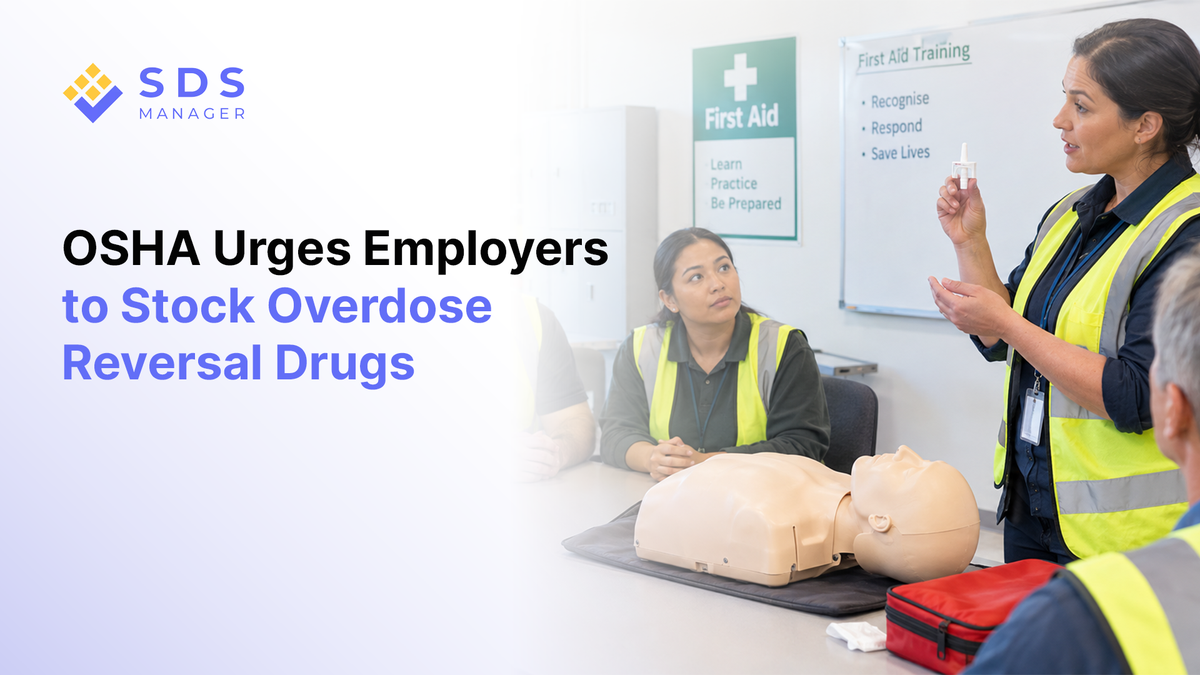
OSHA has released new guidance urging employers to prepare for opioid overdoses at work. The agency recommends that employers keep reversal medication on site and train workers to use it.
The fact sheet, Opioid Overdose Rescue with Reversal Medications (FS-4519), came out in September as part of the administration's Great American Recovery Initiative, a government-wide push focused on addiction treatment and recovery. Its definition of opioids covers prescription drugs, illicit drugs, and substances such as kratom and 7-OH. White House Drug Czar Sara Carter tied the guidance to fentanyl in the illicit drug supply, saying workers need to be familiar with "drug overdose recognition and reversal."
What employers should do
The guidance asks employers to:
- Keep an FDA-approved reversal drug, naloxone or nalmefene, on hand. Nasal sprays are the most common form and need no special training. The drugs generally do not affect someone who hasn't taken opioids.
- Store kits as the label directs, away from direct light and heat, and never frozen.
- Place kits in visible, easy-to-reach spots, such as with AEDs and first-aid kits, with clear signs. Larger sites may need several.
- Assign someone, such as a safety officer, to track expiration dates and restock.
- Tell employees which product is on site, and train them to recognize an overdose: slow or stopped breathing, blue lips, pinpoint pupils, unresponsiveness, or a gurgling or snoring sound.
OSHA stresses that the drugs don't replace emergency medical care. Responders should call 911 even if the person regains consciousness, and a second dose may be needed if the first wears off before help arrives.
Guidance, not a mandate
The fact sheet states that it imposes no new compliance requirements, and it describes training as a voluntary program. Still, it signals that overdose response now belongs in workplace emergency planning, next to first aid and AED programs.
For most employers, getting started costs little. Some naloxone nasal sprays are sold without a prescription, and many state and local health departments supply it at low or no cost. Safety teams can add kits to first-aid inspections, track expiry dates with other emergency supplies, and add overdose response to first-aid and CPR refreshers.

Arysha Alif Khan

Arysha Alif Khan is an EHS and chemical safety specialist with a background in biochemistry, biotechnology, and public health. She works closely with the product and regulatory teams to turn complex chemical regulations, SDS requirements, and workplace safety standards into clear, practical guidance for people.