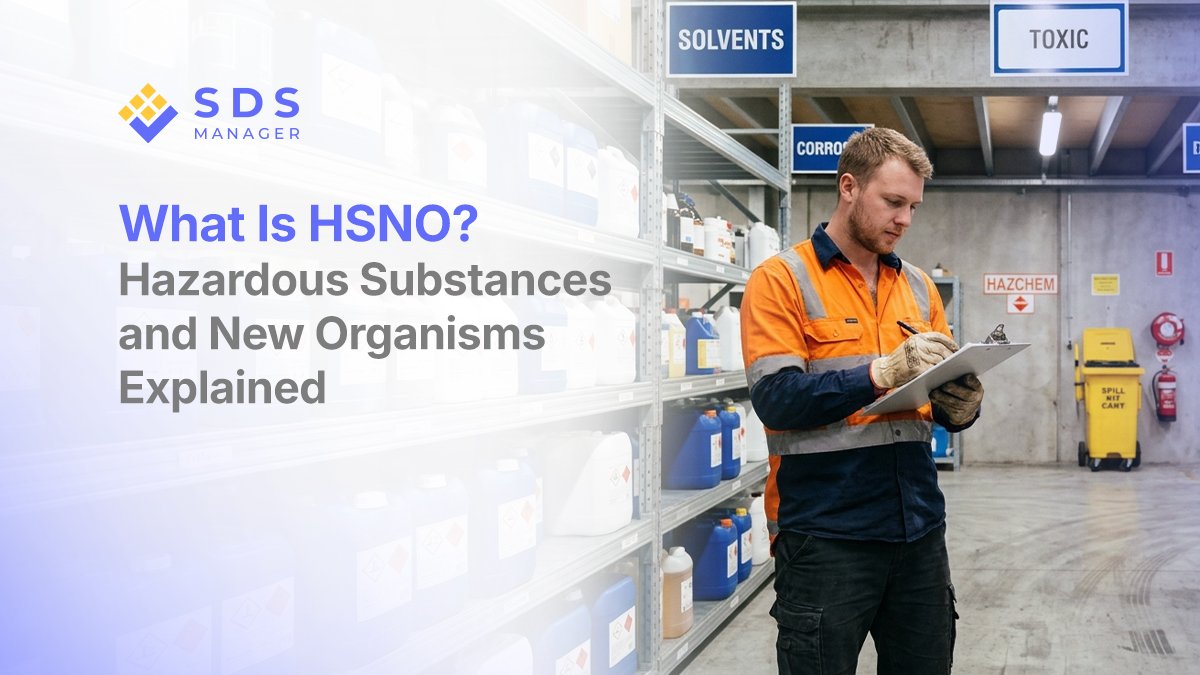
Walk into almost any New Zealand workplace, and you will find hazardous substances. The fuel in the generator shed. The cleaning chemicals under the sink. The pesticides are locked in the farm store. Most people handling these products every day have no idea there is a national law governing exactly how each one must be labelled, stored, and used.
The Hazardous Substances and New Organisms Act 1996 is New Zealand's primary framework for managing the risks posed by dangerous chemicals and by living organisms new to the country's environment.
It applies to businesses of every size, across every industry, and to a far wider range of everyday products than most people realise.
This guide explains what HSNO is, what counts as a hazardous substance, how the approval and controls system works, and what the law means in practical terms for workplaces and the public.
Key Takeaways
- HSNO stands for the Hazardous Substances and New Organisms Act 1996, New Zealand's primary legislation for managing dangerous chemicals and living organisms new to the country's environment.
- The Environmental Protection Authority (EPA) administers the Act through a three-step process: approval before a substance enters New Zealand, classification into a hazard class, and controls that set the legal safety rules for use, storage, and transport.
- There are eight hazard classes under HSNO. Explosive, flammable, oxidising, toxic, corrosive, and ecotoxic are the six most commonly encountered. Class 7 (radioactive materials) is regulated separately.
- Hazardous substances are not confined to industrial settings. Fuels, paints, solvents, cleaning products, pesticides, and agrichemicals all fall under HSNO regulation.
- HSNO also covers new organisms, including genetically modified organisms (GMOs), newly imported species, and biological control agents, because unassessed introduction can cause irreversible environmental harm.
- WorkSafe New Zealand enforces HSNO compliance in workplaces. The EPA sets the framework; WorkSafe checks that businesses follow it.
- Every business that uses, stores, or transports hazardous substances is subject to HSNO regardless of size. Obligations scale with the quantity and nature of the substances on site.
What Is HSNO?
Understanding what HSNO is and how hazardous substances are regulated in New Zealand starts with one law: the Hazardous Substances and New Organisms Act 1996. It is New Zealand's primary legislation for controlling risks from dangerous chemicals and from living organisms not yet established in the country's environment.
The Environmental Protection Authority (EPA) administers the Act, assessing every substance or organism before it can be imported or manufactured here. Not every risk can be eliminated. Every known risk can be managed. HSNO makes the second part legally mandatory rather than optional.
What Counts as a Hazardous Substance?
A hazardous substance is any chemical or product that carries one or more of the following dangerous properties. The classification is based on the substance's physical or toxicological characteristics, not its intended purpose.
| Hazard Class | What It Means | Everyday Examples |
|---|---|---|
| Explosive | Capable of a rapid, violent reaction, releasing pressure or heat | Certain industrial gases, pyrotechnic compounds |
| Flammable | Catches fire easily as a liquid, gas, or solid | Petrol, acetone, LPG |
| Oxidising | Intensifies combustion in surrounding materials | Bleach (sodium hypochlorite), hydrogen peroxide |
| Toxic | Poisonous through ingestion, skin contact, or inhalation | Pesticides, industrial solvents, and some cleaning agents |
| Corrosive | Destroys living tissue or materials on contact | Drain cleaners, battery acid, and certain industrial cleaners |
| Ecotoxic | Harmful to waterways, soil, or wildlife | Herbicides, heavy-metal compounds, and some lubricants |
| Compressed Gas | Gas stored under pressure that can explode if heated or release rapidly if the container fails | LPG cylinders, aerosol cans, oxygen tanks, and fire extinguishers |
| Environmental Hazard | Harmful to aquatic life, soil ecosystems, or wildlife, often persisting long after exposure | Certain lubricants, copper-based fungicides, and some hydraulic fluids |
There are eight hazard classes under HSNO. Class 7 covers radioactive materials, which are regulated separately under distinct legislation and are excluded from HSNO's scope.
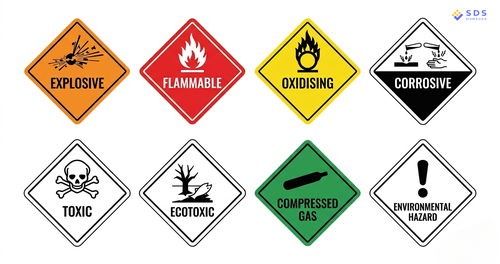
The substances that fall under these classifications are not rare industrial compounds locked away in specialised facilities. Fuels, paints, solvents, cleaning sprays, weed killers, and agrichemicals are all hazardous substances under HSNO. Any business that stocks them is operating within the Act's scope, and it covers products sitting in most New Zealand kitchens, garages, and garden sheds right now.
How the HSNO Approval, Classification, and Controls System Works
HSNO manages hazardous substances through three sequential steps, and none can be skipped.
Step 1: Approval
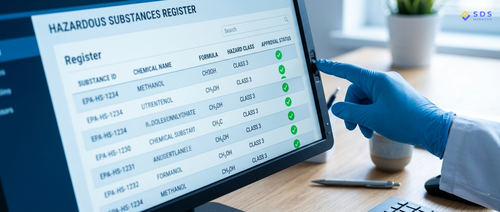
Before a hazardous substance can be imported or manufactured in New Zealand, the EPA must approve it. The EPA weighs the substance's benefits against its risks to human health, communities, and the environment. A substance that does not pass this assessment cannot enter the New Zealand market.
Step 2: Classification
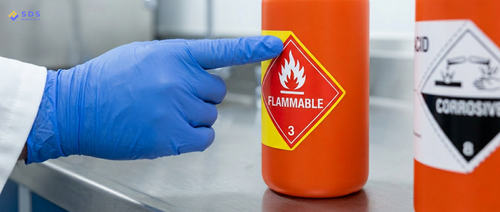
Once approved, the substance is assigned to one or more hazard classes based on its properties. This classification is not cosmetic. It determines which legal controls apply and how strictly.
Step 3: Controls
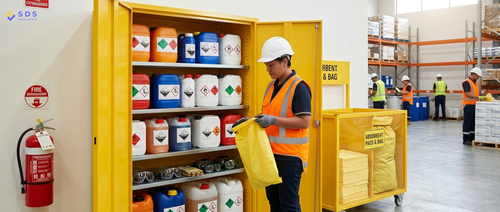
Controls are the legally binding safety rules attached to a substance because of its hazard class. They specify how a substance must be labelled, packaged, stored, transported, used in the workplace, and managed during emergencies such as spills or fires.
The controls are proportional to the risk, and the difference is significant. A bottle of methylated spirits requires a flammable storage label and ventilation guidance. A drum of concentrated hydrochloric acid requires certified storage facilities, secondary containment, emergency response planning, and staff with documented training. Same framework, vastly different requirements.
By the time a product reaches your shelf or your storeroom, this process has already run its course. The label is the last step, not the first.
Why the HSNO Act Exists
Hazardous substances cause two distinct categories of harm, and the HSNO Act was designed to address both.
Acute harm occurs from a single exposure event. A chemical fire does not need a label to announce itself. An explosion, a burn, an acute poisoning — these are the incidents that make headlines and trigger WorkSafe investigations.
Chronic harm builds silently from repeated low-level exposure over months or years. Occupational diseases linked to chemical exposure include respiratory conditions, neurological damage, and certain cancers. Without systematic exposure monitoring and mandatory controls, a worker can develop respiratory disease over ten years, and the cause is never formally attributed to the chemicals they handle every day. That is the gap HSNO closes.
Acute harm triggers investigations. Chronic harm rarely does, unless a legal framework forces the attribution.
Without a structured approval and controls system, labelling would be inconsistent, storage rules would be left to individual judgment, and emergency responses would be improvised. The HSNO Act exists because preventable harm requires a preventable framework, not goodwill.
What Are New Organisms Under HSNO?
A new organism does not arrive looking dangerous. That is precisely what makes it difficult to manage without a legal framework forcing the assessment upfront.
New organisms are living things not already established in New Zealand's natural environment. The HSNO Act covers them for the same fundamental reason it covers hazardous chemicals: both can cause serious, potentially irreversible harm if introduced without proper assessment.
New organisms regulated under HSNO include:
- Genetically modified organisms (GMOs): plants, animals, or microbes altered through genetic engineering
- Imported species: animals, plants, or insects entering New Zealand for the first time
- Biological control agents: living organisms introduced deliberately to manage pests or disease
An invasive insect species or a GMO crop with unexpected ecological effects can damage agriculture, displace native wildlife, and alter ecosystems in ways that are extremely difficult to reverse. The damage is not theoretical. It is documented, expensive, and in most cases permanent.
The EPA assesses each new organism application individually. That assessment examines the organism's biology, its potential to establish and spread, its effects on native species and ecosystems, and whether any release can be reversed if something goes wrong. The EPA then decides whether it can be imported, developed in containment, or released into the environment, and under what specific conditions.
What HSNO Compliance Looks Like in Practice
HSNO compliance is not a folder you update once and file away. For any workplace that uses, stores, or transports hazardous substances, it is an ongoing operational responsibility with real legal consequences for getting it wrong.
Those consequences are tied to specific obligations. Every business must track their hazardous substance inventory across every location, ensure correct labelling, keep Safety Data Sheets (SDS) accessible to all staff, separate incompatible substances in storage, train staff in safe handling and emergency response, and have a written emergency plan for spills, leaks, or fires.
Two agencies make sure those obligations are met. The EPA sets the framework by approving substances, assigning hazard classes, and determining the controls. WorkSafe New Zealand enforces it in the field, visiting sites and holding businesses accountable when those controls are not followed.
Businesses looking to go beyond the minimum can assess and document chemical risks across their site using a structured risk assessment process, identifying hazards before controls are required by an inspector rather than after.
That accountability extends beyond the workplace. For the general public, the message is simple: read the label. A hazard diamond on a product is not a design choice. It is the law made visible.
Conclusion
HSNO is not a law most people think about until something goes wrong. A chemical fire, a poisoning incident, an invasive species establishing itself in a national park. By that point, the framework was already meant to have prevented it.
For anyone running a business that handles hazardous substances, HSNO is not background knowledge. It is a legal obligation with real consequences for ignoring it. The system is designed to be manageable. Approval, classification, controls. Three steps that convert a dangerous substance into a regulated one with clear rules attached. A bottle of cleaning solvent and a drum of industrial acid are both hazardous substances. The law does not treat them the same, and neither should you.
Start with your inventory. Know what is on your site, what class it falls into, and what the controls require. Everything else in HSNO compliance follows from that.
Frequently Asked Questions
What does HSNO stand for?
HSNO stands for the Hazardous Substances and New Organisms Act 1996. It is New Zealand's primary legislation for managing dangerous chemicals and living organisms that are new to the country's environment. The Act is administered by the Environmental Protection Authority (EPA), which approves, classifies, and applies controls to regulated substances and organisms.
Who enforces HSNO compliance in New Zealand workplaces?
WorkSafe New Zealand is the primary enforcement agency for workplace HSNO compliance. The EPA administers the Act by approving substances and setting classifications and controls. WorkSafe inspects businesses to verify they are meeting their obligations, including correct labelling, storage, staff training, and emergency planning.
Does HSNO apply to small businesses?
Yes. HSNO applies to any business that uses, stores, or transports hazardous substances, regardless of its size. The practical obligations scale with the quantity and nature of the substances involved, but no business is exempt. A sole trader using pesticides on a client's property is subject to the same legal framework as a large manufacturing operation.
What is a Safety Data Sheet under HSNO?
A Safety Data Sheet (SDS) is a standardised document providing detailed information about a hazardous substance, covering its properties, health risks, safe handling requirements, storage conditions, and emergency procedures. Employers are legally required to have an SDS available for every hazardous substance in the workplace. The SDS is a controlled document: it must reflect the current approved formulation of the product.
Where can I check whether a substance is approved under HSNO?
The EPA maintains a searchable register of approved hazardous substances at epa.govt.nz. You can search by product name or active ingredient. If a substance does not appear in the register and has not been granted approval, it cannot be legally imported or manufactured in New Zealand.

Arysha Alif Khan

Arysha Alif Khan is an EHS and chemical safety specialist with a background in biochemistry, biotechnology, and public health. She works closely with the product and regulatory teams to turn complex chemical regulations, SDS requirements, and workplace safety standards into clear, practical guidance for people.