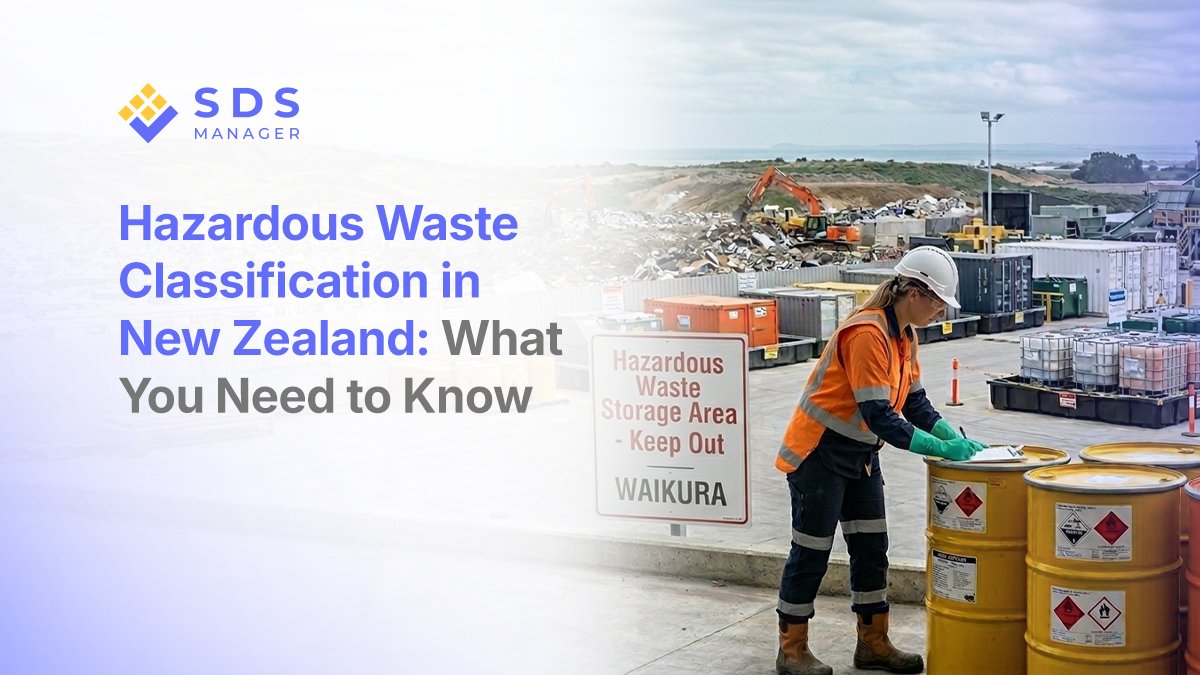
New Zealand generates an estimated 17.49 million tonnes of waste each year, with roughly 12.59 million tonnes ending up in landfill (Ministry for the Environment, 2023). A portion of that total is hazardous, and it does not stop being hazardous once it becomes waste.
The problem is not a lack of rules. The rules are split across three separate laws, each covering a different stage of the process, and the agency that enforces one often has no jurisdiction over the others. It's not about finding the right law. It's about knowing which one is watching you right now.
This guide breaks down how hazardous waste classification in New Zealand works, which legislation governs each step, and what practical duties fall on waste generators, transporters, and disposal facilities.
Key Takeaways
- New Zealand's hazardous waste rules are split across the HSNO Act, HSWA, and RMA rather than one single law
- Waste is hazardous if it contains flammable, toxic, corrosive, or ecotoxic substances under the GHS 7 system, fully in force since 1 May 2025 and a baseline compliance requirement for 2026
- Five landfill classes determine where your waste can go and what levy rate applies, from $70 per tonne at Class 1 in 2026 down to zero at cleanfills
- Businesses must inventory, label, and store hazardous waste correctly, and use licensed contractors for disposal
- An EPA permit is required before importing or exporting any hazardous waste
Why Does Hazardous Waste Classification in New Zealand Feel Complicated?
New Zealand does not have a single hazardous waste statute. That is the structural reality, and it means compliance responsibility is split across agencies with different mandates, different enforcement powers, and different definitions of what counts as a problem.
The Office of the Auditor-General found that New Zealand's hazardous waste system relies on a patchwork of legislation, strategies, and guidelines rather than one coherent law (Office of the Auditor-General, 2007). Three separate laws govern different parts of the process, and they do not always point in the same direction.
The Hazardous Substances and New Organisms Act 1996 (HSNO Act) sets the overall classification framework and controls approvals for importing, manufacturing, and disposing of hazardous substances. The Environmental Protection Authority (EPA) administers it.
The Health and Safety at Work Act 2015 (HSWA) and its associated Hazardous Substances Regulations 2017 cover workplace risks from hazardous substances, including waste generated on site. WorkSafe New Zealand is the principal enforcement agency in workplaces.
The Resource Management Act 1991 (RMA) governs discharges of contaminants into land, air, and water. Regional councils use it to set conditions on landfills and treatment facilities, which means local rules can vary between regions.
What Is a Hazardous Substance Under New Zealand Law?
Under the HSNO Act, a hazardous substance is any substance with one or more intrinsic hazardous properties. These include explosiveness, flammability, the ability to oxidise, corrosiveness, acute or chronic toxicity, ecotoxicity, and the ability to generate a hazardous substance when in contact with air or water.
The HSNO Act does not include a standalone definition for "hazardous waste." If a waste material contains or is likely to contain a substance with those properties, it is treated as hazardous waste, and the same classification controls apply. WorkSafe describes hazardous waste in the workplace context as waste from manufacturing or industrial operations that is likely to be, or to contain, at least one hazardous substance with explosive, flammable, oxidising, toxic, or corrosive properties.
Misidentifying a waste stream means the storage, labelling, transport, and disposal that follows will all be wrong. Each of those failures carries its own enforcement exposure, and under the HSWA, fines for serious breaches can reach $600,000 for a body corporate.
How Does New Zealand's Classification System Work?
New Zealand's hazardous substance classification system went through a significant update in 2021. Every business handling chemicals or waste needs to understand what changed and what is now required.
The Move to GHS 7
On 30 April 2021, New Zealand adopted the seventh revised edition of the Globally Harmonised System of Classification and Labelling of Chemicals (GHS 7) as its official hazard classification system under the HSNO Act (EPA New Zealand, 2025). This replaced the older HSNO system in place since 2001 and brought New Zealand into line with more than 50 countries, including all major trading partners.
A four-year transitional period gave importers, manufacturers, and suppliers time to update labels, safety data sheets, and packaging. That period ended on 30 April 2025. From 1 May 2025, all substances must comply with the updated GHS 7 requirements. The transition period was four years. There is no extension.
What GHS 7 Means in Practice
Under GHS 7, hazard classification uses standardised pictograms, signal words (Danger or Warning), and hazard statements on labels and safety data sheets. Each substance is assigned to one or more hazard classes, such as flammable liquids, acute toxicity, or environmental hazards, along with a category indicating severity.
For hazardous waste, the classification is based on the known or likely constituents. If the exact composition is not known, businesses must make a reasonable assessment based on the source and any available information.
HSWA workplace regulations still reference older HSNO classification codes during an ongoing alignment period. WorkSafe's Hazardous Substances Calculator accepts both systems and maps between them. Confirm which code set applies to your specific obligation before relying on either.
What Types of Waste Are Classified as Hazardous in New Zealand?
Not all waste is hazardous, but the range of materials that can qualify is broader than many businesses expect. According to the EPA, hazardous waste includes waste products that contain or are contaminated by pesticides and herbicides, waste hydrocarbons, polychlorinated biphenyls (PCBs), lead-acid batteries, electronic and electrical waste, products containing persistent organic pollutants (POPs) such as older PFOS-containing fire-fighting foams, clinical and pharmaceutical waste, and waste from producing inks, dyes, paints, and organic solvents.
Three categories need particular attention -
Asbestos must be handled under strict WorkSafe and regional council conditions, typically at Class 1 landfills with specific acceptance criteria. Any asbestos-containing material removed during renovation or demolition must be treated as hazardous waste regardless of quantity.
PCB waste and POPs fall under the Stockholm Convention. Some cannot be disposed of domestically and must be exported to specialist facilities overseas. Attempting domestic disposal of a Stockholm Convention-listed substance without checking export requirements first creates significant liability.
E-waste is a growing concern. The EPA advises treating it as hazardous by default because many devices contain lead, cadmium, mercury, and brominated flame retardants banned under the Stockholm Convention. The burden of proving otherwise sits with the business disposing of it.
How Are New Zealand Landfills Classified for Hazardous Waste Disposal?
The landfill class system determines where waste can legally go, and it ties directly into disposal costs and compliance obligations. Sending waste to the wrong class is not just a procedural error. It can void the facility's consent conditions and make the generator liable for the resulting contamination.
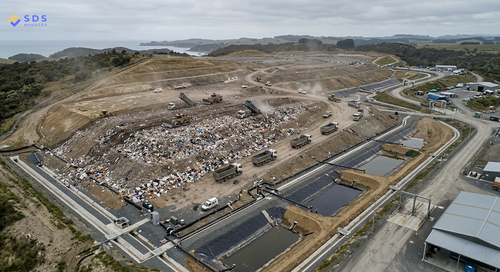
Class 1: Municipal disposal facilities are engineered landfills accepting mixed waste from residential, commercial, and industrial sources. They can accept some hazardous wastes that meet defined acceptance criteria. The levy is $70 per tonne from 1 July 2026, up from $65 per tonne in the prior year (Ministry for the Environment, 2025).
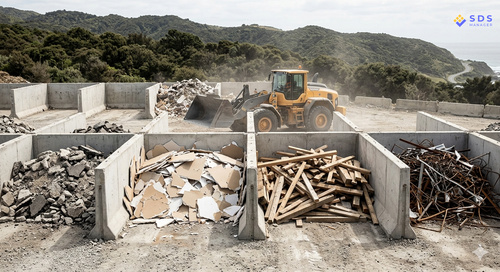
Class 2: Construction and demolition facilities accept C&D waste including rubble, plasterboard, and timber. They may accept limited hazardous components within specified criteria. The levy rises to $40 per tonne from 1 July 2026, up from $30 per tonne.
Class 3: Managed fill facilities take contaminated but technically non-hazardous soils and inert materials with engineered controls. Levy: $15 per tonne.
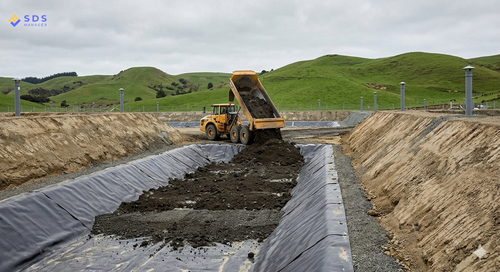
Class 4: Controlled fill facilities accept soils and inert materials with lower contaminant levels, also at $15 per tonne.
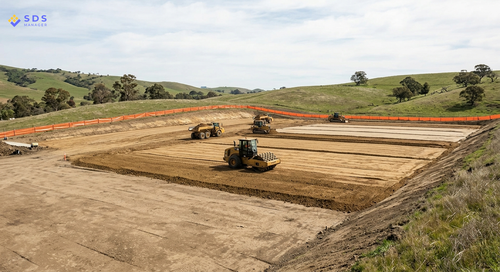
Class 5: Cleanfills accept only very low-risk inert materials. Hazardous waste is prohibited and no levy applies.
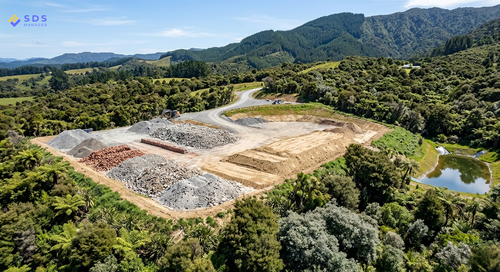
Some facilities operate as industrial monofills under tailored resource consents, handling a single waste stream not suitable for a standard landfill class. These sit outside the five-class structure and require direct engagement with the relevant regional council before use.
The Ministry for the Environment's Hazardous Waste Guidelines Module 2 sets waste acceptance criteria for each class. Certain wastes are prohibited from all landfill types: free liquids above defined limits, radioactive waste unless under specific conditions, PCB waste, and some infectious wastes that must be treated before disposal.
A waste can be hazardous and still go to a landfill, provided it meets the acceptance criteria for the right class. If it does not, it requires treatment, destruction, or export.
What Are the Duties of Businesses That Generate Hazardous Waste?
If your business generates hazardous waste, you have specific obligations under the HSNO Act and HSWA regulations. This isn't paperwork for its own sake. A misclassified drum can trigger fines of up to $600,000 under the HSWA.
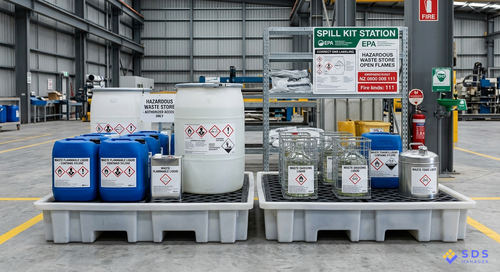
Keep an inventory
Workplaces must maintain an up-to-date inventory of all hazardous substances, including waste, covering the name, quantity, location, and storage requirements. This applies even if the waste is held temporarily before contractor collection. Keeping your safety data sheets current and accessible is the foundation for accurate waste identification.
Label containers correctly
Hazardous waste containers must be labelled in English with the waste name, relevant GHS 7 hazard pictograms and statements, and the producer's contact details where known. This is a requirement under the Health and Safety at Work (Hazardous Substances) Regulations 2017.
Store it correctly
Hazardous waste must be stored as if it were an unused hazardous substance. That means the same segregation rules, secondary containment, ventilation, and temperature controls. Mixing incompatible waste streams, acids with alkalis, for instance, is both a safety risk and a compliance failure.
Use licensed contractors and approved facilities
Businesses are responsible for ensuring hazardous waste is disposed of without causing significant adverse effects. That means using licensed contractors and sending waste to a facility whose resource consent covers the waste class being disposed of.
Train your workers
Staff handling hazardous waste need adequate information, training, and supervision on hazards, storage procedures, emergency response, and required PPE.
How Does Importing or Exporting Hazardous Waste Work?
Here is a polished version with the flow tightened, repetition reduced, and the table integrated more smoothly:
A permit from the EPA is required before hazardous waste is imported to or exported from New Zealand. The EPA administers this through the Imports and Exports (Restrictions) Prohibition Order (No 2) 2004, which identifies hazardous waste categories in Schedule 3.
New Zealand is also a party to four major international agreements that govern the movement and management of hazardous waste and chemicals:
| Agreement | Main focus | Key obligation |
|---|---|---|
| Basel Convention | International movement of hazardous waste | Requires prior consent for imports and exports and ensures waste is managed in an environmentally sound manner. |
| Waigani Convention | Protection of Pacific Island nations and Antarctica | Restricts hazardous waste shipments from New Zealand and Australia to Pacific Island countries and Antarctica. |
| Rotterdam Convention | Trade in hazardous chemicals | Uses a prior informed consent process before specified hazardous chemicals can be imported or exported. |
| Stockholm Convention | Persistent organic pollutants (POPs) | Restricts or eliminates the production, use, and release of the most toxic POPs. |
Together, these agreements create an international framework for controlling transboundary waste movements, regulating hazardous substances, and protecting sensitive environments from toxic materials.
In practice, if a waste is not classified as hazardous in New Zealand but is considered hazardous in the destination country, a permit is still required. The EPA cannot issue an export permit without the importing country’s prior consent, and the requirements of every transit country must also be checked before shipment.
What Is Changing in New Zealand's Waste Laws in 2026?
A Waste Management Bill was introduced in December 2025, proposing to replace both the Waste Minimisation Act 2008 and the Litter Act 1979. Its key feature is an Extended Producer Responsibility (EPR) framework holding manufacturers and importers responsible for end-of-life product management. Public consultation received 267 submissions. You should verify the current status of this Bill before relying on it for planning purposes, as its passage before the 2026 general election had not been confirmed at the time of writing.
Waste disposal levy increases are now in effect. From 1 July 2026, the Class 1 levy is $70 per tonne and Class 2 rises to $40 per tonne, with further increases planned through 2027/28. Factor these figures into your 2026 waste disposal budgets.
GHS 7 compliance has been fully in force since 1 May 2025. Any business that has not updated its labels, safety data sheets, and packaging is operating outside the law.
Conclusion
Hazardous waste classification in New Zealand does not sit in one place, and that is the core challenge for anyone trying to stay compliant. The cost of disposal is rising. The cost of getting it wrong is higher.
Start with the substance. If a waste contains something classified as hazardous under the HSNO Act and GHS 7, apply the same controls you would to the unused chemical. Match your disposal route to the right landfill class, confirm the facility's resource consent covers your waste, and check whether any export permit requirements apply before the waste leaves your site.
That process only works if your hazardous substance inventory is current. An outdated SDS gets the classification wrong. A missing inventory entry means the waste moves without controls. A label that does not match the GHS 7 classification is a breach the moment an inspector sees it.
Frequently Asked Questions
What makes a waste "hazardous" under New Zealand law?
Under the HSNO Act 1996, a waste is hazardous if it contains a substance with properties such as explosiveness, flammability, corrosiveness, toxicity, or ecotoxicity. Classification follows GHS 7 hazard classes and categories, which became mandatory across New Zealand on 1 May 2025.
Do I need a permit to dispose of hazardous waste in New Zealand?
No permit is needed for domestic disposal, provided the waste goes to an appropriately consented facility that accepts your waste class. A permit from the EPA is mandatory before any hazardous waste is imported to or exported from New Zealand. The requirement applies even if the waste is not classified as hazardous here but is classified as hazardous in the receiving country (EPA New Zealand, 2025).
What are the current waste disposal levy rates for 2026?
The levy applies by landfill class. From 1 July 2026: $70 per tonne for Class 1 municipal landfills, $40 per tonne for Class 2 construction and demolition facilities, and $15 per tonne for Class 3 and Class 4 managed and controlled fills. Class 5 cleanfills are not levied but cannot accept hazardous waste. Further increases are scheduled through 2027/28.
Is e-waste always classified as hazardous in New Zealand?
Not automatically, but the EPA advises treating e-waste as hazardous by default, as many devices contain lead, mercury, cadmium, or brominated flame retardants. Some brominated compounds fall under the Stockholm Convention, requiring export-only disposal. Always retain documentary evidence that your e-waste is hazardous-free before attempting export
Which agency handles hazardous waste classification questions?
For substance classification and import/export permits, contact the EPA's Hazardous Substances team at epa.govt.nz. For workplace hazardous waste storage and handling, WorkSafe New Zealand is the primary contact. For disposal and landfill acceptance, your regional council holds the relevant consenting and enforcement powers under the RMA.

Arysha Alif Khan

Arysha Alif Khan is an EHS and chemical safety specialist with a background in biochemistry, biotechnology, and public health. She works closely with the product and regulatory teams to turn complex chemical regulations, SDS requirements, and workplace safety standards into clear, practical guidance for people.