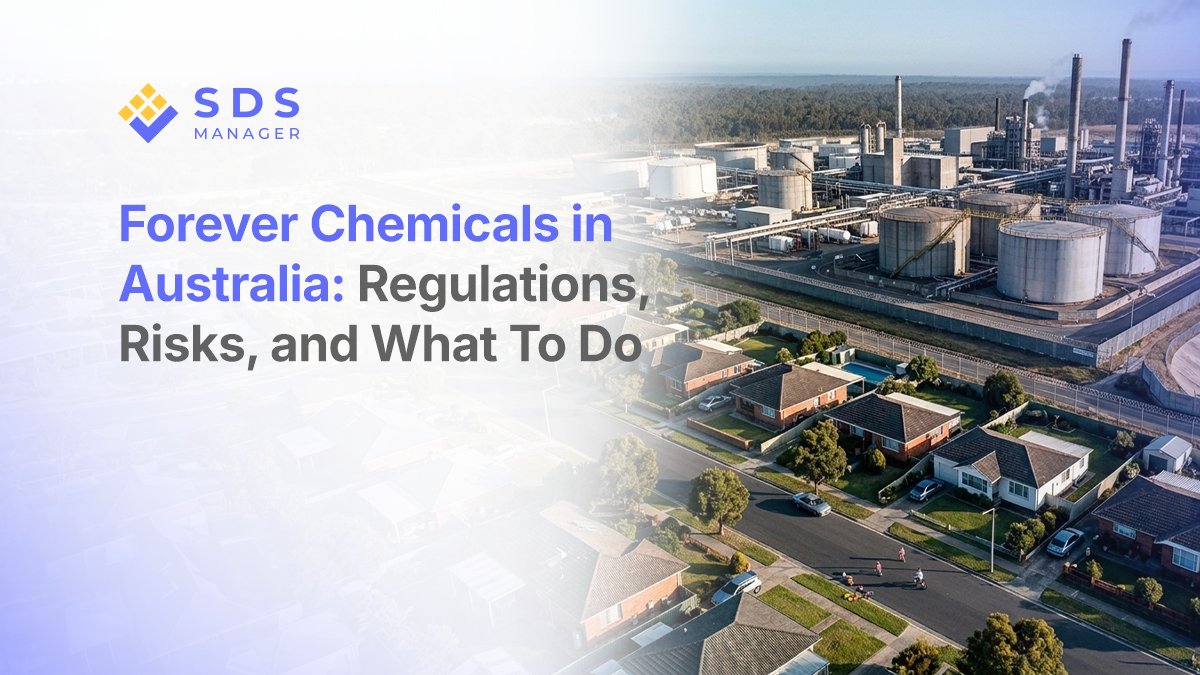
PFAS are present in the blood of 85% of the Australian population (SBS News, 2026). After decades of use across defence, aviation, and industry, Australia's regulatory response has finally caught up. But knowing what the rules say, what the risks actually are, and what to do about them are three very different things.
Forever chemicals, the common name for per- and poly-fluoroalkyl substances (PFAS), have been in Australian soil, water, and human blood since the 1970s. They do not break down in the environment, and they do not clear from the human body quickly.
This guide covers the current regulatory framework, what the evidence says about health risks, and practical steps for individuals, households, and businesses.
Key Takeaways
- Australia banned PFOS, PFOA, and PFHxS from 1 July 2025, but more than 14,000 other PFAS compounds remain unregulated, with AICIS evaluating a further 522 by December 2026.
- Health risks vary significantly by exposure level. The general population faces a different risk profile than workers or communities near Defence contamination sites.
- Practical steps for individuals include filtering drinking water, replacing worn non-stick cookware, and checking proximity to known contamination sites.
- For businesses, obligations cover chemical register audits, AICIS reporting, current SDS records, and separate state and federal EPA compliance.
What Are Forever Chemicals?
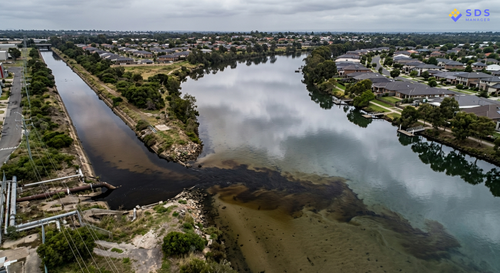
PFAS are a family of more than 14,000 synthetic chemicals built around carbon-fluorine bonds, one of the strongest in chemistry. They have been used since the 1950s in non-stick cookware, firefighting foam, stain-resistant fabrics, food packaging, and industrial processes.
The same property that made them commercially useful, extreme chemical stability, is the problem. They do not break down in the environment. They accumulate in soil, groundwater, food chains, and human tissue. That persistence is where the name comes from.
In Australia, the primary source of environmental contamination has been aqueous film-forming foam (AFFF) used at military bases and airports from the 1970s through the mid-2000s. That contamination has leached into surrounding groundwater for decades and in many areas is still spreading.
PFAS Regulations in Australia: What Businesses and Individuals Must Know
From 1 July 2025, Australia banned the manufacture, import, export, and use of three PFAS compounds: PFOS, PFOA, and PFHxS, under Schedule 7 of the IChEMS Register. These are the most harmful of the group. The ban does not cover the remaining 14,000+ PFAS, and exemptions apply for trace contamination below 0.025 mg/kg and legacy materials already in use before July 2025.
Each state and territory must also pass its own legislation to give the ban effect, so obligations vary depending on location. A business in Victoria faces different requirements than one in Queensland.
In March 2025, the Commonwealth released PFAS NEMP 3.0, the national framework for how contaminated sites are assessed and remediated. Any investigation or clean-up work on PFAS-affected land must follow this standard. Businesses that imported or manufactured PFAS compounds between September 2023 and August 2025 must also report that data to AICIS, which is evaluating 522 PFAS with findings due by December 2026. Knowing exactly what is in the chemical register is where hazardous chemical inventory management becomes a compliance necessity, not just a best practice. Failing to report is a standalone breach.
In May 2026, the Commonwealth launched a $2 billion lawsuit against 3M over PFAS contamination at 28 Defence sites, the largest legal claim ever brought by an Australian government (Defence Ministers, 2026). The direction of travel is clear.
What Are the Real Health Risks?
For most Australians, PFAS exposure at everyday levels has not been shown to cause direct disease. PFAS were detected in more than 85% of Australians tested (Australian CDC, 2025), but mean levels here are lower than in comparable studies overseas.
The picture is different for higher-exposure groups. Research links prolonged PFAS exposure to elevated cholesterol, liver changes, reduced vaccine response in children, and increased cancer risk at high doses. The groups most at risk are people who drank contaminated bore water near Defence bases for years, and workers who handled AFFF over long careers.
The key point is that exposure level drives the risk. What applies to someone living next to a contaminated Defence site is not the same as what applies to the broader population.
What To Do and What Not To Do
For Individuals and Households

Filter drinking water.
Activated carbon filters and reverse osmosis systems are the most effective methods for removing PFAS from drinking water. Standard pitcher filters are not all rated for PFAS. Contact the local water authority to check whether PFAS has been detected in the supply, and for anyone on a private bore near a former Defence base, airport, or industrial site, arrange independent laboratory testing before relying on any treatment system.
Check proximity to known contamination sites.
The Department of Defence manages 28 priority sites nationally. Former RAAF bases, civilian airports, and industrial fire training grounds are the most likely locations for groundwater contamination. People living near these sites should contact their state health authority about monitoring options. The Senate Select Committee recommended subsidised blood testing for the highest-exposure communities.
Replace worn non-stick cookware.
Scratched or degraded PTFE-coated cookware can release PFAS into food during cooking. Switching to stainless steel or cast iron removes one ongoing exposure source at minimal cost.
Do not assume greaseproof packaging is safe.
Paper-based food packaging, particularly takeaway containers and fast food wrappers, often contains PFAS as a grease barrier. Reducing reliance on this packaging where alternatives exist is a practical and low-effort step.
Do not delay if direct exposure has occurred.
Someone who has been drinking contaminated water for an extended period, or who has worked with AFFF products over a career, should not wait for symptoms before seeing a GP. Baseline blood testing for PFAS is available and provides a reference point for monitoring over time.
For Businesses and Workplaces
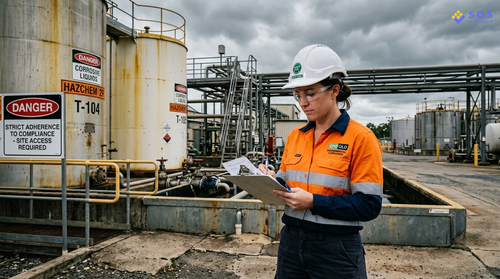
Audit the chemical register against IChEMS Schedule 7.
Any business that manufactures, imports, exports, or uses PFOS, PFOA, or PFHxS after 1 July 2025 without a valid exemption is in breach. Exemptions are narrow and require documentation. Assuming a legacy product qualifies without verification is a compliance risk.
Report historical PFAS use to AICIS if required.
Businesses that imported or manufactured any of the 522 PFAS under evaluation between September 2023 and August 2025 must submit that data. This is not optional and not a minor administrative step. Failure to report is a standalone breach.
Keep Safety Data Sheets current and accessible.
WHS obligations require SDS documents for all hazardous substances on site to be accurate, accessible to workers, and linked to risk assessments. For sites near known PFAS contamination, that obligation extends to assessing worker exposure through groundwater, soil contact, or air. A well-maintained chemical safety register is the foundation of that compliance process.
Do not treat state and federal obligations as interchangeable.
The IChEMS listing is a federal instrument. State and territory EPA obligations operate separately and can go further. A site in Victoria faces different requirements than one in NSW or Queensland. Both frameworks can apply to the same incident.
Do not ignore the PFAS NEMP 3.0 if site remediation is involved.
Any environmental assessment or remediation work on PFAS-affected land must follow the PFAS NEMP 3.0 framework released in March 2025. Engaging a consultant not working to this standard creates legal and regulatory exposure.
Conclusion
Forever chemicals in Australia are not going away. The 2025 ban is progress, but it covers three compounds out of thousands. Regulations are still catching up, health research is ongoing, and the contamination already in the ground will take decades to address.
For individuals, the focus is on reducing exposure where it is practical to do so. For businesses, the focus is on knowing what the current rules require and having the documentation to prove it.
Keeping chemical records accurate and Safety Data Sheets current is a basic obligation under WHS law. For businesses working through PFAS compliance, chemical compliance software helps keep that process manageable as obligations continue to evolve.
Frequently Asked Questions
What are forever chemicals and why are they in Australia's environment?
Forever chemicals is the common name for PFAS, per- and poly-fluoroalkyl substances. They persist and accumulate rather than break down, with some having a half-life in water exceeding 92 years. In Australia, the primary contamination source has been AFFF used at Defence bases and airports from the 1970s, which leached into surrounding groundwater over decades.
Is PFAS exposure dangerous for the average Australian?
PFAS are detectable in 85% of Australians, but trace exposure has not been established as causing direct disease at population levels. Risk is significantly higher for people near Defence contamination sites who drank affected water for years, and for workers with long-term occupational PFAS exposure.
What does the 2025 PFAS ban cover?
The ban covers PFOS, PFOA, and PFHxS under Schedule 7 of the IChEMS Register from 1 July 2025. It prohibits manufacture, import, export, and use. Exemptions apply for trace contamination below 0.025 mg/kg and legacy materials. AICIS is evaluating 522 additional PFAS, with outcomes expected by December 2026.
How can PFAS be removed from drinking water?
Activated carbon filters and reverse osmosis systems are the most effective options. Not all standard pitcher filters are rated for PFAS removal. For private bore water near contamination sites, arrange independent laboratory testing before relying on any filtration system.
What should a business do if PFAS are in its supply chain?
Audit the chemical register against IChEMS Schedule 7. Any use of PFOS, PFOA, or PFHxS after 1 July 2025 without a valid exemption is a breach. Report historical PFAS imports or manufacturing to AICIS if required, and check state and territory EPA obligations separately, as they can exceed federal requirements.

Arysha Alif Khan

Arysha Alif Khan is an EHS and chemical safety specialist with a background in biochemistry, biotechnology, and public health. She works closely with the product and regulatory teams to turn complex chemical regulations, SDS requirements, and workplace safety standards into clear, practical guidance for people.