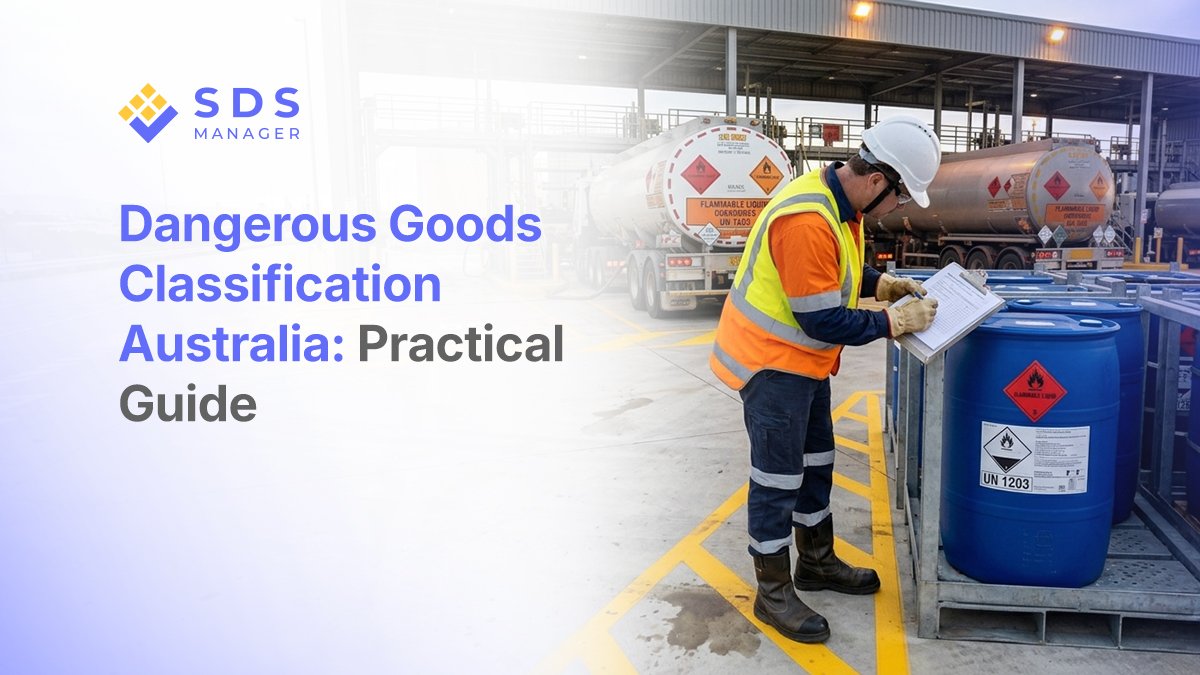
A truck carrying Class 3 flammable liquids doesn't become dangerous the moment something goes wrong on the road. It becomes dangerous the moment it leaves the loading dock with the wrong label, a missing declaration, or a packing group that was never checked.
In Australia, getting dangerous goods classification wrong isn't just a compliance issue. It can stop a shipment at the loading bay, void your insurance, or put criminal liability on the person who signed off on the paperwork. Not just the driver who moved it.
This guide covers how classification works under ADG Code Edition 7.9, what each of the 9 hazard classes requires, and the 7-step process that keeps a shipment compliant from preparation to delivery.
Key Takeaways
- The ADG Code Edition 7.9 is mandatory for all road and rail transport from 1 October 2025
- Australia's system covers 9 hazard classes and 16 subclassifications, each with specific labelling, packaging, and documentation rules
- Most dangerous goods incidents stem from packaging failures or paperwork errors, not the substances themselves. Corporations face fines exceeding $500,000 for non-compliance
- Non-compliance penalties include potential criminal liability for individuals in serious cases
What Is Dangerous Goods Classification in Australia?
Dangerous goods classification is how Australia's transport system identifies what's in a shipment and what it takes to move it safely. Every substance that poses a risk during transport gets assigned a hazard class, a division, a UN number, and a packing group. Those four things determine the packaging it needs, the labels it carries, the documents that must travel with it, and which transport modes will accept it.
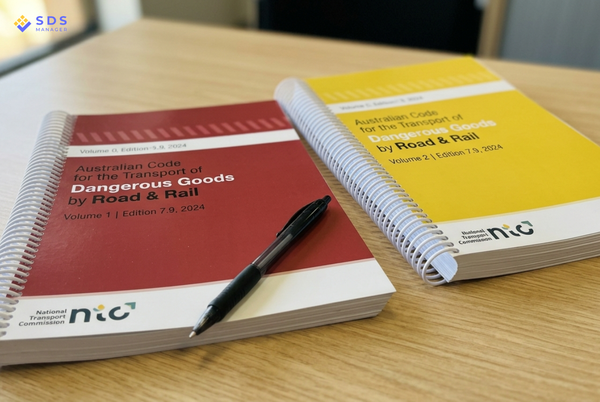
In Australia, that system is governed by the Australian Dangerous Goods (ADG) Code, published by the National Transport Commission (NTC, 2024). ADG Code Edition 7.9 is the current version, compulsory from 1 October 2025 for road and rail transport nationally. Some states may have later commencement dates, so check with your local authority.
The Code isn't advisory. Each state and territory writes it into their dangerous goods transport legislation, so non-compliance is a legal breach. It also aligns with the United Nations Model Regulations, so Australia's 9 hazard classes and UN numbers are consistent with what shippers encounter internationally.
Three separate regulatory bodies govern dangerous goods depending on the transport mode:
- Road and rail: ADG Code 7.9, administered by the NTC
- Air transport: ICAO Technical Instructions, enforced by CASA
- Sea transport: IMDG Code, enforced by AMSA
A shipment compliant for road doesn't automatically meet ICAO or IMDG requirements. If your goods move across more than one mode, you need to classify all of them before the first truck leaves. The Code applies to anyone who prepares, packs, or consigns dangerous goods, not just freight companies.
What Are the 9 Dangerous Goods Classes?
The ADG Code assigns every hazardous substance to one of 9 primary classes based on its physical and chemical properties. Some substances carry a subsidiary hazard and belong to more than one class. The primary class determines the primary label; the subsidiary hazard still requires its own label on the outer packaging.
Class 1: Explosives
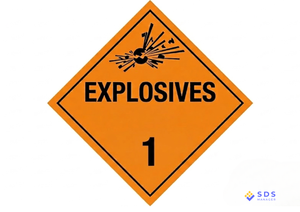
Substances designed to detonate, deflagrate, or rapidly release heat, gas, or pressure: fireworks, blasting caps, detonators, ammunition. Six divisions (1.1 through 1.6) based on explosion type, from mass explosion hazard at 1.1 to extremely insensitive substances at 1.6. The division determines the label and the transport conditions.
Class 2: Gases
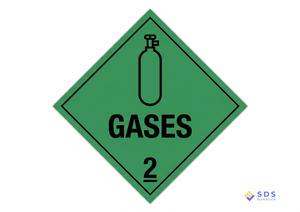
Compressed, liquefied, refrigerated, or dissolved gases, including aerosols. Division 2.1 covers flammable gases; Division 2.2 covers non-flammable, non-toxic gases; Division 2.3 covers toxic gases like chlorine. The division determines whether the goods can travel on a passenger aircraft at all.
Class 3: Flammable Liquids
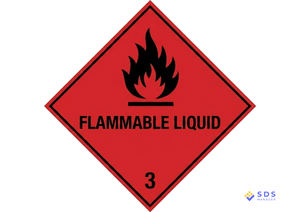
Any liquid giving off flammable vapour at 60°C or below. One of the most commonly transported and most frequently mislabelled classes in Australia. Petrol is Class 3, UN 1203, Packing Group II: flammable liquid labels, Class 3 documentation, and intermediate packaging throughout (Freight Assist Australia, 2025). Every field must match across the SDS, the package, and the consignment note. One mismatch is enough to hold the shipment.
Class 4: Flammable Solids and Reactive Substances
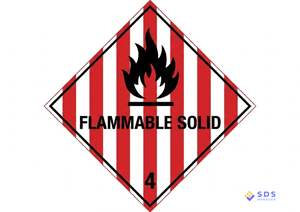
Three divisions covering distinct ignition risks. Division 4.3 covers substances that release flammable gases on contact with water and requires moisture-proof packaging at every stage. Division 4.1 does not. Getting the division wrong here isn't a labelling error. It's a packaging failure.
Class 5: Oxidising Substances and Organic Peroxides
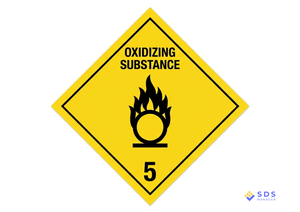
These don't burn on their own. The risk is that they make other materials burn harder or decompose dangerously. Division 5.2 organic peroxides can self-accelerate into decomposition if temperature conditions change, which is why many require controlled transport and have strict aircraft quantity limits.
Class 6: Toxic and Infectious Substances
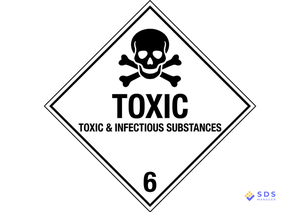
Division 6.1 covers substances causing death or injury through inhalation, contact, or ingestion. Division 6.2 covers infectious substances containing pathogens. Division 6.2 shipments carry obligations under Commonwealth and state biosecurity legislation on top of the ADG Code.
Class 7: Radioactive Material
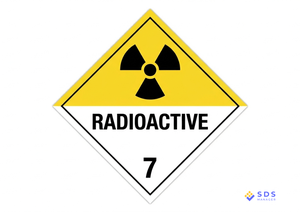
Uranium ore, medical isotopes, industrial radiography equipment. Radiation is invisible, which is why Class 7 has the most stringent packaging and shielding requirements in the system. Transport categories (I-White, II-Yellow, III-Yellow) are based on radiation level at the package surface. No Class 7 shipment moves without specialist assessment of the isotope, activity level, and packaging type.
Class 8: Corrosives
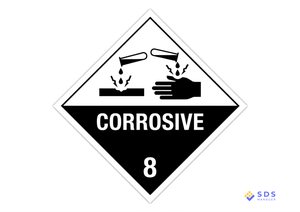
Substances that destroy living tissue or degrade metals, plastics, and other freight on contact: sulphuric acid, sodium hydroxide, battery fluid, formaldehyde. A leaking Class 8 container doesn't just harm the person who opens it. It can compromise surrounding freight, the vehicle, and anyone handling it at every stop along the route.
Class 9: Miscellaneous Dangerous Goods
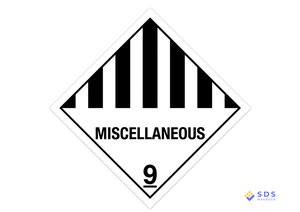
A catch-all for hazards not covered by Classes 1 to 8: lithium batteries, dry ice, magnetised materials, asbestos, environmentally hazardous substances. Lithium batteries are one of the most frequently misclassified goods in Australia (AUSFF, 2026). The rules change based on whether the battery is inside a device, packed with a device, or shipped standalone, and change again when the mode shifts from road to air.
How to Classify Your Goods Correctly: A 7-Step Process
ADG Code Part 5 sets out specific requirements for every consignment. Getting these wrong can stop a shipment, void insurance, or trigger a penalty. This process covers both what each item is and when it applies before anything is packed or moved.
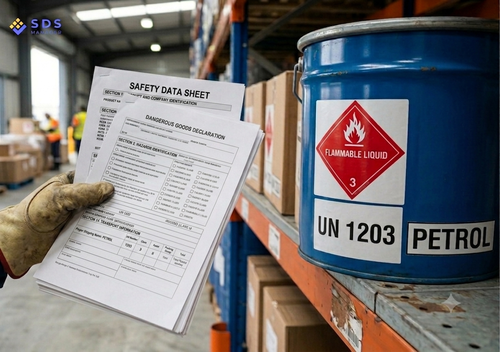
Step 1: Get the manufacturer's SDS. It must come directly from the chemical manufacturer. A distributor-supplied or third-party SDS won't satisfy the requirement under ADG Code Part 5. If you need to locate a current SDS by product name, the SDS search tool covers Australian safety data sheets. Check Section 14 (Transport Information) for the hazard class, UN number, packing group, and any special provisions.
Step 2: Identify the primary hazard class. If the substance carries more than one hazard, the primary class is determined by the most significant risk. The subsidiary hazard still requires its own label on the outer packaging.
Step 3: Confirm the correct division. Within Classes 2, 4, 5, and 6, the division is not interchangeable. It determines which labels apply, which segregation rules apply, and which packaging instructions apply under ADG Code Table 3.2.3.
Step 4: Assign the packing group. PG I requires the most robust packaging. PG III allows standard regulated packaging. The gap between them is significant. Check Table 3.2.3 or Section 14 of the SDS every time.
Step 5: Find the UN number and Proper Shipping Name. Every dangerous good has a unique four-digit UN number. Table 3.2.3 is a free Excel download from the NTC. The Proper Shipping Name is the official term ("PETROL", not "unleaded fuel"). It must appear on the outer package, all transport documents, and vehicle placards. Using a trade name instead is one of the most common reasons shipments are held at loading.
Step 6: Apply the correct hazard labels. The label must match the class and division exactly. The ADG Code specifies the colour for each class. Using the right class number on the wrong colour still counts as a labelling failure under ADG Code Part 5. Apply primary label first, then subsidiary labels. Include the UN number, Proper Shipping Name, and net quantity. If you need to generate compliant transport labels for Australian formats, do it before the shipment is packed.
Step 7: Complete the Dangerous Goods Declaration (DGD). The DGD certifies everything in steps 1 through 6 has been done correctly. For road transport, it's embedded in the consignment note. For air and sea, a standalone DGD is mandatory. Before the shipment moves, cross-check the SDS, the package markings, and the DGD against each other. A conflict between any of the three is a reason to stop, not proceed.
How Do Packing Groups Work?
Once you've identified the hazard class, the packing group tells you how dangerous the specific substance is within that class. It doesn't change the class. It changes the container strength, the inner packaging type required, and in some cases the quantity limits on aircraft.
| Packing Group | Danger Level | What It Means |
|---|---|---|
| PG I | High | Strongest packaging. Strictest air freight limits. |
| PG II | Medium | Intermediate packaging standards. |
| PG III | Low | Standard regulated packaging. Most lenient air limits. |
Classes 1, 2, 7, and some Class 9 goods don't use packing groups. For Classes 3 to 8, the packing group comes from ADG Code Table 3.2.3 or Section 14 of the SDS. Familiarity with a product is not a basis for assuming its packing group. Check it every time.
Why Do Classification Mistakes Cost So Much?
Most businesses assume a classification error is a paperwork problem: fix it, delay the shipment, move on. That is not how the ADG Code's Chain of Responsibility works.
Every party in a dangerous goods consignment carries legal exposure: the shipper who prepared the goods, the packer who packed them, the driver who moved them, and the carrier who accepted them. If the classification was wrong, liability goes back to where the error was made.
Getting it wrong can mean:
- Financial penalties: fines exceeding $500,000 for corporations (Freight Assist Australia, 2025)
- Criminal liability for individuals where non-compliance contributed to injury or death
- Voided insurance: an incorrectly declared shipment can void coverage entirely
- Carrier blacklisting: freight companies can permanently refuse a non-compliant shipper. Carriers talk to each other.
- Customs seizure with no guaranteed timeline for release
Meeting ADG Code requirements for road does not mean a shipment meets ICAO requirements for air or IMDG for sea. A fully compliant road shipment can be rejected at the freight terminal the moment it's destined for an aircraft. Classify for the full route before the first leg moves.
Conclusion
Most dangerous goods shipments move without incident because someone got the classification right before anything left the building.
Classification isn't a form you fill in at the end. It's a decision about packaging, labelling, and documentation made before the goods move. Get it right and everything downstream follows. Get it wrong, and the consequences don't stay administrative for long.
As the ADG Code 7.9 is in effect. Review your classification practices, check that SDS documents are current and from the right source, and confirm DGDs match package markings. If goods move across more than one mode, classify for the full route.
Frequently Asked Questions
What is the ADG Code and who has to follow it?
The ADG Code governs road and rail transport of hazardous materials across Australia. Edition 7.9 is mandatory from 1 October 2025. It applies to everyone who prepares, packs, loads, or consigns dangerous goods: shippers, packers, carriers, and drivers. You don't have to be a freight company to be legally bound by it.
What are the penalties for misclassifying dangerous goods?
Corporations can face fines exceeding $500,000 per breach. Where non-compliance contributes to injury or death, criminal liability for individuals, including imprisonment, is possible. Carriers may refuse future business, shipments can be seized, and insurance coverage may not apply.
Where can I find the official dangerous goods list and UN numbers?
ADG Code Table 3.2.3 is the complete list with UN numbers, hazard classes, packing groups, and special provisions. It's a free Excel download from the National Transport Commission at ntc.gov.au.
What is the difference between dangerous goods and hazardous chemicals?
Dangerous goods are a transport classification governed by the ADG Code. Hazardous chemicals are a workplace classification governed by Work Health and Safety regulations and the Globally Harmonised System (GHS). The same substance can be both. The distinction is context: transport risk versus workplace risk. A business shipping and storing the same chemical has obligations under both frameworks simultaneously.
Does road compliance cover air and sea transport as well?
No. The ADG Code covers road and rail only. Air transport is governed by the ICAO Technical Instructions, enforced by CASA. Sea transport is governed by the IMDG Code, enforced by AMSA. A shipment fully compliant for road can be rejected at a freight terminal the moment it is destined for an aircraft or vessel. If goods move across more than one mode, each leg must be classified separately before the first truck leaves.

Arysha Alif Khan

Arysha Alif Khan is an EHS and chemical safety specialist with a background in biochemistry, biotechnology, and public health. She works closely with the product and regulatory teams to turn complex chemical regulations, SDS requirements, and workplace safety standards into clear, practical guidance for people.