The Safety Desk by SDS Manager
Managing Fast-Moving EHS Risks in Warehouses
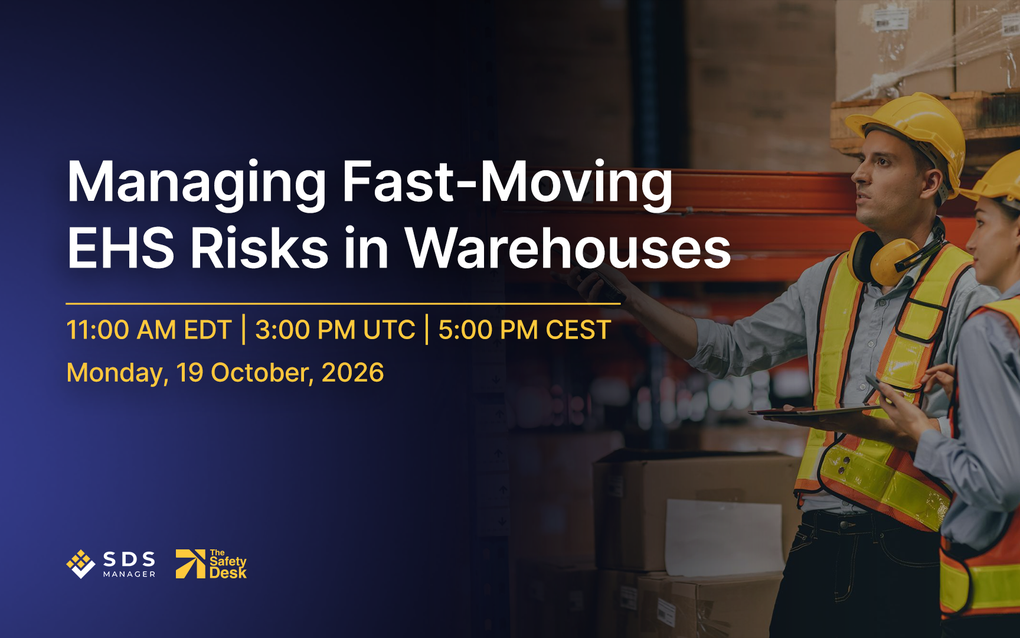
Warehouse risk moves as quickly as the operation itself. Forklifts cross pedestrian routes, loading activity changes by the hour, temporary workers enter unfamiliar environments, and hazards can appear between one shift and the next.
For EHS and operations teams, the challenge is not only identifying these risks, but making sure everyone on the floor, including permanent employees, contractors, agency workers, and seasonal staff, is properly prepared, supervised, and protected.
This session looks at how warehouse teams can create better visibility around changing hazards, contractor and temporary worker safety, incident responsibility, and follow-up before risks become repeat problems.
Why Attend:
Understand where warehouse risks are most likely to emerge during everyday operations
Learn how to manage contractor and temporary worker safety more consistently
See how inspections, near misses, and frontline reporting can help catch risks earlier
Get practical guidance on responsibility when incidents involve contractors or multiple teams
See how connected EHS workflows can help track hazards, investigations, and corrective actions from identification to closure
Event Format:
Live Webinar
Expert Panel Discussion
Interactive Audience Q&A
Recorded Session (available after the event)
What you'll learn
- ✓ Where Warehouse Risk Builds Up - How forklifts, loading docks, storage areas, manual handling, equipment movement, and changing workloads create fast-moving risks across warehouse operations.
- ✓ Managing Contractor & Temporary Worker Safety - Making sure contractors, agency workers, seasonal staff, and other temporary workers are properly inducted, trained, supervised, and assigned work they are prepared to perform.
- ✓ Finding Hazards Before Someone Gets Hurt - Using inspections, near-miss reporting, equipment checks, and frontline observations to identify changing risks before they become incidents.
- ✓ Knowing Who Owns the Risk - Clarifying responsibilities across EHS, operations, supervisors, contractors, and staffing partners, and making sure hazards, actions, and follow-ups are properly tracked.
- ✓ When an Incident Happens - Managing reporting, communication, investigation, corrective actions, and follow-up when an incident involves contractors, temporary workers, or multiple employers.