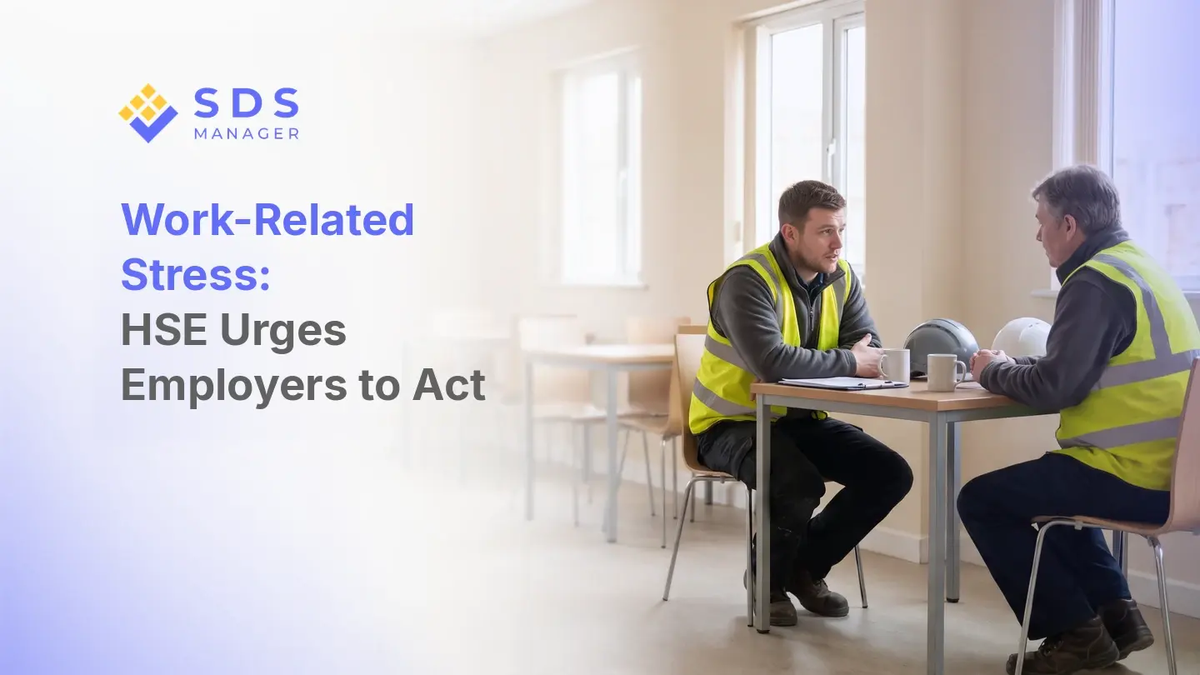
The Health and Safety Executive (HSE) is calling on employers in Great Britain to assess work-related stress as they would any other workplace risk. The call, issued on 31 October 2026, coincides with Stress Awareness Week, which runs from 2 to 6 November 2026. HSE says work-related stress remains one of the leading causes of work-related ill health.
The message is aimed at employers and managers. HSE is directing them to its Working Minds campaign and its Management Standards approach.
Stress is a legal health and safety risk
Employers must assess and manage risks to workers' health, and that includes mental health. HSE wants stress treated as a standard part of risk assessment, not as a separate wellbeing project.
Kayleigh Roberts, HSE's Work-Related Stress Policy Lead, said employers should assess the risks of stress, and its effect on mental and physical health, as they would other workplace risks. She described Stress Awareness Week as a chance for employers to review their practices and start conversations with their teams.
The six Management Standards areas
HSE's Management Standards cover six areas of work that can contribute to stress: demands, control, support, relationships, role and change.
The Working Minds 5Rs
Working Minds sets out the 5Rs approach:
- Reach out: start conversations about stress and mental wellbeing.
- Recognise: understand the signs and causes of stress.
- Respond: act on concerns and support workers.
- Reflect: review what works and where to improve.
- Make it routine: build good practice into everyday work.
What to do this week
HSE recommends that employers:
- Review their stress risk assessment, if needed, so it reflects current risks.
- Use HSE's Talking Toolkit to hold structured conversations with workers.
- Discuss the six Management Standards areas with teams.
- Encourage managers to use Working Minds training and resources.
- Plan how to build the 5Rs into everyday practice.
Free resources include the Talking Toolkit, the Stress Indicator Tool, Management Standards guidance and online learning modules.
Why this matters to chemical safety teams
High workload, time pressure and unclear roles can lead to shortcuts in chemical handling, such as skipping PPE or not reading labels and SDSs. Reviewing stress risks alongside COSHH assessments can show which job pressures lead to unsafe chemical handling.
Source: HSE urges employers to take action on work-related stress during Stress Awareness Week, HSE press release, 31 October 2026.

Arysha Alif Khan

Arysha Alif Khan is an EHS and chemical safety specialist with a background in biochemistry, biotechnology, and public health. She works closely with the product and regulatory teams to turn complex chemical regulations, SDS requirements, and workplace safety standards into clear, practical guidance for people.