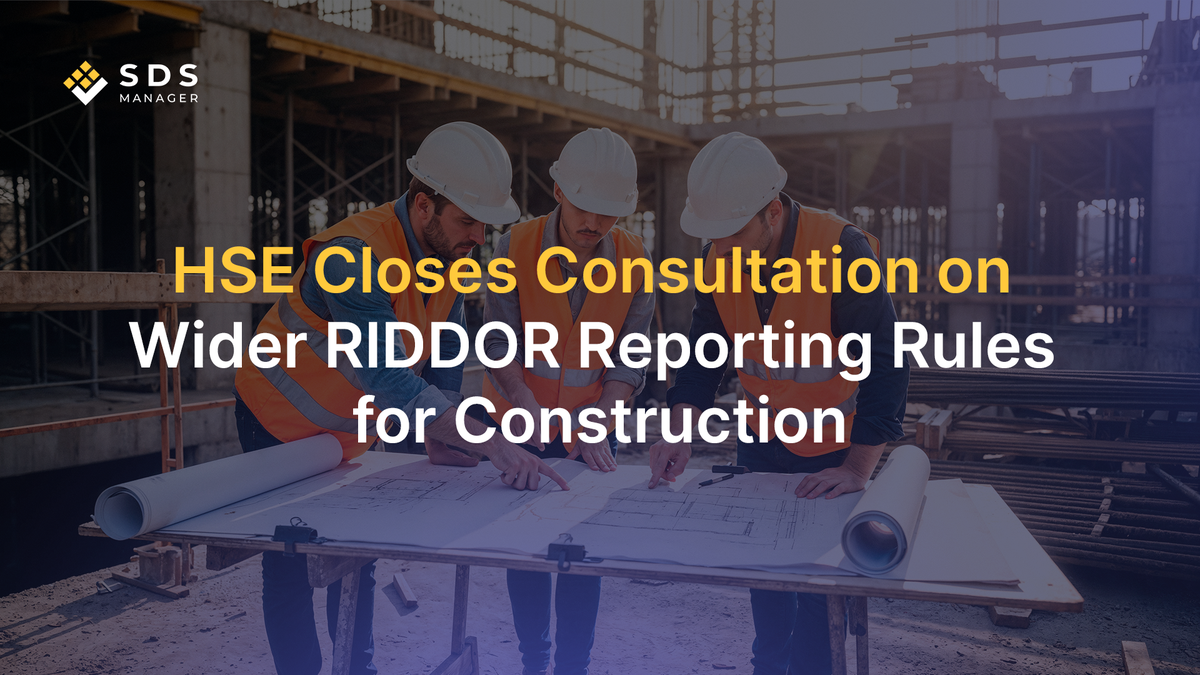
The Health and Safety Executive closed a public consultation on June 30, 2026, proposing to widen several RIDDOR dangerous occurrence categories, with construction sites facing the biggest change. Tunnelling incidents, falling objects beyond lifting operations, and overturning mobile plant would all become reportable under the proposal.
The move follows updated RIDDOR guidance HSE published in April 2026, which clarified how non-worker injuries should be reported and sharpened the criteria for occupational disease.
Under the proposed changes, tunnelling works over 1.2 metres in diameter would become reportable. So would unintentional falling objects from any structure under construction or demolition. Overturning excavators and piling rigs would also qualify, along with structural collapses involving roofs, ceilings, temporary works, or trenches, according to reporting by Construction Enquirer.
HSE has not published a timeline for when a final rule will take effect. Employers running construction or high-risk industrial sites should review their incident classification criteria now, ahead of any confirmed changes.
The reform targets a system already under strain. HSE recorded 124 worker fatalities and 59,219 non-fatal employee injuries under RIDDOR in 2024/25, at an estimated cost of £22.9 billion to the UK economy.
Current RIDDOR reporting rules
Under the existing regulations, the Reporting of Injuries, Diseases and Dangerous Occurrences Regulations 2013, employers must notify HSE using the F2508 form for work-related deaths, specified injuries, over-seven-day incapacitation, non-worker injuries requiring hospital treatment, occupational disease, and dangerous occurrences. Deaths, specified injuries, and dangerous occurrences require immediate notification and a written report within 10 days. Over-seven-day incapacitation cases must be filed within 15 days of the accident date.
Section 37 of the Health and Safety at Work etc. Act 1974 allows HSE to prosecute a director, manager, or similar officer personally when a reportable event results from that person's consent, connivance, or neglect.
Knowing which chemicals in an inventory are genuinely hazardous, and which of those are missing a completed risk assessment, makes the difference between catching a potential dangerous occurrence early and finding out about it only after HSE gets involved. A compliance dashboard that flags chemicals awaiting risk assessment or containing restricted substances turns that from a manual audit into something a safety manager can check in seconds.
References HSE Targets Construction with Tougher Incident Reporting Shake-Up, Construction Enquirer, April 2026 | HSE: Key Figures for Great Britain 2024 to 2025 | HSE: When Do I Need to Report an Incident?

Mehreen Iqbal

Started with a Bachelors in Microbiology, then a Masters in Public Health; Currently a Workplace Safety Expert.