
A Safety Data Sheet (SDS) is a critical document that communicates hazards of chemicals used at work. Having outdated SDSs can place workers at risk and create compliance gaps with WorkSafe regulations.
Timely updates ensure that everyone, from the person storing the chemical to the worker using it, has access to accurate information for safe handling, storage, and emergency response.
Regulatory Requirements at a Glance
| Jurisdiction | Update Deadline | Relevant Rule / Standard |
|---|---|---|
| Health and Safety at Work (Hazardous Substances) Regulations 2017 | SDS must be reviewed and reissued at least every 5 years, or immediately when new significant information becomes available | Regulation 2.3, Schedule 8: Requirements for safety data sheets |
| WorkSafe NZ | Requires suppliers to ensure SDSs reflect current knowledge of chemical risks and are available to downstream users | Hazardous Substances Toolbox and HSW Regulations guidance |
| Employer Responsibilities | SDS must be accessible at the workplace and match the most recent version from the supplier | Part 4, Regulation 2.2: Duties of PCBU handling hazardous substances |
Key Triggers That Demand an Update
Even with the five-year requirement, SDS updates must occur sooner if any of the following apply:
- New Hazard Information
New data on toxicity, physical hazards, or exposure risks require revision. - Reformulated or Rebranded Products
Changes in ingredients, concentrations, or supplier chain that alter hazard profiles. - Regulatory Reclassification
If a substance is reclassified under the GHS, its SDS must reflect the new category. - Worker Safety Incidents
Investigations that uncover gaps in hazard controls may require SDS amendments. - New Control Measures Introduced
Updates to handling procedures, PPE, or emergency protocols should be captured in the SDS.
Suppliers must issue a new SDS promptly, and businesses must make the new version available immediately at all work sites where the substance is used.
Recommended Review Cycles & Best Practices
While regulation sets the maximum interval at five years, proactive reviews are advised:
| Review type | Frequency / trigger | What to do | Recordkeeping tip | Why it matters |
|---|---|---|---|---|
| Quarterly Update Monitoring | Every quarter | Monitor supplier websites and WorkSafe bulletins for reclassification or new control measures; flag impacted SDS. | Keep a simple change log by product/CAS and link sources. | Catches changes early; reduces compliance risk. |
| Annual Checks | Once per year | Scan your SDS library for sheets nearing expiry; request and replace with current supplier versions. | Maintain an SDS register with version/expiry and confirmations. | Keeps documents current and audit-ready. |
| After Any Safety Incidents | Immediately after any spill, exposure, or near-miss | Review the relevant SDS for accuracy and clarity; update SOPs, training, and signage as needed. | Record the review and corrective actions in the incident report. | Improves response and prevents recurrence. |
This layered review approach helps ensure SDSs support safe operations, not just legal minimums.
Building an Effective SDS Update Workflow
Clear procedures help maintain SDS relevance year-round:
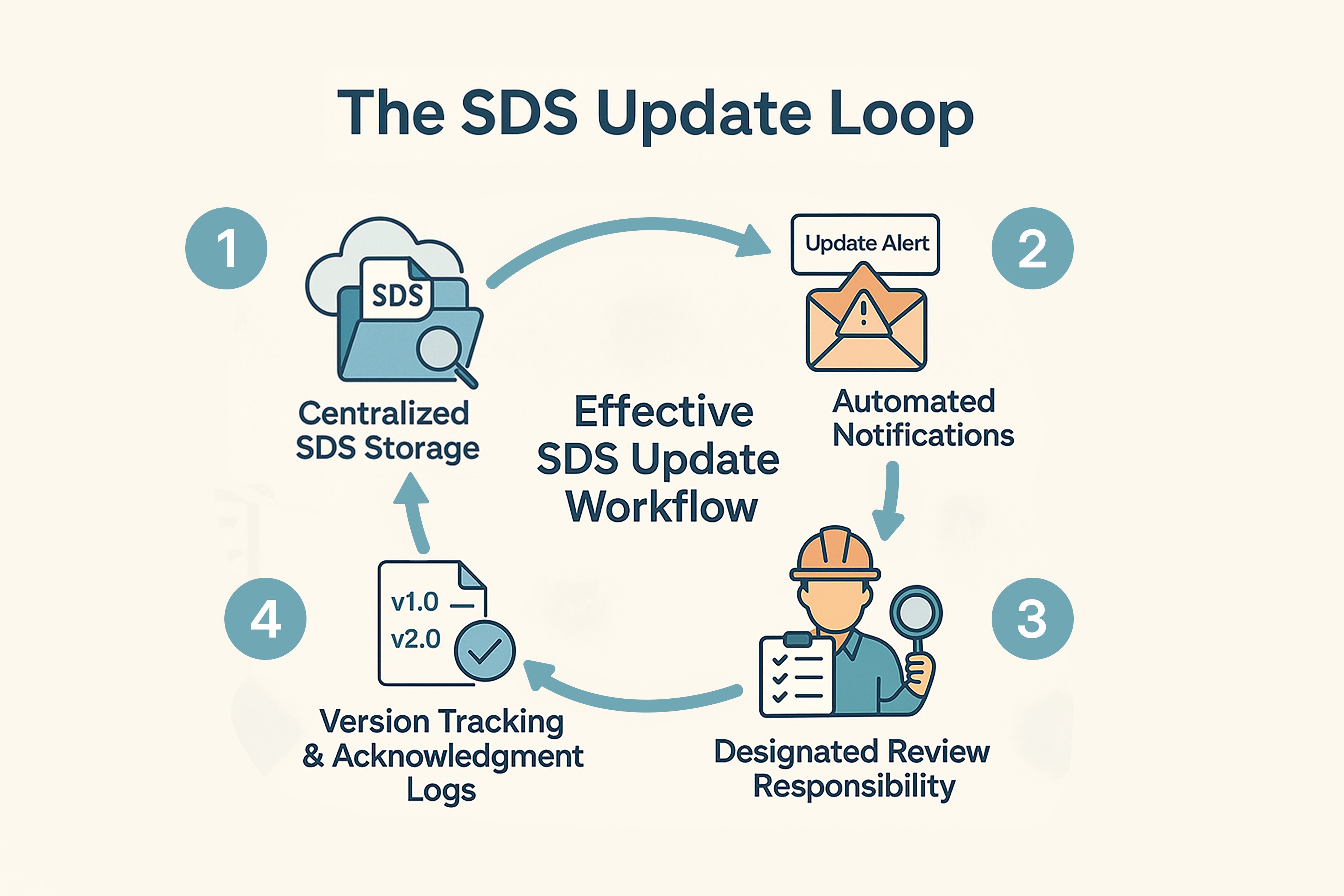
- Keep SDS in a searchable, centralised system accessible at any work area.
- Use safety software or spreadsheet trackers to flag SDS reaching their 5-year limit.
- Assign an H&S representative to coordinate supplier follow-ups and employee communication.
- Record each SDS update, noting the date received, revision number, and who acknowledged it internally.
Staying Ahead of Future Compliance Changes
New Zealand aligns its SDS and labelling practices with the GHS framework, and continues to evolve with updates from international sources.
By subscribing to WorkSafe alerts, supplier bulletins, or industry associations, businesses can monitor when substances are reclassified or when new guidance is issued.
Internally, keeping logs of SDS reviews, staff training acknowledgments, and chemical reclassification history will make compliance smoother and more defensible during inspections.
FAQs
How often must SDS be updated in Australia?
Every five years at minimum, or earlier if significant new hazard information becomes available.
What happens if an SDS is outdated?
Employers may be found non-compliant under WHS laws, especially if the outdated SDS contributes to a workplace incident.
Can I use a digital SDS system?
Yes. Digital formats are acceptable if they are accessible without delay and backed up.
Who is responsible for updating SDS?
Suppliers must issue revised SDSs. Employers must ensure current versions are available to workers.
Is the 5-year rule strict?
Yes, but it's a maximum. SDS must be updated sooner if hazards change, even within the 5-year period.

Zarif Ahmed

An engineer and safety writer by profession, focusing on chemical management, regulatory development, and the patterns that shape workplace practice over time.