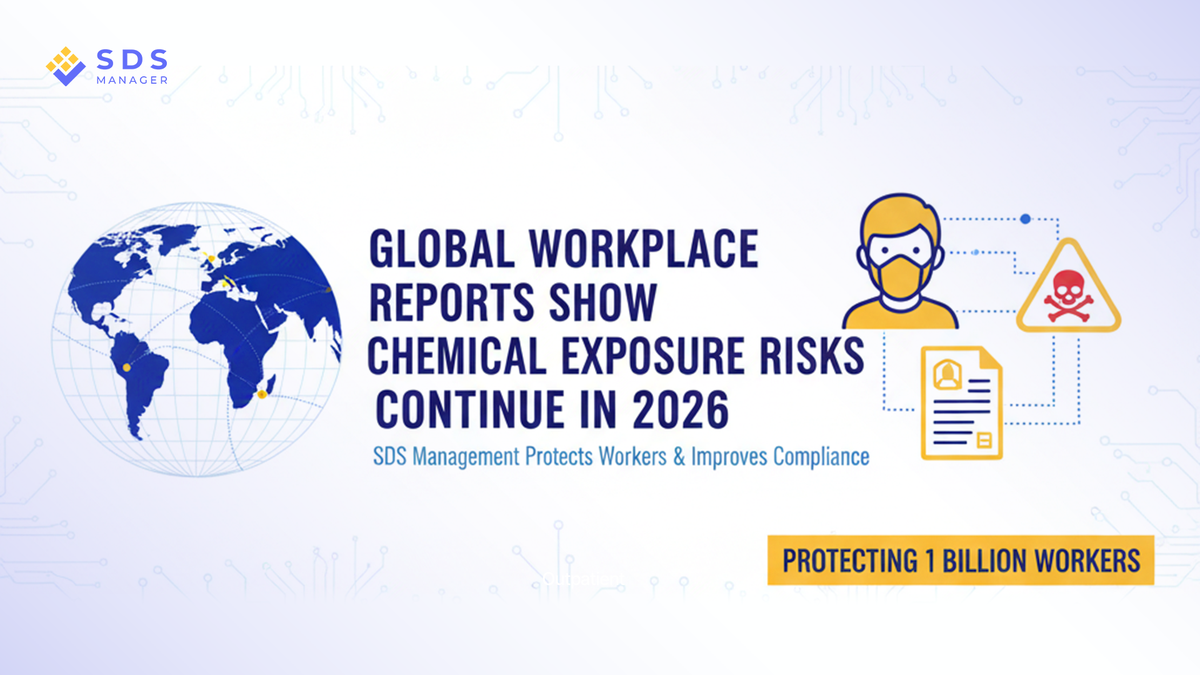
Millions of workers face chemical risks every day. Despite workplace safety improvements, gaps in hazard communication and Safety Data Sheet (SDS) management leave employees exposed.
These exposures can lead to serious long-term health problems, including respiratory illnesses, reproductive harm, and chronic diseases.
Industries like petroleum, electronics, and plastics report some of the highest exposure levels, showing that chemical hazards remain a major occupational threat.
With new regulatory updates and evolving classifications on the horizon, staying informed isn’t just about compliance, it’s about protecting workers.
Chemical Hazards Remain a Significant Threat to Worker Health
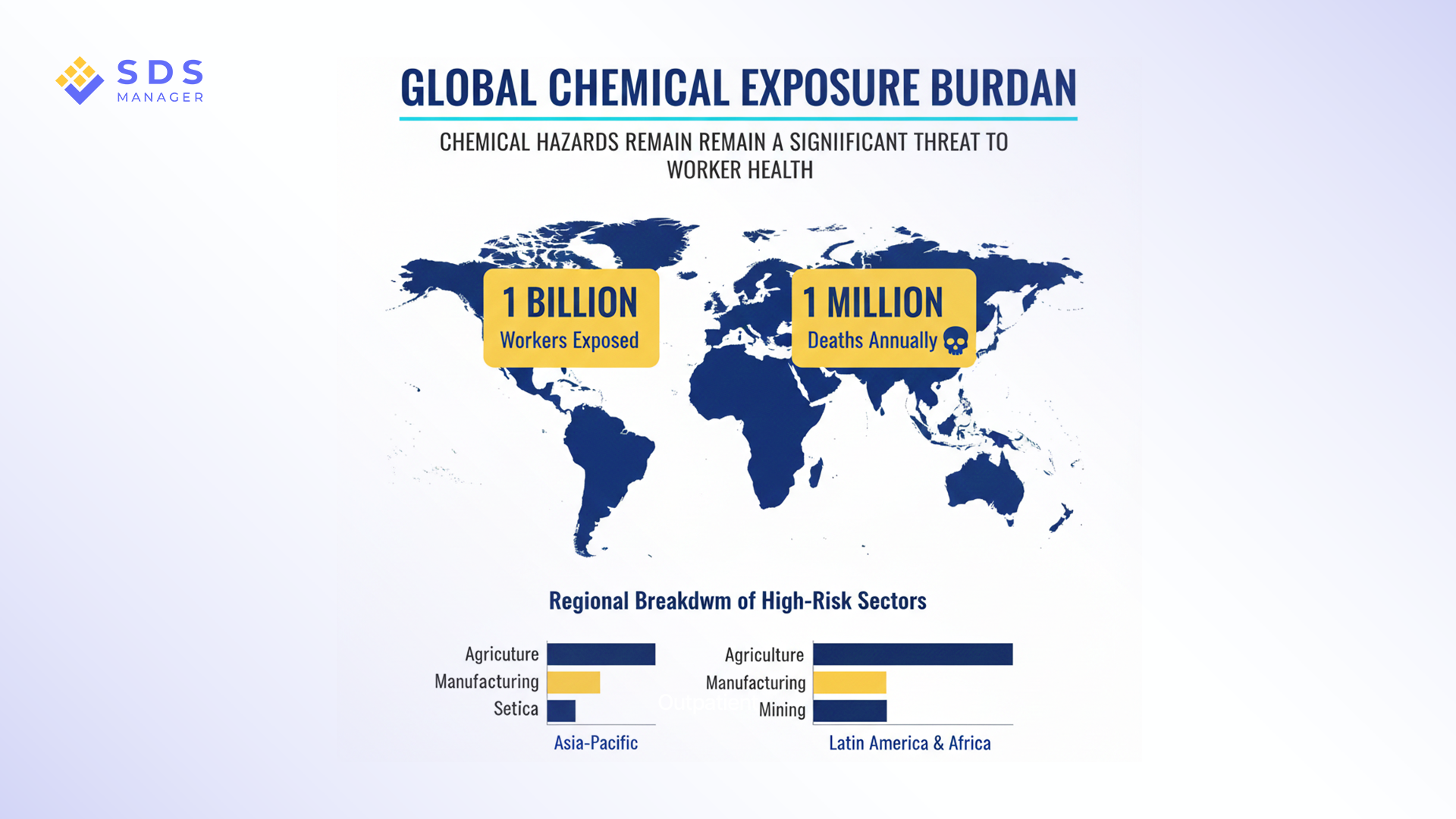
Source: World Health Organization (WHO) Occupational Risk Estimates
Data from global and national authorities shows that chemical exposure continues to harm worker health. The International Labour Organization reports that more than 1 billion workers are exposed to hazardous substances each year. These exposures include vapours, fumes, dust and airborne pollutants.
Around 1 million deaths annually are linked to chemical exposures and related diseases, according to the same body. Many more workers develop chronic illnesses, long term respiratory conditions and permanent disabilities.
In the United States, the Occupational Safety and Health Administration conducts chemical exposure monitoring programs that collect thousands of workplace air and personal samples each year. A significant portion of elevated exposure findings come from sectors such as petroleum, electronics and plastics manufacturing.
While some occupational injury rates have improved over time, chemical hazards remain a major and ongoing occupational health threat across multiple industries.
Millions of Workers Face Chemical Exposure Daily
U.S. workplace safety data show millions of workers face chemical hazards each year. The Centres for Disease Control and Prevention reported over 2,500 inhalation injuries over the years. This caused more than 1,300 outpatient visits and approximately 900 people received hospital treatment. Over 300 deaths occurred due to inhalation exposures.
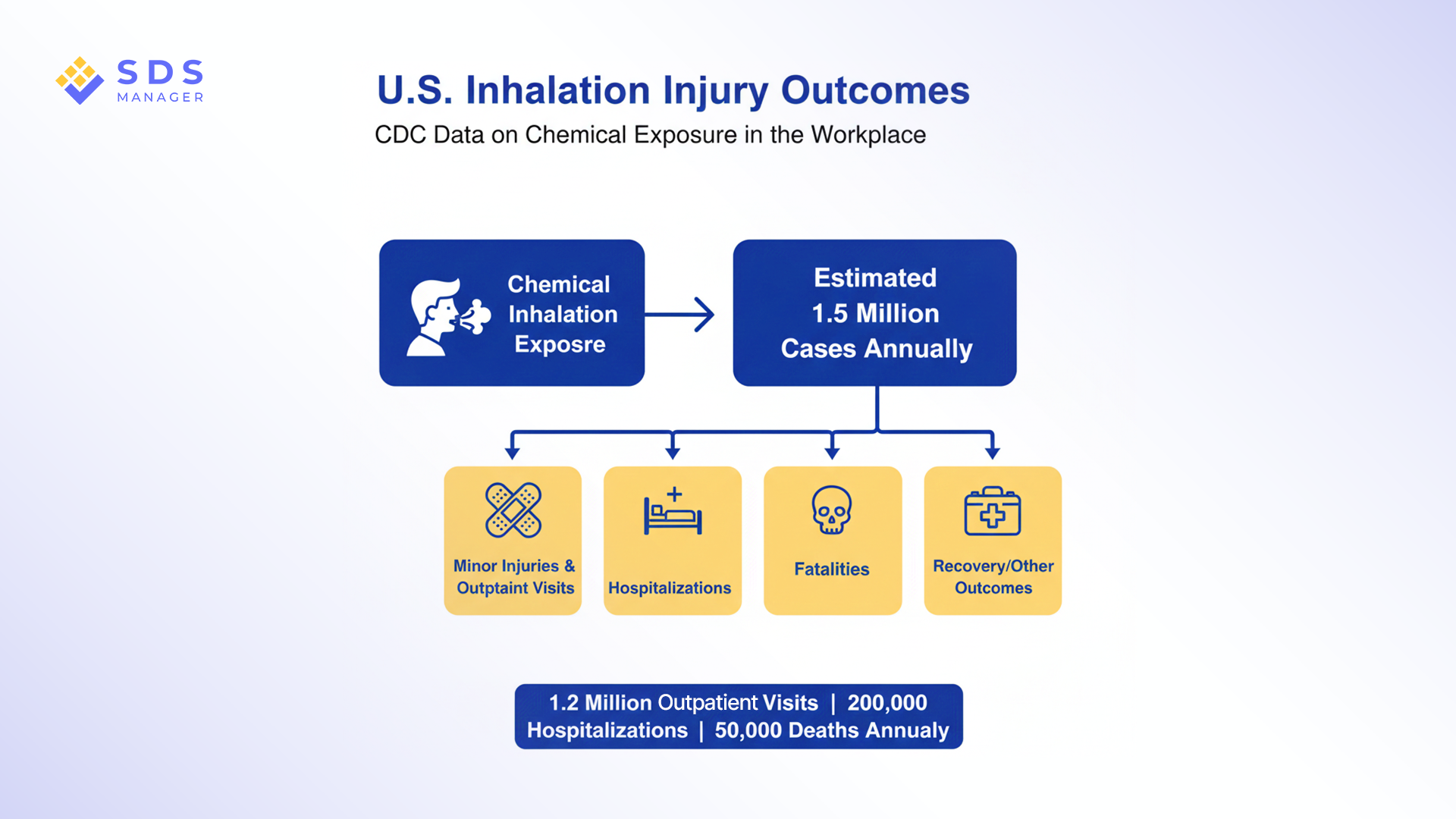
Source: CDC/NIOSH report: Acute Occupational Inhalation Injuries
Most cases involved inorganic gases, acids, bases, and oxidising agents. Researchers found the highest numbers in manufacturing and construction workplaces.
Reports say that chemicals like benzene, formaldehyde, lead, and pesticides are a threat. They endanger hundreds of thousands of workers each year. This exposure can lead to serious long-term issues, including cancer and respiratory diseases.
WHO estimates that millions of work-related deaths occur due to toxic exposures. This is especially true in low- and middle-income countries, where control measures are often missing.
These patterns show a worldwide health crisis of chemical hazards affecting workers in many industries and areas.
SDS Access and Hazard Communication Still Lag Behind Risk
Safety Data Sheets are key for sharing chemical hazards at work and is a must according to OSHA's Hazard Communication Standard. This standard mandates that employers provide information about hazardous chemicals and train employees.
Despite this framework, gaps in SDS management persist. Many facilities still use old binders and incomplete electronic files which does not show the current hazards. As a result, workers and safety professionals often struggle to find current SDS documents.
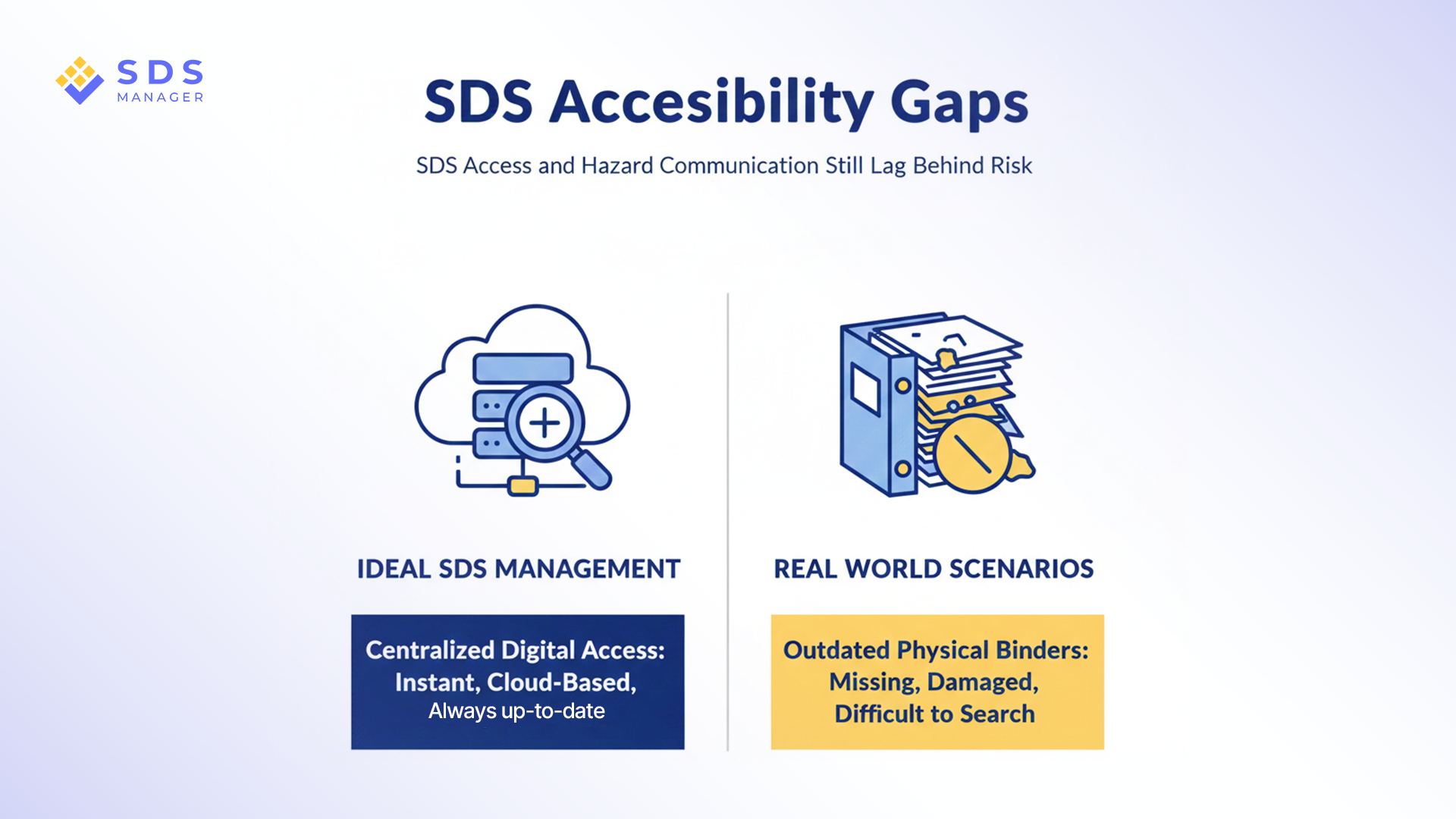
Source: OSHA Hazard Communication Standard Citation Data
These management issues happen where chemicals are always used e.g, labs and construction sites. When workers cannot access protective documents right away, it raises the risk of injury during exposure.
OSHA’s hazard communication data shows frequent violations across workplaces. Many arise from missing or outdated Safety Data Sheets (SDS), labeling errors and gaps in employee training. These numbers underscore the ongoing challenges of keeping hazard information accurate, up to date, and accessible.
Real Work Examples Show the Human and Operational Cost
Chemical exposures in real settings highlight the stakes behind the statistics. Manufacturing and processing facilities have reported injuries from inhaling gases and aerosolscusing further respiratory damage.
Construction workers deal with silica dust and other airborne risks. They also often lack clear documentation and easy access to SDS information.
Agricultural workers can face serious poisoning from pesticides if there's poor hazard communication. This issue makes health and safety worse, especially in places with little oversight.
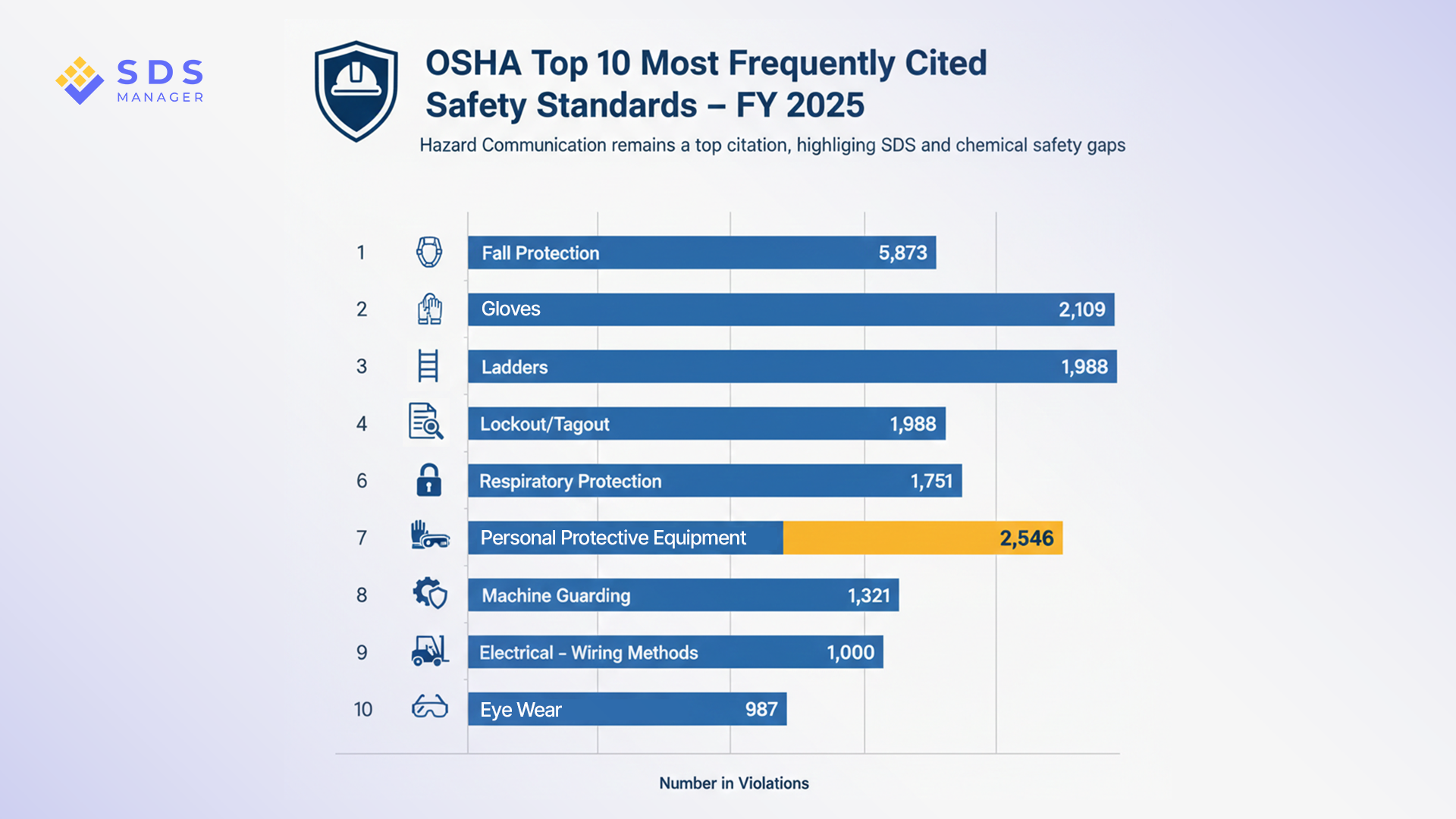
Source: OSHA announces 2025 top 10 most cited standards (NGWA)
Facilities without a systematic process for SDS updates may impose risks on employees. As they might be unaware of proper safe handling procedures and health hazards.
These exposure situations show that incomplete hazard communication harms workers' health and well-being.
Turning Hazard Data Into Protective Action
Workplace safety data for 2026 show that chemical exposure remains a common risk on the job. Handing out hazard information alone isn’t enough. Workers need quick access to documents that clearly explain the hazards and how to protect themselves.
Although no official 2026 trend has been published, long-term data from the World Health Organization show that hazardous chemical related deaths rose 29 percent from 2016 to 2019, highlighting the ongoing increase in exposure risks worldwide. Extending this trend provides an approximate estimate of chemical exposure risks rising by 67% in 2026.
Employers using cloud-based chemical management systems are better able to connect Safety Data Sheets (SDS) to protective actions.
This leads to improved safety outcomes with processes like:
- Tracking SDS revisions for major hazard updates
- Making SDSs easy to find where chemicals are used
- Linking hazard documents with training and exposure controls
Good hazard communication programs help workers identify and understand risks, which is crucial when handling chemicals. They also assist employers in demonstrating compliance and reducing costly inspection citations.

Mehreen Iqbal

Started with a Bachelors in Microbiology, then a Masters in Public Health; Currently a Workplace Safety Expert.