Handling chemicals safely doesn't stop when the container is sealed. Moving them, whether across a warehouse floor or across the country, is often where the real risk begins. A loose cap, a bump in the road, or a moment of distraction can turn a routine task into a serious incident. That's why having a clear plan for chemical transport matters just as much as safe storage.
A Quick Note on the Rules
Dangerous goods transport is regulated at the international level. For road transport, the main standard is ADR 2025, used across dozens of countries and last updated on January 1, 2025. For air, it's the IATA DGR. For sea, the IMDG Code. All three are built on the same foundation: the UN Model Regulations.
This shared foundation is what makes the system consistent worldwide. A UN number on a package means the same thing no matter where the shipment is going. Your national competent authority will tell you exactly which rules apply in your country, but the core steps in this guide apply everywhere.
Step 1: Read the Safety Data Sheet Before You Touch Anything
Before you move any chemical, check its Safety Data Sheet (SDS). Think of it as the instruction manual for that specific substance.
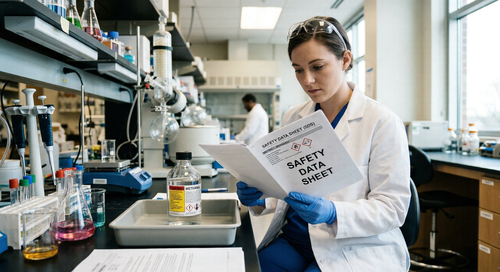
Two sections matter most for transport:
- Section 2 (Hazard Identification): Tells you if the chemical is flammable, corrosive, toxic, or reactive. It also shows the hazard pictograms.
- Section 14 (Transport Information): Gives you the UN number, proper shipping name, hazard class, and packing group - the details that drive every packaging, labeling, and documentation decision.
Check Section 2 first to understand the danger level, then Section 14 for the transport requirements. The whole review takes a few minutes and can prevent a serious incident.
Transporting a smaller quantity automatically lowers the risk. Smaller amounts often qualify for simplified requirements under international rules.
Step 2: Use the Right Packaging
Most transport accidents trace back to the same problems: a bottle cracks, a cap comes loose, or a container tips over with nothing underneath to catch it.
Use UN-Specification Packaging
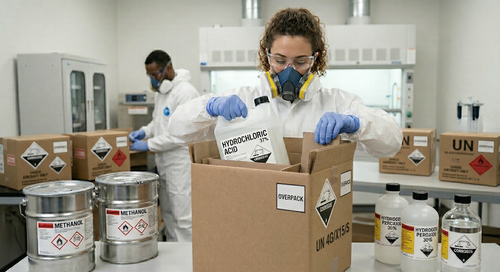
Packaging for dangerous goods must meet UN performance standards. This means the container has been tested and certified for drop resistance, pressure, and stacking. Look for a UN marking stamped on the packaging itself. A code like 1A1 tells you it's a tested steel drum. Never use unmarked packaging for regulated substances.
The packaging must also be chemically compatible with what's inside. The SDS will flag any special material requirements.
Always Double-Pack
Even a well-made container can fail. The outer packaging should be able to hold everything if the inner one breaks. If a glass bottle shatters on a bumpy road, the spill should land in the tray underneath, not on the floor of the vehicle.
Check Before Every Move
Before loading, inspect each container for cracks, chips, loose caps, and signs of corrosion. A container that looked fine last week may not be fine today. Chemical containers degrade between uses.
Step 3: Label Everything Clearly
Picture a leaking, unlabeled box on the back of a truck. Nobody knows what's inside, how dangerous it is, or what to do. That is exactly what you want to avoid and in most places, it's also illegal.
Every package must carry the correct danger label for its hazard class. These are the diamond-shaped symbols you'll recognize from trucks and warehouses. They are standardized internationally under the UN system.
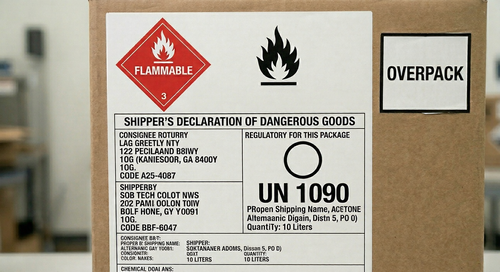
Packages must also show:
- The UN number (for example, UN 1090 for acetone)
- The proper shipping name as listed in the applicable regulations
- The consignor's and consignee's details
Getting these labels right is critical. Errors in labeling can delay shipments, trigger compliance checks, and put people at risk. A Transport Label Generator takes the guesswork out of it; you enter the substance details and it produces accurate, regulation-compliant labels ready to print.
Every shipment must travel with a Dangerous Goods Transport Document listing the substance, quantity, hazard class, and emergency contact information. The driver must also carry Instructions in Writing; sometimes called a Tremcard, explaining what to do in an emergency, in the driver's own language.
Keep a copy of the SDS accessible during transport. If something goes wrong, you or a first responder can quickly see what the hazards are and what steps to take.
Step 4: Choose the Right Vehicle and Route
How you move chemicals matters just as much as how you pack them. The wrong vehicle, or no plan at all, can undo everything else you've done right.
Never use a personal car to move chemicals. Most personal vehicles have no separate cargo area, limited ventilation, and no way to secure containers properly. If there's a leak, vapors can build up around the driver and passengers.
For road transport, use a dedicated vehicle where the load can be strapped down and kept away from the driver. Containers must be secured so they can't shift, tip, or fall during the journey.
Inside a building, the same care applies. Use a cart with raised edges and push at a steady pace. If you wear gloves while handling containers, take one off before touching door handles and lift buttons so you're not leaving chemical residue for the next person.
Step 5: Have a Spill Plan Before You Need One
Even when you follow every rule, accidents can still happen. A solid plan turns a potential disaster into a manageable incident.
When a spill occurs, follow the 5 Cs:
- Control - Stop the source. Shut a valve, plug a leak, or stabilize the container if it is safe to do so.
- Contain - Stop the spill from spreading. Use absorbent materials or physical barriers.
- Clean Up - Remove the spilled material using the appropriate PPE and methods listed in the SDS.
- Communicate - Call emergency services immediately. Depending on the severity, serious transport incidents must also be reported to your national competent authority.
- Critique - After the incident, document what happened and update your procedures so it doesn't happen again.
Every vehicle carrying dangerous goods should have a spill kit within easy reach. It does no good buried under cargo.
Key Takeaway
Transporting chemicals safely doesn't have to be stressful. It comes down to a steady routine: understand the hazards, pack so leaks stay contained, label everything clearly, use the right vehicle, and have a spill plan ready before you need one.
When you rely on these steps instead of luck, you build a safety net that works even when things don't go as planned. Once it becomes a habit in your lab, warehouse, or vehicle - chemical transport becomes predictable, calmer, and much safer for everyone involved.
Frequently Asked Questions
What documents must travel with a chemical shipment?
At minimum, a Dangerous Goods Transport Document listing the substance, UN number, hazard class, and quantity. The driver must also carry Instructions in Writing (Tremcard) and have access to the SDS. Larger or higher-risk shipments have stricter documentation requirements - check the applicable regulations for your transport mode.
Can I use my personal car to move chemicals?
Generally no. Personal vehicles are not built for chemical transport. They lack proper ventilation, cargo separation, and container securing. Use a dedicated service vehicle or approved carrier and check with your safety adviser first.
How do I keep incompatible chemicals apart during transport?
Use a compatibility chart to identify which substances must stay separate. Store them in different containers, trays, or sections of the vehicle. Acids and bases, oxidizers and flammables - these must never share the same space.
What packaging is safest for dangerous goods?
For small amounts, sealed containers are inside sturdy secondary containment. For regulated substances, the packaging must carry a UN specification mark confirming it has been tested. Larger loads require certified drums, intermediate bulk containers (IBCs), or tanks rated for the specific substance.
What training is required for drivers and companies?
Drivers of vehicles carrying dangerous goods above set thresholds must hold an ADR Vocational Training Certificate, valid for five years. Companies regularly handling dangerous goods must appoint a certified Dangerous Goods Safety Adviser (DGSA), also valid for five years. Both qualifications are recognized internationally across ADR contracting countries.

Jawad Monzur

As an EHS specialist, Jawad believes that safety happens in the field, not just on paper. With a background in chemical handling, Jawad focuses on hazard mitigation, incident investigation, and hands-on safety training. He is committed to ensuring every team member returns home safe, every single day.