Work-related accidents and diseases kill nearly 2.93 million people every year, according to the International Labour Organization. The World Risk Poll 2024 found that nearly one in five workers globally reported being harmed at work in the past two years.
The costs go well beyond medical bills and compensation claims. Lost productivity, staff turnover, and reputational damage are hidden costs that are often several times greater than the direct expenses.
Industry safety rules are the legal and operational requirements every business must follow to protect workers from injury, illness, and death. They cover everything from written policies and risk assessments to PPE, machine safety, and emergency planning.
The ten rules below cover what every business needs to get right. They reflect the requirements of EU health and safety law and equivalent frameworks in the Eurasian market and Southeast Asia, with specific regulations listed in the sources at the foot of this page.
Key Takeaways
- A written health and safety policy is the foundation everything else builds on. Without it, safety becomes inconsistent and impossible to enforce.
- Risk assessments need to be repeated whenever equipment, processes, or staffing changes, not just done once and filed away.
- PPE only works if it's the right type for the task, fits correctly, and is worn every time. Partial compliance is the same as no compliance.
- Machine guarding and energy isolation prevent the kind of injuries that happen in seconds and last a lifetime. These rules have no exceptions.
- An emergency plan nobody has practiced is just paperwork. Drill it until people act from habit, not panic.
- Near misses are free warnings. A blame-free reporting culture means problems surface before they become serious injuries.
- Safety audits are how you find out whether the rules on paper match what actually happens on the floor.
The Top 10 Industry Safety Rules
1. Write a Clear Health and Safety Policy

Every business needs a written safety policy. It doesn't have to be long. What it needs is clarity: who is responsible for safety, how risks are managed, and how workers can raise concerns.
Without this document, safety becomes informal and inconsistent. With it, everyone knows the rules and what's expected. It is also the foundation that all other safety work builds on.
2. Do Regular Risk Assessments
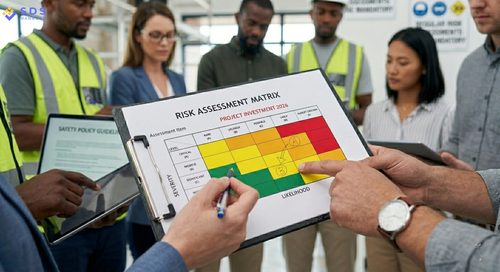
If you're not actively looking for hazards, they build up until they cause an injury. A risk assessment is a structured look at what could go wrong, how likely it is, and what you can do about it.
Assessments should cover physical hazards, chemical hazards, strain risks, and stress-related risks. They should be repeated whenever equipment, processes, or staffing changes.
3. Run an Employee Safety Training Program

A one-off induction is not a training program. Skills fade, habits form, and new workers copy what they see around them, good or bad.
A proper employee safety training program starts at induction and continues with regular refreshers and toolbox talks. It should cover supervisors too, so they coach their teams rather than just react after something goes wrong.
4. Set and Enforce PPE Requirements
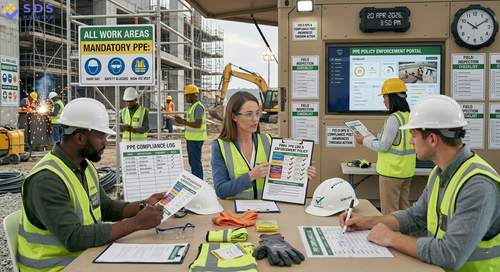
PPE is the last line of defense between a hazard and a person. But it only works if it's the right equipment, worn correctly, every time. Define requirements clearly for each task, provide equipment that fits, and enforce the rules consistently.
| Common PPE Type | When It's Required | Key Maintenance Rule |
|---|---|---|
| Hard hat | Construction, overhead work | Check for cracks before each use |
| Safety glasses / goggles | Chemical handling, grinding | Replace if scratched or damaged |
| High-visibility vest | Traffic areas, outdoor sites | Replace when colour starts to fade |
| Chemical-resistant gloves | Handling harmful substances | Match glove material to the chemical |
| Hearing protection | Loud machinery, above 85dB | Replace disposable types after each use |
| Safety footwear | Heavy materials, wet floors | Check soles for wear and damage |
5. Keep Machines Safe by Isolating Energy Sources
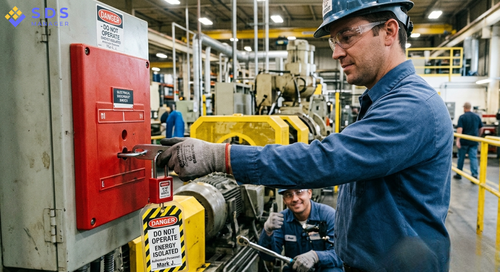
A guard removed "just for a moment" or a machine started while someone is still cleaning it, can cause permanent harm in seconds. Always keep safety guards in place during operation. Always isolate and lock off every energy source before anyone carries out cleaning, repairs, or clearing of jams.
6. Keep Walkways Clear and Workplace Organization High
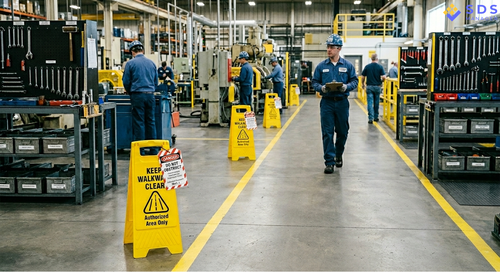
Slips, trips, and falls are among the most common workplace injuries, and most happen because a hazard was left in place too long. Good workplace organization is a daily habit: spills cleared straight away, cables managed, storage kept neat, walkways kept free. When workers see these standards held consistently, they maintain them without being told.
7. Make Hazard Communication and Chemical Labeling Part of Daily Work
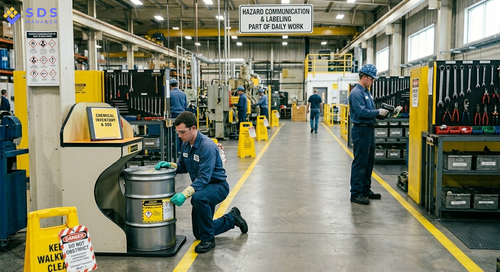
When labels are unclear or missing, workers make guesses, and that is when serious mistakes happen. Every hazardous substance needs an up-to-date Safety Data Sheet (SDS) that staff can access easily, and every container must carry the correct GHS-compliant hazard labels with the right pictograms, signal words, and precautionary statements. Chemical handling rules need to be explained to anyone who could come into contact with those substances.
8. Build and Drill Your Emergency Response Plan

An emergency plan that nobody has practiced is just paperwork. Your plan should cover fire, spills, medical events, and any other site-specific risks, with clear roles, exit routes, meeting points, and emergency contacts. Drill it until people act from habit, not panic.
| Emergency Type | Key Plan Element | Drill Frequency |
|---|---|---|
| Fire | Exit routes, meeting points, fire warden roles | Every 6 months minimum |
| Chemical spill | Containment steps, PPE needed, who to call | At least once a year |
| Medical emergency | First aid kit locations, trained first aiders | Annually |
| Power or equipment failure | Isolation steps, backup systems, who gets notified | As needed for your site |
9. Make Incident Reporting Easy and Blame-Free

A near miss is a free warning. Make reporting simple, respond quickly, and focus on fixing the system rather than punishing the person who reported it. Share what you find across the team so the same problem doesn't happen again.
10. Use Safety Audits to Keep Getting Better

Safety is not a project with an end date. Schedule regular safety audits and inspections, track findings to completion, and review patterns in injuries and near misses over time. EU-OSHA research consistently links structured audit programs to measurable reductions in incident rates.
How to Make Industry Safety Rules Actually Stick
Rules on a poster don't change behavior. People do. The best way to make industry safety rules stick is to lead by example, involve the team in writing procedures, and weave safety into daily routines rather than treating it as an occasional reminder. People are far more likely to follow rules they helped create.
Final Takeaway
Start with whatever is most overdue. If you have no written policy, write one. If your last risk assessment was two years ago, schedule one. If your emergency plan has never been dialed in, fix that before the end of the month.
Safety doesn't improve all at once. It improves one closed gap at a time.
Frequently Asked Questions
What is the first step in setting industry safety rules?
Start with a written health and safety policy, then use risk assessments to identify which rules are most urgent for your specific workplace.
How often should we review our industry safety rules?
At least once a year and after any major change in process, tools, or staffing. Use audit results and incident data to guide updates.
Do small businesses really need formal industry safety rules?
Yes. Even a small team faces real hazards, and clear rules are often required by law. The size of the business doesn't reduce the size of the risk.
How do we get employees to actually follow safety rules?
Involve people in writing the procedures, run hands-on training, and recognize safe behavior openly. A workplace where safety feels fair will always outperform one where it feels like policing.
Which safety rules make the biggest difference the fastest?
Better housekeeping, consistent PPE use, machine energy isolation, and a practiced emergency plan typically deliver the quickest wins.
What's the real cost of ignoring industry safety rules?
Direct costs include compensation claims, medical bills, and fines. Hidden costs, including lost output, staff turnover, and reputational damage, are often several times higher.

Arysha Alif Khan

Arysha Alif Khan is an EHS and chemical safety specialist with a background in biochemistry, biotechnology, and public health. She works closely with the product and regulatory teams to turn complex chemical regulations, SDS requirements, and workplace safety standards into clear, practical guidance for people.