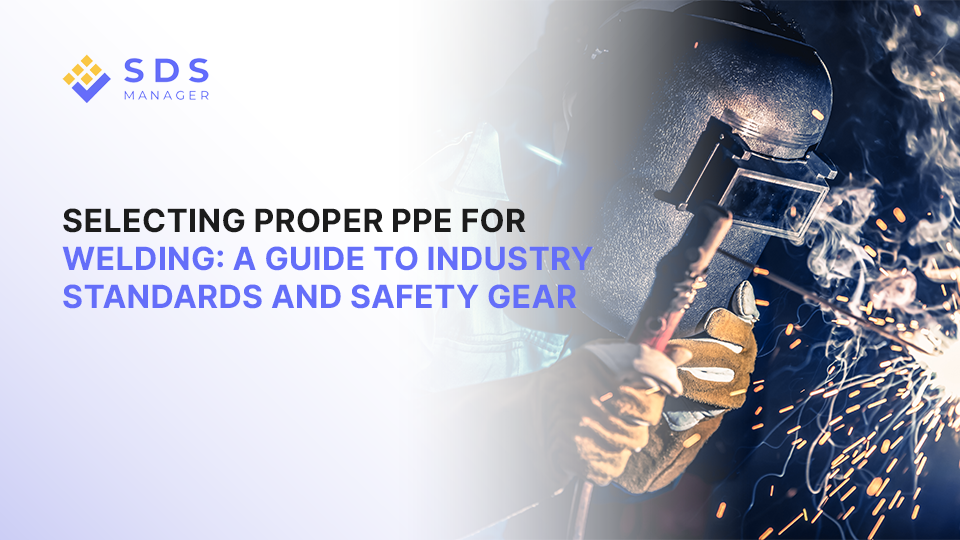
Welding personal protective equipment is a specialized protection system designed to shield you from radiant energy, extreme heat, molten metal, and hazardous fumes. It protects against ultraviolet (UV) and infrared (IR) radiation, thermal burns, and airborne particulate matter.
In professional safety practice, PPE is the final layer in the Hierarchy of Controls. Engineering controls and ventilation reduce exposure first. Protective equipment is what stands between you and irreversible injury when other controls cannot eliminate the hazard.
Understanding this framework separates informed welders from underprepared ones.
Understanding the Specific Risks of Welding Environments
Before selecting gear, you need to understand what you are defending against.
Radiant Energy and Arc Exposure
Welding arcs emit intense UV and IR radiation. UV exposure can cause photokeratitis, commonly known as “arc eye.” Symptoms may not appear immediately, but damage occurs within seconds.
IR radiation penetrates deeper into tissue and contributes to long-term eye damage and skin burns.
Thermal and Spatter Hazards
Molten metal droplets can exceed 6,000°F at the arc source. Even small spatters can ignite clothing or penetrate unprotected skin.
Particulate Matter and Metal Fumes
Welding fumes contain fine metal oxides. Stainless steel welding can generate hexavalent chromium. Carbon steel welding may produce manganese fumes. Both present neurological and respiratory risks.
OSHA regulates exposure under 29 CFR 1910.1026 for hexavalent chromium and enforces air contaminant limits under 29 CFR 1910.1000.
Noise Exposure
Grinding and arc gouging can produce 85–120 dB. Prolonged exposure at these levels increases the risk of permanent hearing loss.
Hazards are layered. Your protection must be layered as well.
Proper PPE for Professional Welding
When choosing PPE, match equipment performance to arc intensity, heat exposure, and fume generation. Each component must work as part of a coordinated protection system, not as an isolated item.
Eye and Face Protection (ANSI Z87.1+ & ISO 16321-2)
A welding helmet protects against UV, IR, and impact hazards.
You typically choose between:
- Passive helmets with fixed shade lenses
- Auto-darkening filters (ADF) that adjust within milliseconds
An optical clarity rating of 1/1/1/1 under EN standards represents the highest level of visual performance. It minimizes distortion and eye strain during long sessions.
Always ensure lenses meet ANSI Z87.1+ impact standards.
Hand Protection: Matching Leather to the Process
Glove selection affects both safety and control.
| Material | Technical Property | Best Application |
|---|---|---|
| Goatskin | High Lanolin content; stays supple after heat cycles. | TIG Welding (High dexterity). |
| Cowhide | High fiber density; superior abrasion and heat resistance. | Stick (SMAW) & MIG. |
| Pigskin | Porous structure; maintains grip and softness when oily/wet. | Industrial/Pipe Fabrication. |
TIG requires precision. Stick requires heat resistance.
Look for Kevlar-stitched seams. Standard nylon thread will melt and cause the glove to fail at the fingertips during high-heat MIG runs.
Body Protection: Flame Resistance and Performance Classes
Welding garments should comply with ISO 11611.
- Class 1: Lower spatter risk, lighter protection
- Class 2: Higher spatter and radiant heat exposure
Clothing must be flame-resistant (FR), not just flame-retardant. FR fabrics self-extinguish and resist ignition.
Avoid synthetic base layers. They can melt into skin during exposure.
Foot and Hearing Protection
Footwear should comply with ASTM F2413-18 for impact and compression resistance. Leather uppers and metatarsal guards provide added protection.
Hearing protection becomes mandatory when exposure exceeds 85 dB, as outlined by OSHA’s hearing conservation standard (29 CFR 1910.95). Fire-resistant earmuffs or plugs are appropriate in high-heat zones.
Process-Specific PPE Requirements
Different welding methods create different exposure profiles.
| Process | Typical Amps | Recommended Glove | Helmet Shade |
|---|---|---|---|
| TIG (GTAW) | 5–200A | Goatskin (Type B) | DIN 8–11 |
| MIG (GMAW) | 100–400A | Cowhide (Type A) | DIN 11–13 |
| Stick (SMAW) | 50–500A | Heavy Cowhide/Elkskin | DIN 10–14 |
TIG generates intense UV but less spatter. MIG and Stick produce heavier molten droplets and higher radiant heat.
Protection must align with the physics of the arc.
The Science of Lens Shades: Radiant Energy Control
Lens shade selection is not arbitrary. It correlates directly with arc intensity.
Shade Selection Matrix
| Welding Current (Amps) | Recommended DIN Shade |
|---|---|
| < 60 A | 7–8 |
| 60–160 A | 10 |
| 160–250 A | 12 |
| 250–500 A | 13–14 |
Higher amperage requires darker lenses.
Odor is not a safety indicator for fumes. Visual brightness is not a reliable gauge for radiation. Only proper lens filtration prevents arc eye.
Respiratory Protection: Controlling Toxic Fume Exposure
Inhalation presents the most serious long-term health risk.
Disposable Respirators
- N95: Filters 95% of airborne particles
- P100: Higher filtration efficiency for metal fumes
Suitable for short-duration tasks in well-ventilated environments.
Powered Air-Purifying Respirators (PAPR)
PAPR systems deliver filtered air under positive pressure. They reduce breathing resistance and increase comfort during extended welding.
Critical for protection against:
- Hexavalent chromium (stainless steel welding)
- Manganese exposure
- Confined-space welding
OSHA’s Hazard Communication Standard (29 CFR 1910.1200) requires proper hazard assessment and PPE selection based on exposure risk.
Ventilation reduces exposure. Respirators address what ventilation cannot eliminate.
Maintenance and Care: Extending the Life of Safety Equipment
A piece of gear that looks intact can still be compromised. Follow this 2026 inspection protocol:
- UV "Chalking": If your helmet shell looks dull or "chalky," the plastic has likely undergone UV degradation. It may crack upon impact and must be replaced.
- Lens Pitting: Small "pits" in the cover lens refract light and cause eye strain. Replace cover plates daily in high-production shops.
- The "Tag-Out" Rule: If PPE is found to be damaged, it must be tagged and rendered unusable (e.g., cutting the fingers off a burnt glove) so it is not accidentally salvaged by another worker.
Conclusion
Effective welding protection is not about buying equipment. It is about selecting gear that matches exposure intensity, material hazards, and process type.
You protect against radiation with the correct shade.
You protect against heat with proper materials.
You protect against fumes with engineered respiratory systems.
PPE is your last barrier. It must never be your weakest link.
When protection is selected intentionally and maintained properly, safety becomes predictable rather than reactive.

Samiha Fairooz Audrika

Samiha is a workplace safety expert and writer at SDS Manager. She translates complex safety standards into clear, practical guidance rooted in real-world challenges and industry insight. Her work helps businesses strengthen compliance, protect workers, and make safer decisions with confidence.