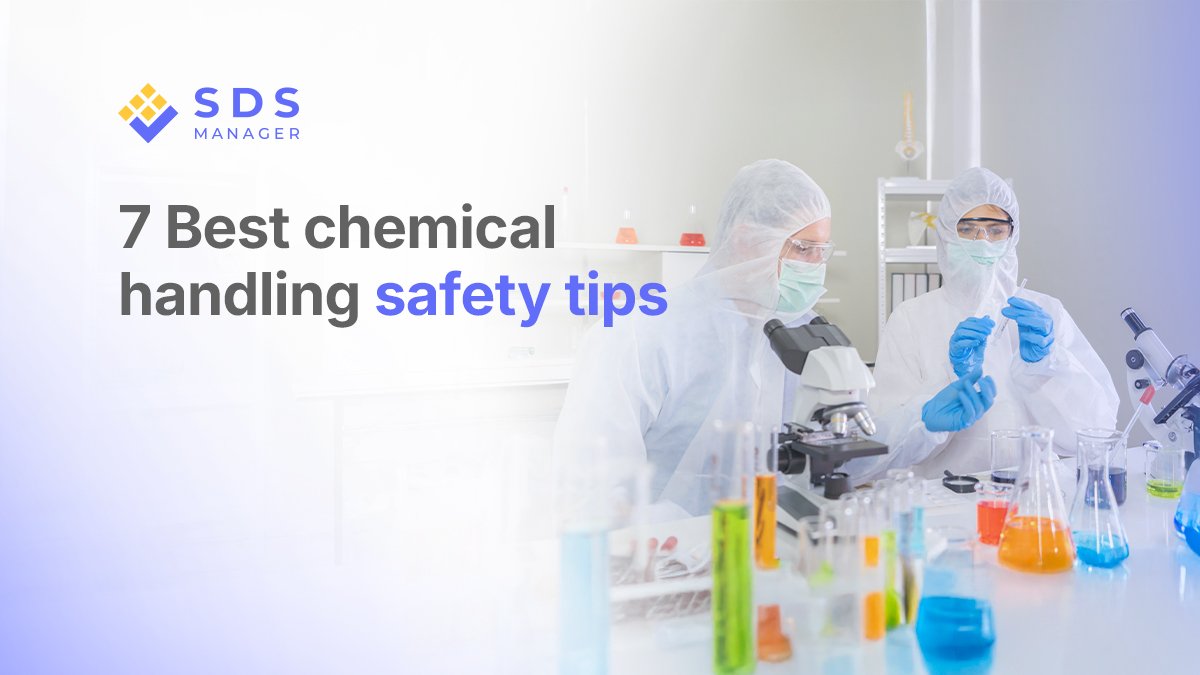
Handling chemicals safely is critical in any workplace where hazardous substances are present. Improper handling can lead to burns, inhalation injuries, environmental damage, or even long-term health issues. But with clear, practical guidance, chemical handling can be safe and manageable.
This guide breaks down the 7 best chemical handling safety tips that are easy to follow and useful whether you are just starting out or refining existing safety practices.
Top 7 Chemical Handling Safety Tips
1. Confirm the Chemical and Task Before You Start
Before touching any chemical, take a moment to verify that you have the correct substance for the task at hand. Check the safety data sheet and container label carefully. The SDS provides essential information about hazards, safe handling, storage requirements, and emergency measures.
Always treat each chemical as potentially hazardous until confirmed otherwise. When you understand the risks, you are better equipped to handle it safely.
2. Put On Appropriate PPE Before Contact
PPE is your first line of defense while handling chemicals. Gloves, goggles, face shields, aprons, and other protective clothing should be worn before you open or pour any chemical.
Ensure the PPE you choose is compatible with the chemical hazards identified in the Safety Data Sheet (SDS). If any piece of equipment is damaged, ill-fitting, or missing, pause your work and replace it. Proper PPE use prevents skin contact, inhalation, and accidental exposure.
3. Work in a Controlled, Ventilated Area
Chemicals can release harmful vapors or create dangerous fumes. Handling them in confined or poorly ventilated spaces increases your risk.
Whenever possible, use fume hoods, local exhaust ventilation, or open work areas. Position containers and yourself to avoid direct inhalation, and keep workspace airflow clear. Controlled, ventilated environments are essential for reducing respiratory hazards during active handling.
4. Use Proper Transfer and Handling Tools
Spills and splashes often occur when chemicals are transferred carelessly. Avoid pouring directly from large containers or using makeshift tools.
Instead, use pumps, funnels, or dispensing systems specifically designed for chemical handling. These tools give you better control over volume and direction, reducing the risk of accidents. Proper tools make handling more precise and safer.
5. Avoid Distractions While Handling Chemicals
Chemical handling demands focus. Multitasking or rushing through procedures increases the chance of spills, incorrect measurements, or direct exposure.
Do not use phones, eat, drink, or engage in unrelated conversations while working with chemicals. Staying fully attentive ensures you notice hazards immediately and maintain control throughout the task.
6. Maintain Clean and Deliberate Movements
Even minor, abrupt movements can lead to splashes, dropped containers, or accidental mixing. While handling chemicals, move slowly and deliberately.
Keep containers steady, handle them with both hands if possible, and avoid overfilling. Wipe off drips and clean spills immediately. Small, controlled actions dramatically reduce the likelihood of exposure and accidents.
7. Stop Immediately if Conditions Change
Unexpected events such as container leaks, sudden fumes, or PPE failure can occur even during routine tasks. If this happens, pause immediately.
Secure the area if possible, notify supervisors or coworkers, and follow your workplace’s emergency procedures. Recognizing when to stop prevents minor issues from becoming major incidents.
How to Ensure Safe Chemical Handling
Safe chemical handling is most effective when your individual actions are supported by well-designed workplace systems.
While following precautions during handling is important, combining them with organizational safeguards ensures consistent safety.
To ensure safe chemical handling in practice, you should:
- Maintain easy access to Safety Data Sheets (SDSs): Ensure that SDSs for all chemicals are readily available.
- Implement a written hazard communication program: Clearly document how chemicals are labeled, how hazards are communicated, and where information is stored.
- Provide regular staff training: Conduct training sessions that cover safe handling procedures, proper use of PPE, spill response, and emergency actions. Refresh training periodically to account for new chemicals or processes.
- Use checklists and standard operating procedures (SOPs): Develop step-by-step guides for common chemical tasks to minimize errors and reinforce best practices.
- Encourage a safety-first culture: Promote open communication about hazards, near misses, and unsafe conditions so employees feel empowered to report issues before they lead to incidents.
When these elements are in place, chemical safety becomes reliable and systematic, rather than dependent solely on memory, experience, or individual judgment. This combination of personal responsibility and organizational support ensures a safer workplace for everyone.
Final Thoughts
Handling chemicals safely requires awareness, preparation, and consistent attention to detail. You should practice careful handling, follow established safety procedures, and stay alert during every chemical task. These actions help prevent accidents, reduce exposure risks, and protect both you and your coworkers.
Access to Safety Data Sheets, a written hazard communication program, and regular staff training further support safe practices. Together, these habits create a workplace where chemical safety is part of daily operations.
By making safety a routine part of your work, you contribute to a more professional, responsible, and secure environment for everyone.

Samiha Fairooz Audrika

Samiha is a workplace safety expert and writer at SDS Manager. She translates complex safety standards into clear, practical guidance rooted in real-world challenges and industry insight. Her work helps businesses strengthen compliance, protect workers, and make safer decisions with confidence.