That bottle of bleach sitting under your kitchen sink? It contains one of the most widely used hazardous chemicals in the world, and most people grab it without thinking twice.
Sodium hypochlorite is the active ingredient in chlorine bleach. It is great at killing bacteria, viruses, and fungi, but it can also cause real harm if you are not careful. This article covers what it is, where it is used, the risks it carries, and how to handle it safely.
What Is Sodium Hypochlorite?
Sodium hypochlorite (NaOCl) is a pale yellow liquid with a sharp, chlorine-like pungent smell. It is a strong oxidizing agent, which means it breaks down the cell walls of bacteria and viruses on contact. That is what makes it such an effective disinfectant.
Most household bleach products contain between 3% and 8% sodium hypochlorite. Industrial-grade versions can go up to 12% to 15%. The higher the concentration, the more dangerous it becomes. The specific concentrations for each product can be found in their Safety Data Sheets (SDS).
It has been used commercially since the early 1800s and is still found in homes, hospitals, food facilities, and water treatment plants all over the world.
What Is Sodium Hypochlorite Used For?
Sodium hypochlorite shows up in more places than most people realize. Here is a quick look at its most common uses.
Household cleaning
It is the main ingredient in most laundry bleaches and surface cleaners. It removes tough stains and kills germs on countertops, tiles, and bathroom surfaces.
Water treatment
Cities and towns use it to disinfect drinking water and wastewater, making sure harmful bacteria are eliminated before water reaches your tap.
Hospitals and food facilities
Hospitals use diluted bleach to clean surfaces and equipment. Food processing plants use it to sanitize machinery and stop bacterial contamination before it starts.
Mold and mildew removal
It is one of the most effective products for killing surface mold, especially in bathrooms and other damp areas of the home.
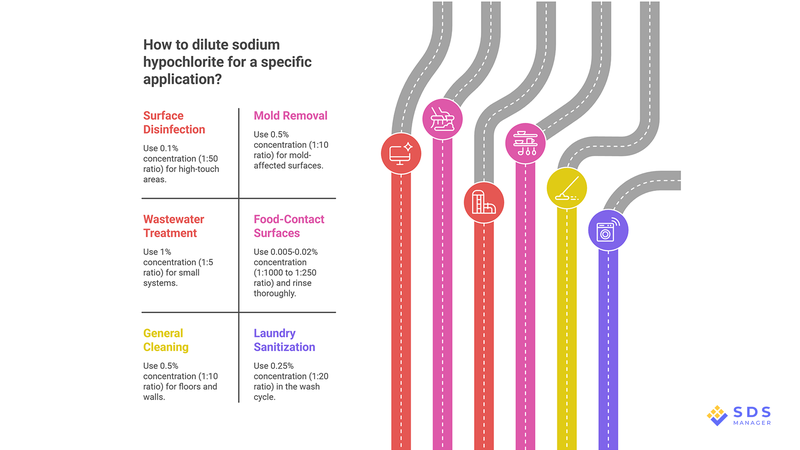
During the COVID-19 pandemic, sodium hypochlorite use shot up worldwide. The WHO recommended a 0.1% solution for disinfecting surfaces and a 0.5% solution for cleaning up bodily fluid spills.
Health Risks of Sodium Hypochlorite and Bleach Toxicity
People often underestimate how hazardous bleach can be. It is classified as a corrosive chemical. This means that it can cause chemical burns, irritation, or severe damage upon contact.
Bleach toxicity may also occur from breathing in its vapors or swallowing it, causing stomach pains and breathing problems. Even the household concentrations found in your cleaning cupboard can cause harm.
Skin and eye contact
This is the most common way people get hurt. Direct contact can cause redness, irritation, and in worse cases, chemical burns or eye damage. A 2022 study in PMC found that most sodium hypochlorite injury cases involved accidental skin or eye exposure, with dental procedures being a common clinical setting where injuries occur.
Breathing in fumes
This can irritate your throat and airways, trigger asthma symptoms, and at higher concentrations, cause serious lung damage, especially in a room with no airflow.
Swallowing
Swallowing bleach is dangerous. Even a small amount can cause burns to the mouth, throat, and stomach, along with nausea and vomiting. In serious cases, it can damage the esophagus.
Mixing it with other chemicals
This is where things can go really wrong. Combining it with ammonia-based cleaners produces toxic chloramine gas. Mixing it with acids like vinegar or certain bathroom cleaners releases chlorine gas, which can cause breathing problems even at low levels.
Important: Never mix bleach with ammonia, vinegar, hydrogen peroxide, or rubbing alcohol. The reaction can happen fast and the results can be serious.
Safety Precautions When Handling Bleach
A little preparation goes a long way when working with sodium hypochlorite. Follow these steps every time.
Wear the right protective gear
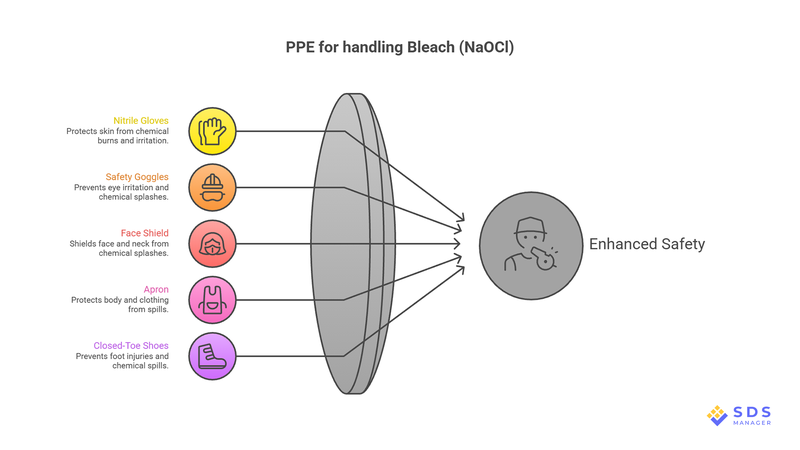
Use nitrile or neoprene gloves and safety goggles at a minimum. If you are working with higher concentrations, add a full face shield and a chemical-resistant apron or jacket.
Make sure the space has good airflow
Open windows, run an exhaust fan, or step outside if possible. Bleach fumes build up fast in closed rooms, even at low concentrations.
Dilute it properly
For general surface cleaning, the CDC and WHO recommend mixing 1 part bleach with 9 parts water. Always pour bleach into the water, not the other way around. Pouring water into bleach can cause splashing.
Store it correctly
Keep bleach in its original container with the lid tightly closed. Store it somewhere cool and away from sunlight, heat, and other cleaning products. Keep it out of reach of children and pets.
Label your mixed solutions
Diluted bleach loses its strength quickly, especially in heat or sunlight. Write the date on any container you mix, and prepare a fresh batch every 24 hours if you need it for cleaning or disinfection.
Know your first aid steps
If bleach gets on your skin or in your eyes, rinse with running water for at least 20 minutes. If someone swallows it, do NOT make them vomit. Rinse their mouth with water and call Poison Control right away.
Final Thoughts
Bleach is one of the most useful cleaning products out there, but it is not something to take lightly. The risks are real, and most bleach-related injuries happen because people were not prepared or simply did not know what they were dealing with.
The steps to stay safe are simple: protect your skin and eyes, keep the space well-ventilated, dilute correctly, and never mix bleach with other products. Those four things alone will keep most people out of trouble.
If you use sodium hypochlorite regularly at work, make sure your team has a copy of the product's Safety Data Sheet (SDS) and knows what to do in an emergency. A bit of preparation upfront can prevent a lot of pain later.
Frequently Asked Questions
Is sodium hypochlorite the same as bleach?
Sodium hypochlorite is the main ingredient that gives bleach its cleaning and disinfecting power. Household bleach products contain between 3% and 8% sodium hypochlorite mixed with water.
What are the symptoms of bleach toxicity from inhalation?
Common symptoms include coughing, throat irritation, watery eyes, and shortness of breath. Severe or prolonged exposure can lead to chest pain and lung damage.
Can you mix bleach with hydrogen peroxide?
No, you should not. Combining the two creates a highly reactive mixture that can release oxygen gas rapidly, which raises the risk of splashing, irritation, and in some cases, an explosion.
How long does a diluted bleach solution stay effective?
Not very long. Diluted bleach breaks down quickly when exposed to light and heat. For the best results, make a fresh batch daily or at least every 24 hours.
What should I do if I accidentally inhale bleach fumes?
Get to fresh air right away. If you are still coughing, feeling tightness in your chest, or having trouble breathing after a few minutes, call Poison Control or go to urgent care.

Zarif Ahmed

An engineer and safety writer by profession, focusing on chemical management, regulatory development, and the patterns that shape workplace practice over time.