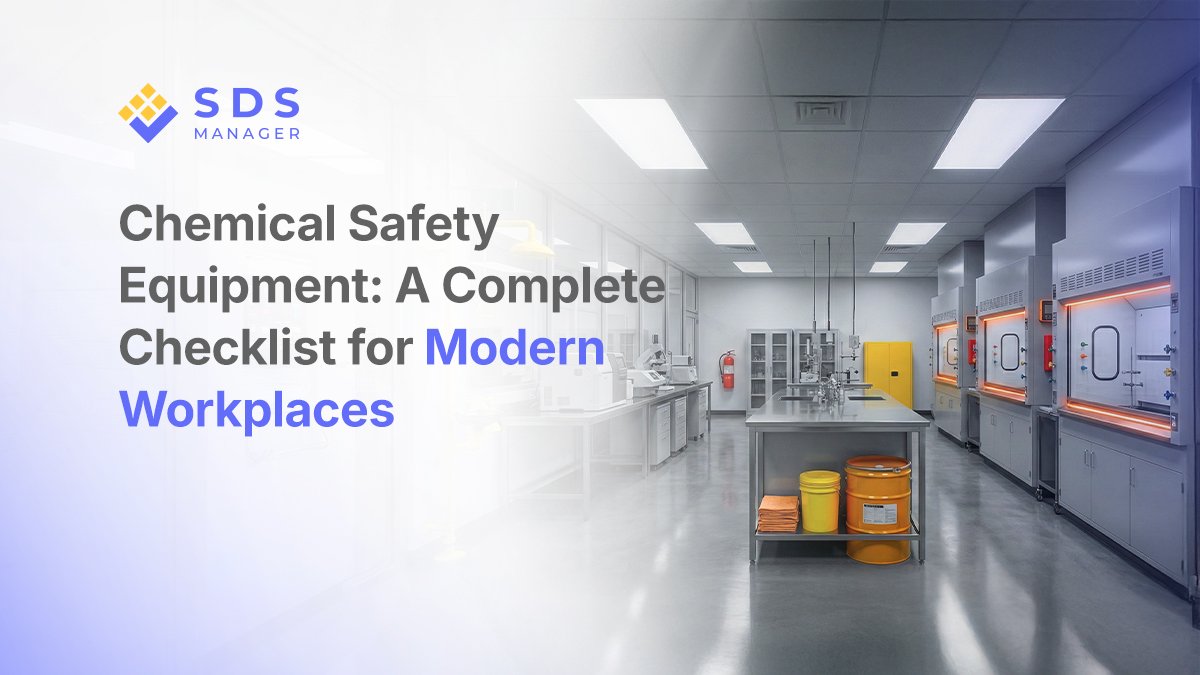
Work-related diseases from chemical exposure claim an estimated 750 to 900 lives annually in New Zealand. The right safety equipment can prevent most of these tragedies.
Chemical safety equipment protects workers from harmful substances through multiple layers of defense.
This includes personal gear like gloves and goggles, emergency systems like eyewash stations, and built-in controls like ventilation.
This guide shows you what equipment you need and how to use it effectively.
What Counts as Chemical Safety Equipment?
Chemical safety equipment includes any tool or gear that protects workers from dangerous substances.
This ranges from personal items like gloves and goggles to systems like ventilation and emergency showers.
Good protection works in layers. If one safeguard fails, others step in to reduce harm. Safety Data Sheets list what safety equipment works best against which chemicals.
Below, we list the types of chemical safety equipment and what they include.
Personal Protective Equipment for Chemical Safety
Breathing Protection
Respirators defend against chemical fumes and airborne particles. P2 respirators, compliant with AS/NZS 1716, filter at least 94% of airborne dangers, while P3 models block 99.95% including toxic dust and oil-based particles.
Half-mask types work for moderate exposure. High-risk situations need self-contained breathing gear (SCBA).
Ensure proper fit because loose respirators provide little protection.
Eye and Face Protection
Chemical splash goggles meeting AS/NZS 1337 standards are necessary when working with corrosive materials.
These goggles seal around your eyes and stop splashes from any direction.
Face shields add protection for explosion risk or large splash hazards.
Always wear them over safety glasses or goggles, never alone.
Gloves for Your Hands
Different chemicals need different gloves. Nitrile resists acids, oils, and petroleum products. Neoprene handles alcohols and phenols.
PVC works for strong acids and bases.
Check each chemical’s safety data sheet (SDS) for the right glove material. Inspect gloves before use and replace them regularly.
Protecting Your Body
Chemical-resistant coveralls and lab coats shield skin and clothes from splashes.
Tyvek suits protect against dry particles, while PVC or neoprene suits protect against liquid chemicals.
At minimum, wear long pants and closed-toe shoes with covered heels. These prevent injuries from unexpected spills.
Emergency Equipment for Chemical Safety
Eyewash Stations
Health and Safety at Work (Hazardous Substances) Regulations require eyewash stations anywhere eyes could contact harmful materials.
They must run for 15 minutes, delivering at least 1.5 litres per minute of lukewarm water (15-38°C).
Place them within 10 seconds (approx. 15-17 metres) of chemical hazards with clear, unobstructed paths.
Test weekly to flush old water and verify operation.
Safety Showers
Emergency showers deliver a quick cleanup for chemical exposure on larger body areas.
They must provide 75.7 litres per minute for 15 minutes to meet AS 4775 standards.
Place showers within 10 seconds of chemical hazards. They should activate in under one second and stay hands-free. Test weekly.
Spill Cleanup Kits
Every chemical workspace needs accessible spill kits with absorbent materials, neutralizers, protective gear, and disposal bags.
Stock based on your specific chemicals.
Place kits in multiple locations, especially near transfer areas. Train everyone on their location and use it before emergencies happen.
Using Engineering Controls to Stop Hazards at Source
Chemical Fume Hoods
Fume hoods protect against chemical vapors and gases by pulling contaminated air away from your breathing zone.
Work at least 15 cm (6 inches) back from the opening for best protection.
Keep the front panel at the proper height and avoid cluttering the hood. Get annual testing to confirm correct operation.
Air Ventilation Systems
Proper ventilation dilutes chemical vapors to safe levels and removes them from your workspace.
General ventilation works for less toxic materials, while dangerous substances need targeted local exhaust ventilation.
Ensure your system matches the chemicals you use. Some require special filters or scrubbers before releasing air outside.
Storage Cabinets for Chemicals
Proper storage prevents accidental exposure and dangerous reactions. Flammable liquids over certain thresholds (e.g., small quantities in workshops) need approved safety containers.
Corrosive materials kept in significant quantities require special storage cabinets compliant with HSWA regulations.
Keep incompatible chemicals separate. Never store acids with bases or oxidizers near flammables. Label everything clearly and maintain updated inventories.
Final Thoughts
Proper chemical safety equipment saves lives when correctly chosen, maintained, and used.
Start with a comprehensive risk assessment to determine your workplace needs.
Build layered protection combining personal gear, emergency equipment, and engineering controls. Equipment is just one component of complete safety programmes.
Combine it with thorough training, regular maintenance, and a safety-first culture. Ready to upgrade your chemical safety programme?
Assess your workplace using this checklist. Compare current equipment to these standards, identify gaps, and create an action plan.
Your team's safety is worth the investment.
Frequently Asked Questions
What is the 10-second rule for chemical safety equipment?
Emergency eyewash stations and safety showers must be within approximately 15-17 metres (10 seconds of walking) from any chemical hazard. Quick access in the first seconds after exposure can prevent permanent damage.
How often should eyewash stations be tested?
Test weekly by running them for 1-2 minutes to flush old water and confirm proper operation. Do full inspections yearly for flow rates, temperature, and AS 4775 compliance.
What type of gloves protect against chemical exposure?
Nitrile resists acids and petroleum. Neoprene handles alcohols and phenols. PVC works for strong acids and bases. Always check the safety data sheet (SDS) for compatibility.
Do all workplaces need chemical safety equipment?
No. HSWA regulations require eyewash stations and showers only where harmful corrosive materials could contact the eyes or body. Do a risk assessment to determine your specific needs.
What's the difference between PPE and engineering controls?
Engineering controls (fume hoods, ventilation) remove hazards from the environment. PPE (gloves, goggles) creates a barrier between the worker and the hazard. Engineering controls are preferred because they protect everyone automatically.

Zarif Ahmed

An engineer and safety writer by profession, focusing on chemical management, regulatory development, and the patterns that shape workplace practice over time.