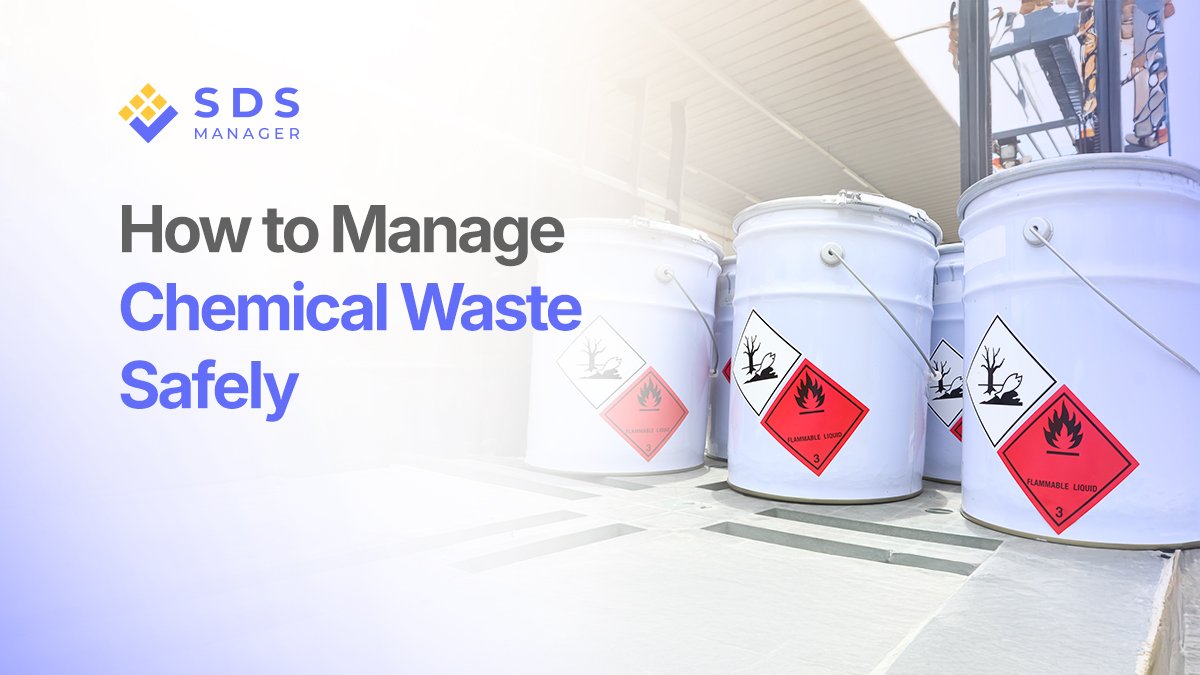
Chemical waste doesn't announce itself. It builds up quietly: drums tucked in corners, bottles lined up on shelves, containers that nobody's quite sure what to do with. Before long, what started as a minor storage issue turns into a serious compliance problem.
And those compliance problems carry real weight. The rules around handling and disposing of chemicals exist for a reason. Ignore them, and the consequences range from heavy fines and shutdowns to serious harm to your workforce and the environment around your facility.
But it doesn't have to get to that point. Managing chemical waste properly isn't as complicated as it sounds. It comes down to four core steps, done consistently and done right. In this article, we talk about how to stay on top of it before it gets to that point.
The Regulations You Need to Know
Regulations sit at the centre of chemical waste compliance:
| Regulation | What It Covers | Who It Applies To |
|---|---|---|
| REACH (EC) No 1907/2006 | Chemical registration, evaluation, and control | Manufacturers, importers, and downstream users |
| CLP (EC) No 1272/2008 | Classification, labelling, and packaging | Anyone handling or supplying chemicals |
| Waste Framework Directive 2008/98/EC | Hazardous waste handling and disposal | All businesses generating chemical waste |
| Seveso III Directive | High-hazard facility safety and reporting | Facilities storing large quantities of hazardous substances |
If your facility stores large quantities of hazardous substances, the Seveso III Directive also applies, requiring additional safety measures and reporting obligations.
Step-by-Step Breakdown of How to Manage Chemical Waste Safely
Step 1: Identify and Classify Every Waste Stream
Before anything else, you need to know exactly what you're dealing with.
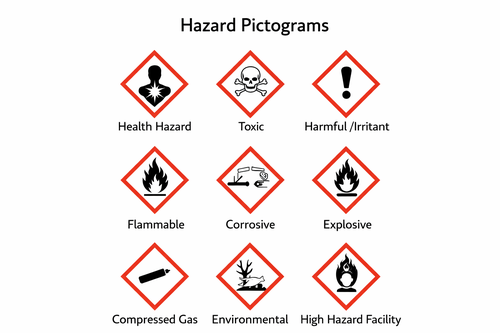
Every container must be labelled at the point of collection with the chemical name, hazard class, GHS pictograms, and date as required under the CLP Regulation. Writing "misc chemicals" on a drum is not acceptable.
Each waste stream must also be assigned a code from the European Waste Catalogue (EWC). These six-digit codes are required for documentation, transport, and disposal. When classification isn't clear, the Safety Data Sheet (SDS) is your reference point. Under REACH Annex II, Sections 2, 7, and 13 cover hazard identification, handling, and disposal.
Never mix incompatible waste streams. Acids and bases, oxidisers and flammables the reactions can be violent, toxic, or both.
Step 2: Use the Right Containers
The container matters just as much as the label on it. Using the wrong one doesn't just risk a spill, it can trigger a chemical reaction, compromise the integrity of the waste stream, or create a serious safety hazard for anyone nearby.
Different waste types call for different container materials.
| Container Type | Best Used For | Key Requirement |
|---|---|---|
| Glass | Most corrosive substances | Not suitable for hydrofluoric acid |
| Polyethylene / PTFE | Hydrofluoric acid and aggressive corrosives | Must be chemical grade, not standard plastic |
| High-Density Polyethylene (HDPE) | Aqueous waste and solvent-based chemicals | Check chemical compatibility before use |
| Stainless Steel | Flammable and reactive waste | Robust and resistant to degradation over time |
| Approved Flammable Containers | Flammable liquids | Must be rated for flammables, fitted with flame arrestors where required |
| Fibre Drums | Dry or solid chemical waste | Must be lined appropriately, not suitable for liquids |
Regardless of the container type, every one of them must be in good condition: no cracks, no rust, no compromised seals. Once a container has held a specific chemical, do not reuse it for a different one.
Cross-contamination between waste streams is unpredictable and dangerous. Keep all containers clearly marked with the words "Hazardous Waste", sealed unless you're actively adding material, and stored upright on stable surfaces.
Step 3: Store Chemical Waste Properly
Poor storage is where most chemical waste incidents begin. A container stored in the wrong place, at the wrong temperature, or near the wrong materials is an accident waiting to happen.
| Waste Type | Required Storage | Key Requirement |
|---|---|---|
| Flammable waste | Flame-proof, ventilated cabinet | Away from ignition sources |
| Corrosive waste | Secondary containment tray | Must hold 110% of largest container |
| Reactive materials | Isolated dedicated area | No contact with incompatible substances |
| General hazardous waste | Cool, ventilated room | Away from sunlight and heat |
Spill response equipment, including kits, absorbent materials, and emergency eyewash stations, must be accessible from every storage area. Under the Industrial Emissions Directive (IED), facilities handling hazardous substances must also have environmental protection measures in place to prevent soil and groundwater contamination.
Step 4: Dispose of Chemical Waste Correctly
This is where the most serious regulatory breaches happen, and where most businesses cut corners without realising the consequences.
Chemical waste cannot be poured down the drain, buried, or placed in general waste bins, even in small quantities. The Waste Framework Directive makes this clear, and national environmental agencies enforce it across all member states.
Disposal must go through a licensed waste management contractor, one that holds the appropriate permits from the relevant national authority. A legitimate contractor will provide a consignment note or waste transfer document for every collection. Keep these on file. They're your legal proof that waste was handled correctly, and they will be requested during audits and inspections.
If waste needs to cross borders for treatment, it falls under the EU Waste Shipment Regulation, which requires prior notification and consent from all relevant authorities. Your licensed contractor should manage this process, but you need to know it exists.
Best Practices That Make a Real Difference
- Train Your Team Properly
Training isn't a one-hour session you run once a year. Anyone handling or labelling chemical waste needs to understand how to read an SDS under REACH Annex II, which PPE is required for which task, and what to do in the first minutes of a spill or exposure. Habits drift over time, especially when things get busy, so regular refreshers keep standards from slipping.
2. Use ECHA's Digital Tools
The European Chemicals Agency (ECHA) provides both of these tools free of charge, and they take a lot of the guesswork out of compliance. The C&L Inventory is useful when you're unsure where a substance falls under CLP. The SCIP database walks you through the reporting process step by step. Missing that submission is one of the most common compliance gaps businesses have, and it's one of the easier ones to close.
- The SCIP Database is a mandatory EU reporting system where businesses submit information about hazardous substances found in products they sell or distribute.
- The C&L Inventory is a publicly accessible database managed by ECHA that holds classification and labelling information for thousands of chemical substances.
3. Keep Records That Hold Up to Scrutiny
Every waste collection, inspection, training session, and spill incident should be logged with dates and details. If your facility falls under E-PRTR (European Pollutant Release and Transfer Register) obligations, those records feed directly into your annual submission to national authorities. Log as you go; don't leave it to the end of the month.
4. Review Your Process Once a Year
Regulations evolve, labels fade, and containers age. What was compliant last year may not meet the same standard today, which is why a structured annual review matters more than most businesses realise.
Start with your European Waste Catalogue (EWC) codes. The EWC is the official EU classification system that assigns every type of waste a six-digit code based on its origin and composition. These codes are required across all documentation, transport, and disposal processes. If your waste streams have changed at any point during the year, your codes need to reflect that.
From there, work through the rest of your process. Check that your SDS documents are current, your containers are still in good condition, and your storage areas still meet the standards outlined in your national permits. These are the areas where compliance gaps most commonly appear, and catching them early is far easier than dealing with a violation later."
Key Takeaways
The regulatory framework exists because mismanaged chemical waste has real consequences: contaminated groundwater, toxic exposure, and environmental damage that can take decades to undo.
But beyond compliance, getting this right just makes practical sense. Safer storage means fewer incidents. Proper records mean smoother audits. Good training means your team actually knows what to do when something goes wrong.
Follow the four steps, know your regulations, work with licensed partners, and use the tools ECHA makes available. That's how responsible chemical waste management works, not in theory, but in practice.
FAQ
What counts as chemical waste under EU law?
Any discarded substance that poses a risk to human health or the environment, including expired reagents, contaminated solvents, and industrial by-products that can no longer serve their original purpose.
Do I need a licence to store chemical waste on my premises?
In most EU member states, yes. Thresholds vary by country, so check with your national environmental authority to confirm what applies to your facility.
How long can chemical waste be stored before it must be disposed of?
It varies by member state, but in many countries, a licensed contractor must collect hazardous waste within 12 months of generation.
What happens if chemical waste is disposed of incorrectly?
Fines, shutdowns, and potential criminal liability. Contamination of soil and groundwater can also trigger remediation costs far greater than proper disposal.
Are small businesses exempt from EU chemical waste regulations?
No. Core obligations around labelling, storage, and licensed disposal apply to every business regardless of size.

Jawad Monzur

As an EHS specialist, Jawad believes that safety happens in the field, not just on paper. With a background in chemical handling, Jawad focuses on hazard mitigation, incident investigation, and hands-on safety training. He is committed to ensuring every team member returns home safe, every single day.