Hard hats are occupational protective helmets built to block falling debris and stop serious electrical shocks. Using hard hats as PPE is a strict legal requirement on most industrial sites. This guide covers safety standards, physical hazards, industry applications, and daily gear maintenance rules.
Core Head Protection Terminology
Here is the thing about modern protective headgear. You must know exactly what goes on your head daily. Picking the wrong plastic shell can lead to severe injuries.
Traditional Hard Hats:
These standard shells offer basic impact protection for overhead hazards. They sit off the head using an internal webbed suspension system. Many sites require specific electrical hazard hard hats for utility workers.
Bump Caps:
These are light plastic shells hidden inside a standard work cap. A hard hat vs bump cap comparison is very simple. Bump caps only protect against minor bumps into stationary objects. You can never wear them on active heavy construction sites.
Safety Helmets:
These look like rock climbing gear and include built in straps. They stay firmly on your head during a nasty fall. Many crews now prefer them over the older standard designs.
AS/NZS Classes and Safety Standards
Safety standards dictate exactly what gear belongs on a job site. Under Australian WHS laws, employers must provide proper headgear. Safe Work Australia mandates helmets meeting the AS/NZS 1801 standard.
Let us break down the specific types of hard hats PPE.
| AS/NZS 1801 Type | Core Protection Focus | Typical Work Environment |
|---|---|---|
| Type 1 | Vertical falling objects | General construction sites |
| Type 2 | High temperatures | Steelworks and smelting |
| Type 3 | Extreme heat exposure | Bushfire fighting |
| Type 4 | Side and rear impacts | Working at heights |
Workers often grab vented Type 1 helmets for the summer heat. On the flip side, that choice instantly fails specific electrical safety tests. You must match AS/NZS 1801 hard hat classes to the exact job.
Ignoring these Australian ratings leads to massive safety fines and injuries.
Common Hazards That Require Head Protection
You might wonder when are hard hats required exactly. WHS hazard assessments mandate them where head injury risks remain after applying controls. Look out for these common danger zones on your site.
- Falling and flying objects: Heavy tools dropped from scaffolding are a classic example. Standard construction hard hat rules exist primarily for this exact reason.
- Electrical shocks and burns: Exposed wiring poses a massive threat to tall workers. Specific unvented helmets will save your life here.
- Fixed object impacts: Think about low hanging steel pipes in a tight mechanical room. This aligns directly with standard PPE head protection guidelines.
One thing people overlook is the swing radius of heavy machinery. An excavator bucket can cause fatal head injuries without any warning. Always wear your protective gear around active mobile equipment.
Hard Hats In Action Across Jobs
Hard hats protect workers across many different high risk sectors. Construction tops the list for daily mandatory use under Australian law. They block falling steel beams and heavy dropped tools.
Manufacturing plants guard against moving overhead machine parts. Electrical work always demands high voltage resistance ratings. Utility crews pick heavy duty unvented shells for extra structural strength.
Warehouse loading docks are often completely overlooked by safety managers. Forklifts frequently drop heavy pallets from high storage racks. These falling loads easily crush unprotected heads in an instant.
Step by Step Hard Hat Inspection and Maintenance
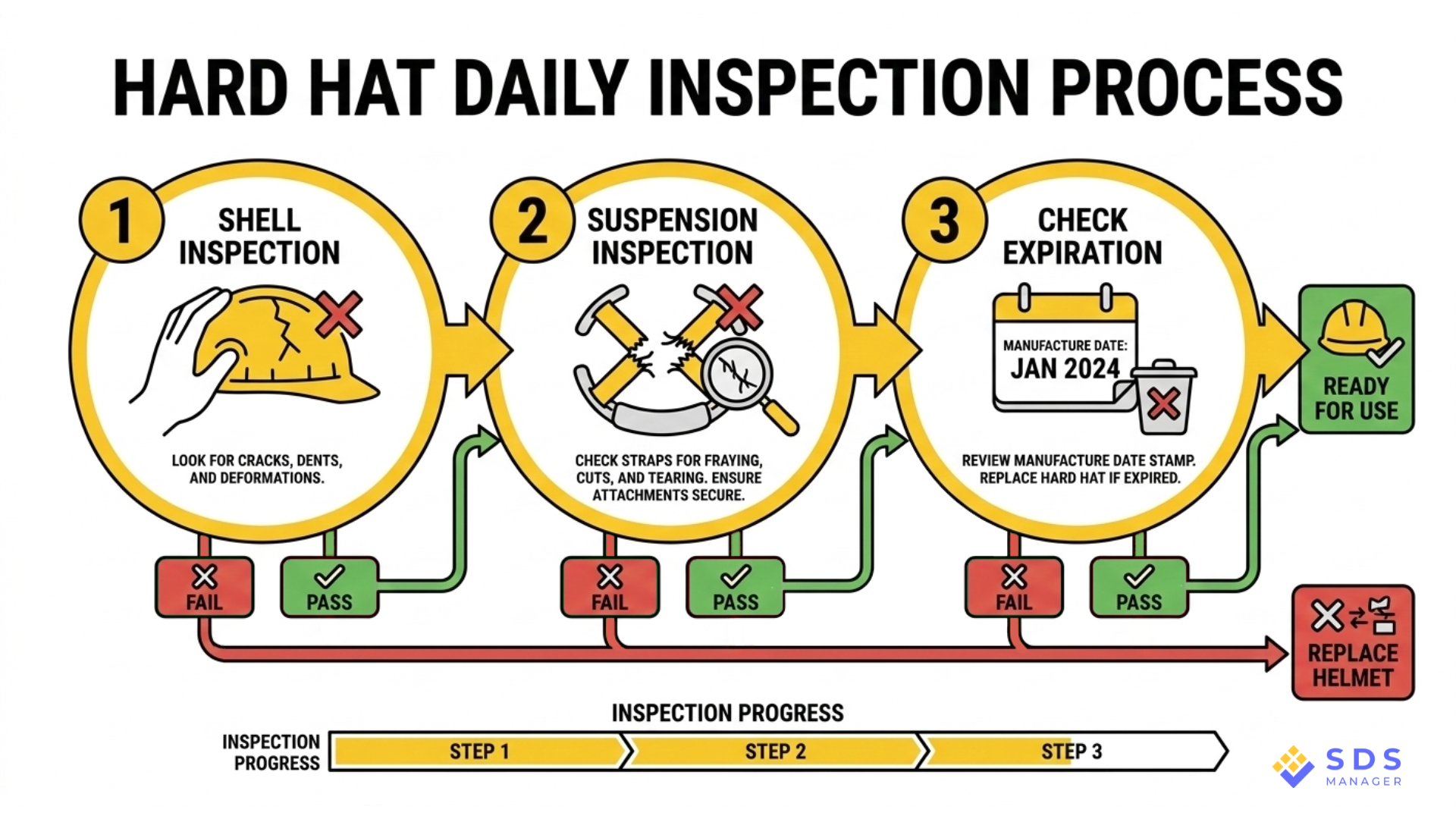
Your safety gear takes a serious beating out in the harsh Australian sun. Knowing how to inspect ppe such as hardhats takes less than a minute. Follow these exact steps before every single long shift.
- Squeeze the shell with both hands to check for general stiffness. If you hear cracking or feel brittle spots, discard the helmet immediately. UV damage makes the heavy plastic very weak over time.
- Pop out the internal suspension and look for frayed straps. A broken suspension means the hard hat cannot absorb impact forces. Wash the dirty sweatband with mild soap and warm water.
- Check the inside brim for the issue date sticker. Your hard hat expiration date is usually three years from then. The suspension harness strictly needs replacing every two years.
Never store your safety helmet in the back window of a ute. The constant harsh sunlight cooks the plastic and ruins the safety rating.
Key Takeaways
Proper head gear saves lives every single day on the site. Using hard hats as PPE requires choosing the correct AS/NZS class.
Stop treating head gear like a permanent piece of your clothing. Replace worn out internal suspensions and cracked outer shells immediately.
Audit your job site hazards and upgrade to safety helmets today.
Frequently Asked Questions
What are the different types and classifications of hard hats?
Type 1 handles top impacts while Type 4 handles multi directional impacts. Types 2 and 3 specifically handle extreme heat and bushfire environments.
Does a hard hat actually expire in Australia?
Yes, Australian guidelines require replacing the outer shell three years from the issue date. You must swap the internal harness every two years.
Can you wear a hard hat backwards?
Only if the manufacturer specifically labels it safe for reverse wear. Check for the reverse donning arrow symbol inside the brim.
How do you clean a hard hat properly?
Use mild soap and warm water on a soft cloth. Harsh chemical solvents will melt the plastic and ruin the protective shell.
When are hard hats required on site?
Safe Work Australia requires them whenever falling objects or overhead hazards exist. Always conduct a site hazard assessment first.
What Australian laws dictate head protection use?
Sites follow state WHS laws and Safe Work Australia guidelines. Mandatory industrial headgear must meet the AS/NZS 1801 standard.

Zarif Ahmed

An engineer and safety writer by profession, focusing on chemical management, regulatory development, and the patterns that shape workplace practice over time.