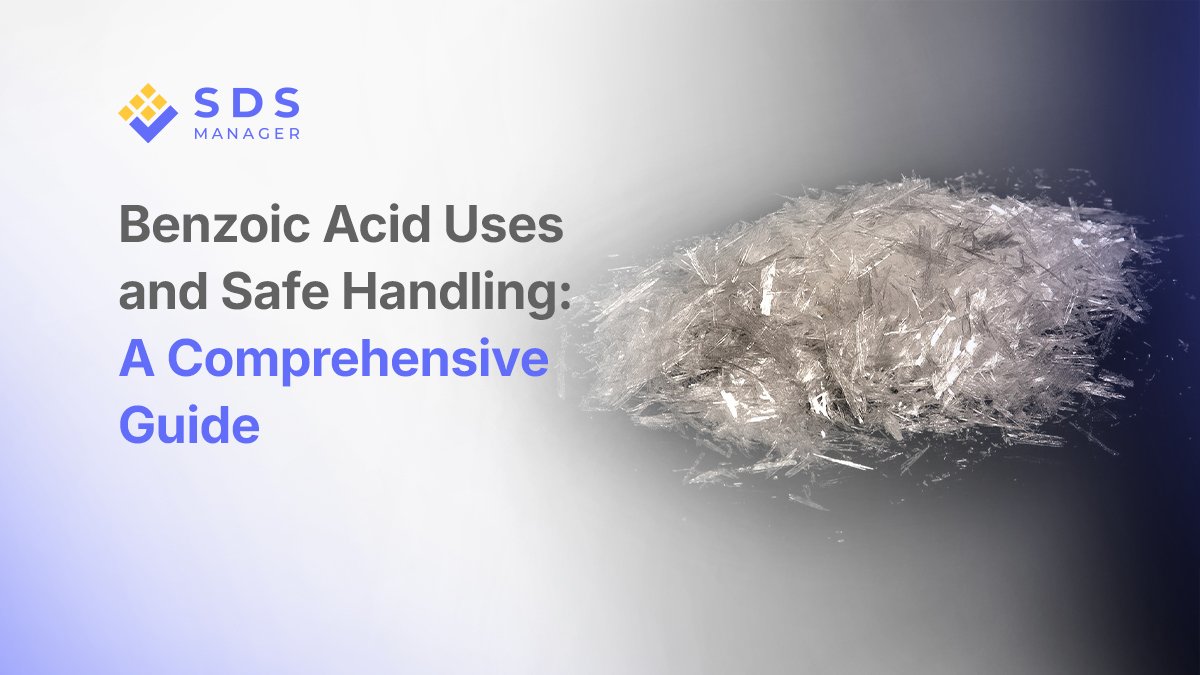
If you work in an industrial setting, chances are you’ve encountered benzoic acid in some form.
Though it’s common, understanding what benzoic acid is, how it’s used, and how to handle it safely is important for your safety and the efficiency of your workplace.
This guide will walk you through everything you need to know.
What Is Benzoic Acid?
Benzoic acid is an aromatic carboxylic acid with the chemical formula C₆H₅COOH. Though naturally occurring in certain fruits, most industrial benzoic acid is synthetically produced through chemical processes like the toluene oxidation method.
Benzoic acid is valued for its antimicrobial properties, chemical stability, and versatility. You might find it in everything from food preservatives to cosmetics and industrial chemical reactions.
What Is Benzoic Acid Used For?
Benzoic acid is remarkably versatile. Its uses span multiple industries:
1. Food Industry
In the food industry, it is commonly used as E210, a preservative in acidic foods and beverages.
It works by inhibiting the growth of mold, yeast, and certain bacteria, effectively prolonging shelf life. Often, it is used in combination with sodium benzoate or potassium benzoate to improve solubility and enhance its preservative effect.
2. Pharmaceuticals
In pharmaceutical applications, benzoic acid is included in topical ointments, antiseptic creams, and antifungal treatments.
Beyond its direct use, it also serves as a precursor in the production of benzyl compounds and sodium benzoate medicines, contributing to a wide range of therapeutic formulations.
3. Cosmetics and Personal Care
The cosmetics and personal care sector benefits from benzoic acid as well. It helps stabilize creams, lotions, and makeup products, reducing the risk of microbial contamination and ensuring product safety for consumers.
4. Industrial and Chemical Applications
Benzoic acid is used in the manufacture of plasticizers, dyes, perfumes, and synthetic resins.
It acts as a chemical intermediate in producing benzoate derivatives and other organic compounds, making it a valuable component in large-scale chemical processes.
5. Laboratory Use
In laboratory settings, benzoic acid is commonly employed in organic synthesis, analytical chemistry, and quality control testing.
It also serves as a standard reference compound for research and calibration purposes, highlighting its importance in both practical and experimental chemistry.
What Are the Hazards of Benzoic Acid?
While benzoic acid is widely used, improper handling can pose significant risks. So, when handling benzoic acid, always read the safety data sheet. Understanding its hazards is essential for any worker dealing with chemicals.
Health Hazards
- Skin Contact: Can cause irritation, redness, or dermatitis with prolonged exposure.
- Eye Contact: Dust or crystals can cause severe irritation or temporary discomfort.
- Respiratory Exposure: Inhaling benzoic acid dust or fumes may lead to coughing, throat irritation, or difficulty breathing.
- Ingestion: While small amounts in food are generally safe, large doses can cause nausea, vomiting, and abdominal pain.
Environmental Hazards
- Large amounts of benzoic acid released into water systems may harm aquatic life. Proper disposal and containment are critical in industrial settings.
Regulatory Classification
- Classified as harmful if swallowed or inhaled in certain regulatory frameworks.
- While WorkSafe NZ has not set a specific Workplace Exposure Standard (WES) for benzoic acid, it is regulated as a hazardous substance under the HSNO Act, requiring employers to manage risks like serious eye damage and respiratory irritation through robust exposure controls.
Side Effects of Benzoic Acid Exposure
At regulated levels, benzoic acid is generally considered safe. However, excessive exposure may lead to health concerns. Such as:
- Dermatitis or skin irritation from direct contact
- Eye irritation, including redness and watering
- Respiratory issues, such as coughing, wheezing, or shortness of breath
- Digestive disturbances if ingested in large amounts
- Allergic reactions in sensitive individuals, including rash or itching due to prolonged skin contact.
If you notice symptoms, seek medical attention promptly and report the exposure to your workplace safety officer.
How to Safely Handle Benzoic Acid
Safety in handling benzoic acid protects both you and your workplace. Always read the safety data sheet, as it lays down all the information you need to safely handle benzoic acid. Follow these practical measures (which are available on the SDS):
Personal Protective Equipment (PPE)
- Gloves: Chemical-resistant gloves prevent skin contact.
- Eye Protection: Safety goggles or face shields to prevent dust or splashes.
- Respiratory Protection: Use dust masks or respirators in poorly ventilated areas.
- Protective Clothing: Lab coats or overalls prevent contamination.
Storage Guidelines
- Store in a cool, dry, and well-ventilated area.
- Keep away from strong oxidizers, bases, and heat sources.
- Use tightly sealed containers to prevent moisture absorption or contamination.
Handling Best Practices
- Work in ventilated areas or under a fume hood.
- Avoid inhaling dust or fumes.
- Wash hands thoroughly after handling, even if gloves are used.
- Prevent food and drink from coming into contact with the chemical.
Spill and Waste Management
- In case of spills, sweep up carefully without creating dust, and dispose of according to local regulations.
- Neutralize large spills with alkaline substances if recommended, then dispose safely.
- Never dispose of benzoic acid directly into drains or waterways.
Conclusion
Benzoic acid is a strong, versatile chemical that plays an essential role in multiple industries. Understanding its applications, hazards, and proper handling procedures is vital for safety and compliance.
By studying the safety data sheet and understanding its hazards, you can confidently work with benzoic acid. Minimizing risks to yourself, your colleagues, and the environment. Remember, safety is not just a protocol; it’s a professional responsibility.

Samiha Fairooz Audrika

Samiha is a workplace safety expert and writer at SDS Manager. She translates complex safety standards into clear, practical guidance rooted in real-world challenges and industry insight. Her work helps businesses strengthen compliance, protect workers, and make safer decisions with confidence.