Calcium chloride plays a key role in many industrial operations.
From keeping roads passable in winter to controlling moisture in production and storage environments, it is often treated as a routine utility rather than a chemical that requires precaution.
Understanding both its function and its risks is part of responsible chemical management. This article walks you through what it is, where it is used, and how to handle it safely.
What Is Calcium Chloride?
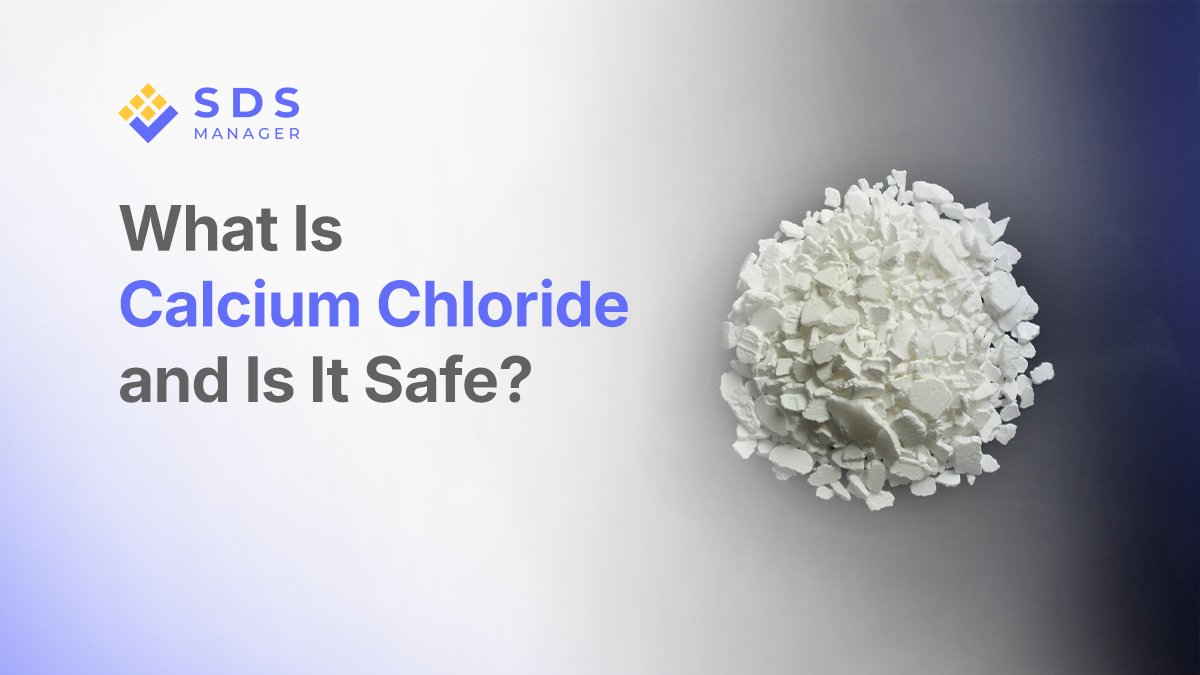
Calcium chloride is an inorganic salt made from calcium and chlorine. At room temperature, it typically appears as a white crystalline solid, pellets, or flakes. One of its defining characteristics is its strong affinity for water. It readily absorbs moisture from the air, releasing heat in the process.
This strong affinity for moisture explains much of its industrial value.
It is a powerful drying and heat-releasing agent that remains effective even at low temperatures. When dissolved in water, it releases heat, a property that is both useful and potentially hazardous depending on how it is handled.
What Is Calcium Chloride Commonly Used For?
Calcium chloride has a broad range of applications across industries. Largely because of its moisture-controlling and temperature-resistant properties.
In industrial and municipal settings, it is commonly used for:
- Deicing and anti-icing on roads, runways, and industrial yards due to its effectiveness at low temperatures and heat releasing properties
- Dust control on unpaved roads and construction sites by binding surface moisture
- In industrial processing, it is often used as a desiccant to keep systems dry and prevent corrosion or product degradation.
- Oil and gas operations, where it helps stabilize drilling fluids and control formation pressures
- Accelerating concrete curing, especially in cold conditions, helping projects stay on schedule.
- Concrete acceleration, especially in cold-weather construction, to speed up setting times
Outside heavy industry, it appears in food processing as a firming agent, in refrigeration systems as a brine component, and in wastewater treatment to adjust hardness and improve solids removal.
Its versatility is impressive, but widespread use also means frequent occupational exposure, which brings safety considerations to the forefront.
What Are the Health Risks of Calcium Chloride?
While calcium chloride is widely used, it can still cause harm under certain conditions. Most health risks are related to irritation and thermal effects rather than systemic toxicity.
Skin and eye contact
Direct contact with solid calcium chloride or concentrated solutions can cause irritation, redness, or burning sensations. Because it releases heat when dissolving in water, prolonged skin contact may result in thermal burns, especially if moisture is present.
Inhalation
Dust or mist can irritate the respiratory tract. In industrial environments where large quantities are handled, airborne particles may cause coughing or throat discomfort if proper controls are not used.
Ingestion
Accidental ingestion can irritate the mouth, throat, and gastrointestinal system. While not typically life-threatening in small amounts, ingestion should always be treated as a medical concern.
These risks are manageable, but they should never be dismissed. Risk assessments and access to safety data sheets are essential tools for keeping exposure within acceptable limits.
How to Safely Handle Calcium Chloride
Safe handling starts with understanding the substance and treating it with the same level of caution as any other chemical. Always read the safety data sheet first when handling calcium chloride.
You should focus on a combination of engineering controls, administrative measures, and personal protection.
Personal protective equipment (PPE)
Gloves resistant to chemical irritation, safety goggles or face shields, and appropriate work clothing help reduce direct contact risks. Respiratory protection may be necessary if dust or aerosols are generated.
Storage and labeling
Store calcium chloride in tightly sealed containers to prevent moisture absorption and degradation. Proper labeling ensures workers understand hazards before handling the material.
Handling practices
Avoid creating dust when transferring solids. When preparing solutions, add calcium chloride slowly to water to control heat release. Never add water directly to large quantities of dry material.
Training and documentation
Ensure workers are familiar with the Safety Data Sheet and understand first-aid measures, spill response procedures, and safe disposal practices. Clear documentation supports compliance and reduces uncertainty during incidents.
When these measures are consistently applied, calcium chloride can be used effectively without unnecessary risk.
Conclusion
Calcium chloride earns its place as a widely used industrial chemical because it is effective, adaptable, and reliable.
Understanding what calcium chloride is and how to handle it safely, allows you to manage it with confidence rather than caution alone.
In HSE, safety is not about fear of chemicals but about informed control.
When proper handling practices, PPE, and training are in place, calcium chloride can be used efficiently without compromising worker health or operational integrity. That balance between utility and responsibility is where a good chemical safety culture thrives.

Samiha Fairooz Audrika

Samiha is a workplace safety expert and writer at SDS Manager. She translates complex safety standards into clear, practical guidance rooted in real-world challenges and industry insight. Her work helps businesses strengthen compliance, protect workers, and make safer decisions with confidence.