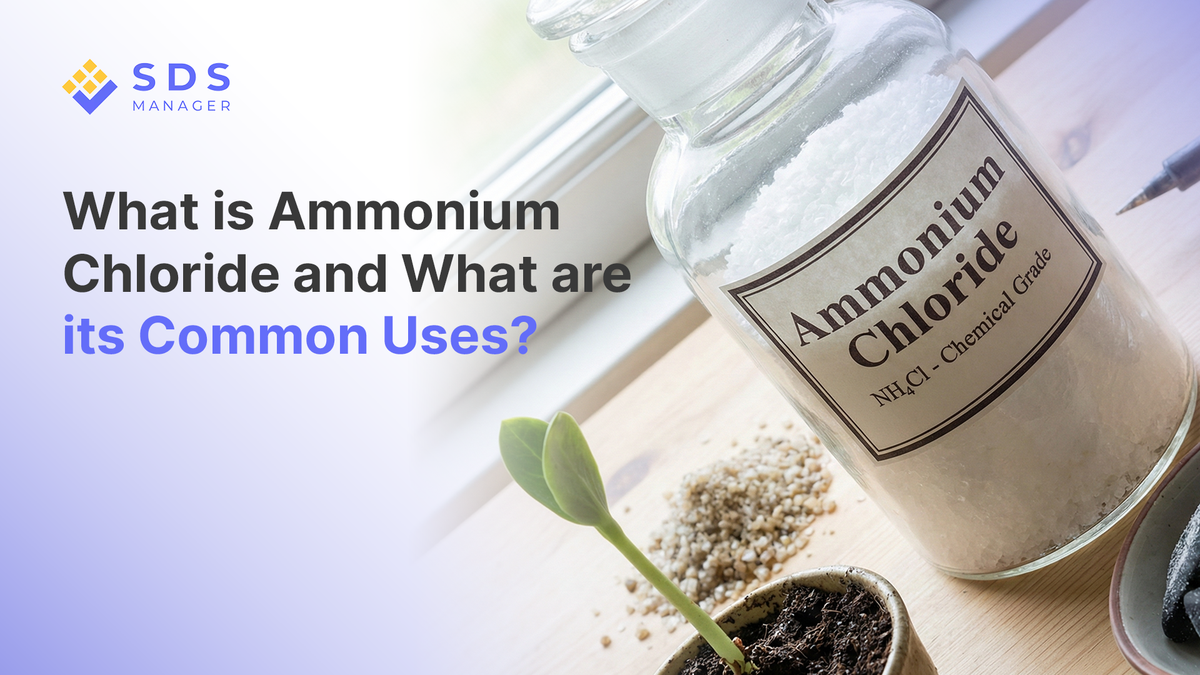
Ammonium chloride is an inorganic salt found in fertilizers, medications, metal manufacturing, and batteries.
This white crystalline compound plays a vital role across regulated industries where chemical safety matters most.
Whether you work with this industrial chemical or simply want to understand its applications and risks, knowing the basics protects your health and workplace.
Here's what you need to know about ammonium chloride, its uses, and how to handle it safely.
What Is Ammonium Chloride?
Ammonium chloride, sometimes called sal ammoniac, is a chemical compound made from ammonia and chlorine.
It looks like white crystals or powder and dissolves easily in water.
At room temperature, it stays stable and safe. When heated above 340°C (644°F), it breaks down into ammonia and hydrogen chloride gases.
This white crystalline substance has a slightly salty taste and creates mildly acidic water when dissolved.
Most commercial production combines ammonia with hydrochloric acid in factories.
You can also find it naturally forming near volcanic vents, though these natural deposits are rarely used commercially.
Common Uses of Ammonium Chloride
Ammonium Chloride as a Fertilizer in Agriculture
Agriculture uses roughly 90% of all production. Farmers depend on this nitrogen source because it contains about 26% nitrogen and can increase crop yields, especially for wheat and barley.
The downside? It makes soil more acidic over time, requiring regular pH testing.
Crops like avocados, beans, and grapes don't tolerate the chloride well.
Medical and Healthcare Uses
Ammonium chloride works as an expectorant in cough syrups and linctus. This means it irritates your airways slightly, making mucus easier to cough up.
Hospitals use it through IV treatment to fix blood chemistry when patients become too alkaline.
Veterinarians also give it to sheep, cattle, and goats to prevent kidney stones.
Industrial Applications in Manufacturing
Manufacturing depends on this chemical for metalworking and batteries.
- Metalworking: It removes rust and oxide layers during soldering by turning them into vapours that evaporate, leaving clean metal.
- Batteries: Battery makers use it to help electricity flow in dry cell batteries.
- Other uses: Textile processing, cooling baths in labs, and feeding yeast cultures.
Uses in Food and Personal Care Products
The food industry uses it as a flavouring in liquorice and as a yeast nutrient in bread making.
In shampoos, related forms of this compound thicken the liquid and improve texture.
Hazards and Health Effects of Ammonium Chloride
This chemical creates real health risks when mishandled. Understanding these dangers helps you protect yourself and others.
What Happens If You Breathe It In?
Breathing in dust or fumes causes immediate coughing, throat irritation, and trouble breathing.
Repeated exposure can lead to long-term breathing problems or asthma-like attacks, especially in people with sensitive lungs.
Skin and Eye Contact
Direct contact with this compound irritates skin, causing redness and itching that can turn into chemical burns when dealing with strong concentrations.
Your eyes are especially at risk. Splashes cause immediate pain, watering, and blurred vision.
Without quick treatment, you could have permanent eye damage.
If You Swallow It
Swallowing ammonium chloride causes nausea, vomiting, and stomach cramps. Large amounts cause dangerous acid buildup in your blood with symptoms like rapid breathing, confusion, extreme drowsiness, and seizures in severe cases.
Who Faces Greater Risk?
People with these conditions need extra caution:
- Liver or kidney disease
- Breathing disorders like asthma or COPD
- Stomach or intestinal problems
The substance also increases urination, which might worsen dehydration or lead to kidney stones.
Fire and Heat Hazards
When heated or involved in fires, it breaks down into toxic gases that severely damage lungs and can be deadly in closed spaces.
Safety Guidelines for Handling Ammonium Chloride
Proper handling protects you from exposure risks. Check its Safety Data Sheet (SDS) for proper handling, storage, and disposal or follow the below safety practices:
Exposure Limits
Canadian occupational health guidelines generally recommend keeping air concentrations below 10mg/m³ (fume) averaged over an 8-hour work shift, and below 20mg/m³ for short-term exposure (15 minutes).
Install proper ventilation systems and check air quality regularly.
Required Personal Protective Equipment (PPE)
- Safety goggles – Protect eyes from splashes and dust
- Chemical-resistant gloves – Nitrile or neoprene work best
- Protective clothing – Long sleeves and full coverage
- Respirator – If airborne levels can't be controlled
Safe Storage Rules
Store ammonium chloride in sealed containers in dry areas with good airflow.
Keep it away from strong oxidizers, ammonium nitrate, potassium chlorate, lead salts, and alkalis.
These combinations can cause dangerous reactions. Make sure containers are clearly labelled and stored where only trained people can access them.
Emergency Response Steps If Exposure Happens
- Eye Contact: Flush right away with water for at least 15 minutes while removing contact lenses. Get medical help even if the pain seems to go away.
- Skin Contact: Wash well with soap and water, taking off any contaminated clothing. Get medical help if irritation continues or if you notice any burns developing.
- Ingestion: Do NOT make yourself vomit. Rinse your mouth with water and contact a Poison Control Centre or emergency services right away. Time matters a lot in these situations.
- Inhalation: Move to fresh air immediately. If symptoms like coughing or trouble breathing develop, get medical attention. Don't assume symptoms will go away on their own.
Workplace Requirements
Train all employees on proper handling before they work with this chemical.
Provide easy-to-reach eyewash stations and emergency showers in areas where the compound is used.
Keep breathing equipment available if exposure levels might go above safe limits.
Post clear warning signs that show the hazard and required safety steps according to WHMIS 2015 standards.
Environmental Impact and Disposal
Ammonium chloride harms water ecosystems and needs careful environmental management.
Aquatic Toxicity
This compound is toxic to fish, shellfish, and other water-dwelling creatures.
Even small amounts damage aquatic life, so never release it into waterways, storm drains, or sewers.
Handling Spills
If spills happen, block off the area immediately, stop it from entering drains or water sources, sweep up material carefully while avoiding dust, and put it in clearly labelled containers for disposal through licensed waste facilities only.
Write down what happened according to your facility's environmental rules.
Proper Disposal
Never pour ammonium chloride down drains or into trash bins.
Canadian environmental regulations require disposal through licensed hazardous waste handlers. Keep records of all disposal activities.
Soil and Ecosystem Impact
Large releases can change soil chemistry and harm helpful microorganisms.
Agricultural users should follow recommended amounts, schedule applications to avoid runoff during rain, and keep buffer zones near water bodies.
These practices protect both the environment and your operation from fines.
Final Thoughts
Ammonium chloride's wide range of uses shows why it remains so valuable across different industries.
Whether growing food, treating health conditions, manufacturing products, or processing materials, this compound delivers reliable results.
The key to using ammonium chloride successfully lies in following proper safety guidelines and applying it correctly.
When handled with care, this chemical compound proves itself as a practical solution for many everyday needs.
Frequently Asked Questions
What is the main purpose of ammonium chloride in agriculture?
It serves as a nitrogen fertiliser that helps crops grow better. Farmers use it mainly for cereals like wheat and barley, and it can significantly increase yields.
Can ammonium chloride be harmful to humans?
Yes, breathing its dust or fumes can irritate your lungs and cause coughing or headaches. Always use proper safety equipment when handling it.
Why is ammonium chloride used in cough medicine?
It works as an expectorant that loosens mucus in your chest, making it easier to cough up and clear your airways.
What makes ammonium chloride useful in metalworking?
It cleans metal surfaces by removing oxide layers during soldering and coating. This helps metals bond together properly.
Is ammonium chloride the same as table salt?
No, they're different chemicals. Ammonium chloride is NH4Cl while table salt is NaCl. They have different uses and properties.
How should you store ammonium chloride safely?
Store in sealed containers in dry areas with good airflow. Keep away from strong oxidizers, ammonium nitrate, and potassium chlorate. Make sure it's properly labeled and only trained people can access it.

Zarif Ahmed

An engineer and safety writer by profession, focusing on chemical management, regulatory development, and the patterns that shape workplace practice over time.