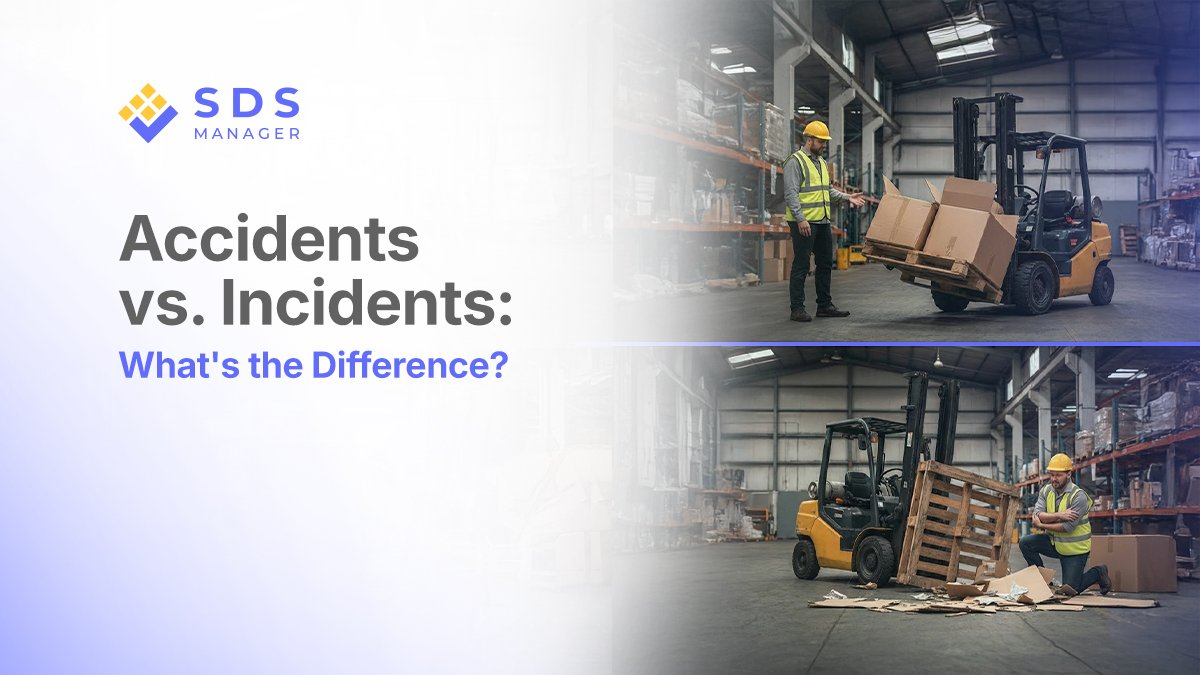
In occupational health and safety, events are grouped by what happens as their outcome. Using the right terms helps keep records accurate and reports consistent. Two terms often used in workplace safety programs are incidents and accidents.
An incident is any unplanned event that interrupts work or has the potential to cause harm. An accident is a specific type of incident that causes injuries, illness, or property damage.
Understanding the difference between accidents and incidents is the most effective way to spot risks early. This allows teams to report problems before they turn into medical emergencies or legal issues.
This guide explains these terms, how they affect safety culture, and why tracking every minor event creates a more secure environment.
What is an Accident?
An accident is a situation that causes harm to your employee or the environment. These events usually trigger COHS recordkeeping and insurance claims.
The word "accident" can sometimes suggest that an event was unavoidable or due to bad luck. In professional safety circles, most accidents are viewed as the result of ignored incidents or failed corrective actions.
What is an Incident?
An incident is a broad term for anything that goes wrong outside of the daily plan. This includes everything from a minor equipment glitch to a major chemical leak.
An incident where an injury almost happened but was avoided by chance is known as a near miss. These events are "free lessons" that provide valuable information without the cost of a human injury.
The Value of Near Miss Reporting
Every near miss points to a gap in a risk assessment. If a tool falls but misses a worker, the safety protocol for heights needs immediate review.
Tracking these minor events allows for preventive measures based on facts rather than guesses. This data-driven method is key to a strong safety management system. Fixing small problems now may prevent a major disaster later.
Summary Table
| Incident | Accident | Near misses | |
|---|---|---|---|
| Focus | An event that happens, with or without damage. | An event that causes harm, injury, or damage. | Something almost goes wrong, but no one is hurt and nothing is damaged. |
| How it is viewed | Helps us look at what happened, not just the outcome. | Can sound like it was just bad luck or could not be avoided. | Shows that something in the work or safety setup did not go as planned. |
| Role in prevention | Shows hazards that exist now and could cause harm later. | Often the result of earlier incidents or problems that were not fixed. | Warns us that there is a gap in the risk assessment or safety rules. |
| Example | A machine jams and stops, but no one is hurt. | A worker is injured by a machine because earlier warning signs were ignored. | A tool falls from height but misses a worker, showing that the work-at-heights system needs a review. |
| What to do | Investigate and fix the hazard before anyone gets hurt. | Look back at what was missed and improve controls so it does not happen again. | Record, investigate, and use the information to improve procedures and prevent a real accident. |
Final Thoughts
A clear understanding of the difference between accidents and incidents directs resources to the right places. It turns a safety program from a collection of files into a strategy that protects lives.
If a workplace only asks for accident reports, problems often go unmentioned until someone is actually hurt. By then, the focus is on damage that has already happened.
Switching to incident reporting helps find the weak spots in a risk assessment early. These minor slips or near misses act as warnings, showing exactly where a safety plan might fail before a real injury occurs.
Encouraging the reporting of every slip, trip, and glitch improves the quality of safety data. When the focus stays on fixing the system rather than blaming a person, it stops accidents before they start.
Frequently Asked Questions
What is the main difference between an incident and an accident?
An incident is any unplanned event at work; an accident is an incident that causes injury or damage.
Why is it important to report an incident if no one was hurt?
Reporting identifies a workplace hazard so it can be fixed before someone gets hurt the next time.
Is a near miss considered an incident?
Yes. A near miss is a type of incident that provides data for preventive measures without an actual injury.
How does using the word "incident" improve safety?
It focuses on fixing the system rather than blaming people, which encourages more honest reporting.
Should every incident be investigated?
Yes. Finding the "why" through a root cause analysis is the only way to stop the event from happening again.

Zarif Ahmed

An engineer and safety writer by profession, focusing on chemical management, regulatory development, and the patterns that shape workplace practice over time.