Managing facility safety is a heavy responsibility. Every year, thousands of workplace fires put lives at risk and cause significant damage.
Fortunately, most of these incidents are preventable. Real fire safety in the workplace goes beyond just hanging a few exit signs.
It means knowing your specific risks and ensuring the team can react without panic. This guide covers the necessary steps to keep your workplace protected.
Identifying Common Hazards to Improve Fire Safety in the Workplace
If you want to stop fires, you have to know where they start. You might expect industrial machinery to be the main culprit, but standard office environments pose surprisingly high risks.
In Australia, electrical faults and mechanical heat are leading causes of fires in commercial premises. We are talking about simple things like overloaded power boards, frayed cables, or equipment left running overnight.
Kitchenettes and breakrooms are also high-risk zones. A toaster or microwave used improperly is often more dangerous than heavy machinery.
If you manage a warehouse or industrial site, focus on hot work (welding/cutting) and combustible storage. These are fuel waiting for a spark.
Keep an eye out for warning signs like warm power points, flickering lights, or burning smells. Now that you know what to watch for, let's focus on building a program that works.
Building a Strategy for Fire Safety in the Workplace
Prevention beats emergency response every time, but you need both working together. Here is how to build a complete fire safety program.
Conducting Comprehensive Fire Risk Assessments
Under section 359 of Work Health and Safety (WHS) Regulations, a Person Conducting a Business or Undertaking (PCBU) must manage fire risks.
Start by walking through your facility to identify fire sources. Specifically, check electrical equipment, heating systems, hot work areas, and chemical storage locations.
Write down your findings and create action plans to address each problem. This sets up accountability and ensures hazards don't get overlooked.
Be sure to update these assessments regularly. Do this whenever you add new equipment, change layouts, or modify operations.
Putting Good Housekeeping and Maintenance in Place
Good housekeeping is your passive defense against fire. It starts with the basics, such as keeping walkways and exit routes completely clear of clutter.
But you also need to look at invisible risks. In offices, this means regular waste disposal. In manufacturing, it implies strict schedules to control combustible dust.
Ensure your safety systems are ready to work. Check fire extinguishers regularly and get them serviced every six months to meet AS 1851 standards.
Test your fire detection and alarm systems on a strict schedule. A functioning alarm system is your first line of defense.
Training Your Team for Emergency Response
Even the best plan falls apart if your people panic. That is why training is less about compliance and more about muscle memory.
AS 3745 (Planning for emergencies in facilities) outlines the training requirements for all occupants. To make it stick, you need hands-on practice.
When an employee physically holds an extinguisher or walks the evacuation route, their confidence doubles. They stop thinking about what the manual said and just act.
Learning Fire Extinguisher Basics
Australian extinguishers use a coloured band system to identify their contents (e.g., White for Dry Powder, Blue for Foam, Black for CO2).
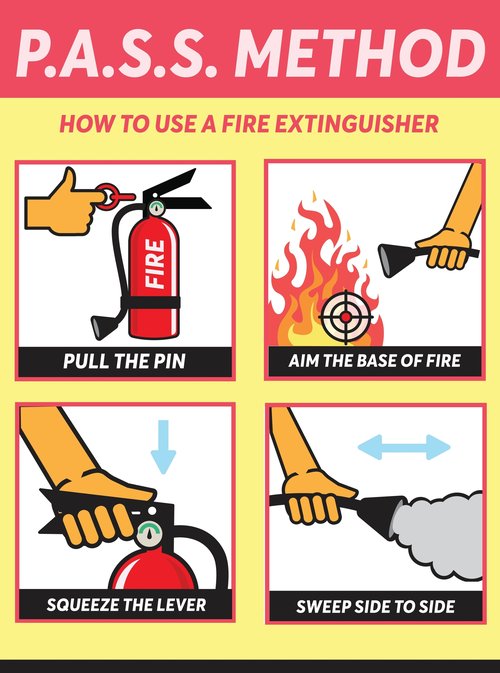
However, the operation usually follows the PASS technique:
- Pull the safety pin.
- Aim at the base of the fire.
- Squeeze the handle.
- Sweep side to side.
Remember that extinguishers work only for small, contained fires. If flames reach the ceiling or smoke fills the room, evacuate immediately.
Running Regular Fire Drills
According to AS 3745, evacuation exercises (drills) should be conducted at least every 12 months.
Facilities with higher risks or high turnover may need more frequent drills to ensure everyone is prepared.
Regular training improves response times significantly. After each drill, sit down with your team to evaluate performance.
Identify what worked and where confusion happened. This feedback loop is the difference between a safe evacuation and a tragedy.
Creating a Comprehensive Emergency Action Plan
Even with strong prevention measures, you need a solid Emergency Plan as required by WHS laws. Clear procedures save lives by removing confusion.
Designing Clear Evacuation Routes and Procedures
You must clearly mark evacuation routes throughout your facility using the standard green "EXIT" signs. All exits need to be visible even in smoke.
It is also critical to post evacuation diagrams showing these locations. These diagrams must be oriented correctly based on where they are displayed ("You are here").
Always plan for redundancy. Having multiple exit options gives employees backup escape routes if primary paths get blocked.
Assign specific people to maintain these pathways. You must ensure they never become storage areas.
Establishing Assembly Areas and Wardens
Pick specific outdoor locations where employees gather after evacuating. In Australia, this is formally called the Assembly Area.
These need to be far enough away to keep everyone safe from heat and falling debris.
You should also designate an Emergency Control Organisation (ECO)—commonly known as Fire Wardens. Large sites need a Chief Warden and area wardens.
These leaders get specialized training. They are responsible for checking spaces before exiting (if safe) and accounting for personnel.
Final Thoughts
Fire safety requires ongoing commitment, but getting started is straightforward. Begin by checking your facility for hazards and identifying risks.
Next, create or update your Emergency Plan. Set up evacuation routes, assign clear responsibilities, and put regular training in place.
The preparations you make today could save lives tomorrow.
Frequently Asked Questions
What are the primary causes of workplace fires in Australia?
Electrical faults and mechanical heat are major causes, along with hot work (welding/grinding) and kitchen accidents. Poor housekeeping leading to fuel accumulation is also a key risk.
How frequently should workplaces conduct fire drills?
Under Australian Standard AS 3745, facilities should conduct an evacuation exercise at least once every 12 months. All occupants must participate.
Who bears responsibility for workplace fire safety?
The PCBU (Person Conducting a Business or Undertaking) holds the primary duty of care under WHS laws. They must ensure the workplace is safe and an emergency plan is in place.
What should a workplace Emergency Plan include?
Your plan must include emergency procedures, testing arrangements, and the contact details of the Emergency Control Organisation (Wardens). It must also define the frequency of training.

Zarif Ahmed

An engineer and safety writer by profession, focusing on chemical management, regulatory development, and the patterns that shape workplace practice over time.