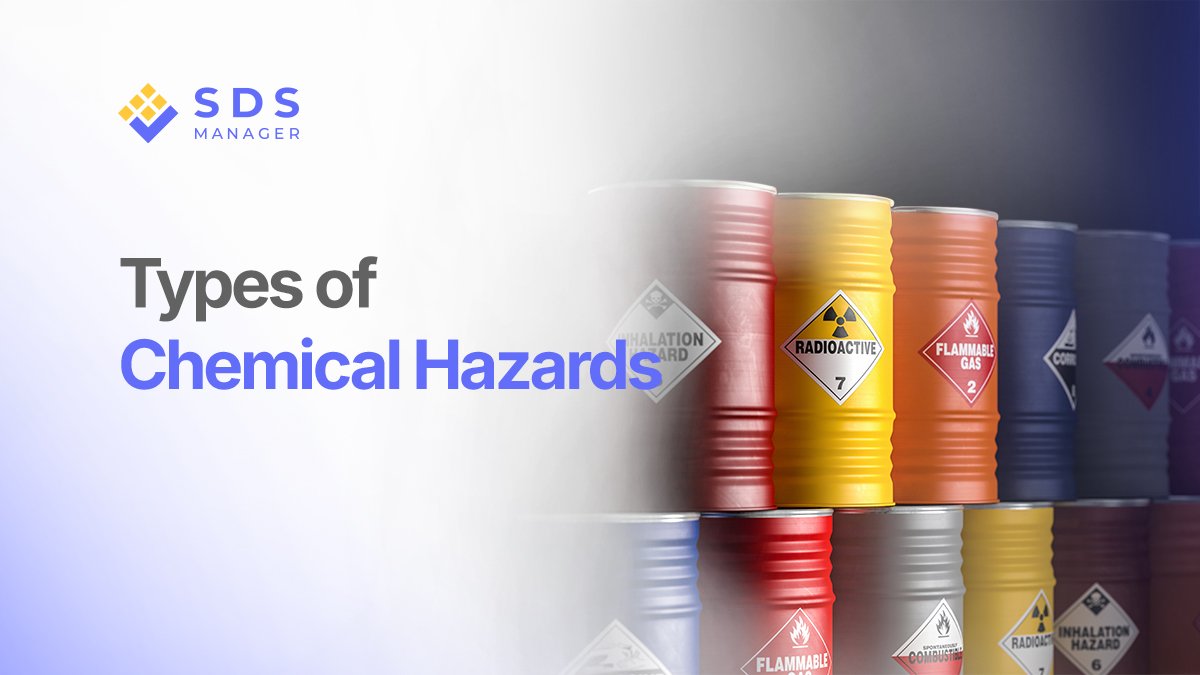
A chemical hazard is any property of a substance that can cause harm to people, property, or the environment. Handling chemicals is an everyday routine in shops, labs, plants, and field work.
Knowing the types of chemical hazards helps you choose controls, train crews, and meet Hazard Communication duties.
This guide explains how hazards are grouped, what they look like in real work, and how to reduce exposure.
Classifications of Chemical Hazards
Most systems group hazards in three groups: physical, health, and environmental.
In New Zealand, the EPA’s Hazard Classification Notice sets the system based on GHS Revision 7.
This alignment helps to standardize the classes, categories, and signal words such as “Danger” and “Warning”. It also includes Hazard and Precautionary statements and pictograms that appear on labels and SDSs.
Types of Chemical Hazards
Chemical hazards can be broken down into Physical Hazards, Health Hazards and Environmental Hazards. The table below expands on what each of these mean and how to reduce the risks associated with each:
| Physical hazards | Health hazards | Environmental hazards | |
|---|---|---|---|
| Focus |
Fire, explosion, pressure, reactivity, metal corrosion |
Acute and chronic effects on people (toxicity, irritation, sensitization, cancer, organ damage) | Aquatic toxicity, persistence, bioaccumulation, harm to ecosystems |
| Typical GHS classes |
-Flammable liquids/gases -Explosives/Self-reactives -Oxidizers -Gases under pressure -Water-reactive -Corrosive to metals |
-Acute toxicity -Skin corrosion/irritation -Serious eye damage -Respiratory/Skin sensitization -Germ cell mutagenicity -Carcinogenicity -Reproductive toxicity -Specific target organ toxicity -Aspiration hazard |
Aquatic acute/chronic toxicity (Some jurisdictions note ozone layer hazard) |
|
Example chemicals/products |
-Acetone, ethanol, propane -Organic peroxides -Hydrogen peroxide, sodium hypochlorite -Sodium, calcium carbide |
-Formaldehyde (irritant/carcinogen) -Benzene (carcinogen) -Isocyanates (respiratory sensitizers) -Certain hazardous drugs/solvents |
-Copper sulfate -Certain pesticides -Petroleum hydrocarbons -Persistent organics |
| Core controls |
-Eliminate ignition sources -Bond/ground containers -Ventilate -Separate incompatible substances -Control Temperature -Use approved cabinets |
-Substitute where possible -Use local exhaust/closed transfer -Maintain exposure limits (PEL/REL/TLV) & monitoring -Use task-based SOPs -Use PPE -Establish medical surveillance for sensitizers |
-Secondary containment -Spill prevention/response, -Effective management and reporting of wastes -Avoiding drains -Following instructions from Environmental SDS sections guide storage/disposal |
Exposure routes and proven controls
Main routes: inhalation, skin/eye contact, ingestion, and injection.
Prioritize the hierarchy of controls: substitution and engineering controls (closed transfer, LEV), then administrative controls and PPE.
Under HSWA and the Hazardous Substances Regulations, PCBUs must manage risks and ensure workers receive information, instruction, and training.
Suppliers must provide compliant labels and SDSs; check Section 2 for hazard identification, signal words, and pictograms.
Why it matters: WHO estimates ~2 million deaths in 2019 were attributable to exposures to selected chemicals worldwide, underscoring prevention and control.
Reinforcing Chemical Hazard Awareness & Safety Culture
Understanding the types of chemical hazards, from flammables and oxidizers to carcinogens and reproductive toxins, helps safety managers anticipate risks before exposure occurs.
Workplace safety requires more than compliance; it requires a safety culture where employees are trained, hazards are communicated clearly, and controls are enforced. Employers who take proactive steps not only reduce risks but also protect their people and their business.
FAQs
Q1. What are the main chemical hazard classes?
Physical (flammables, oxidizers, compressed gases) and health (toxic, corrosive, carcinogenic).
Q2. How can exposure be prevented?
Use the hierarchy of controls: eliminate, substitute, engineering, administrative, PPE.
Q3. What’s the difference between acute and chronic exposure?
Acute = short-term effects like burns; chronic = long-term effects like cancer.
Q4. How does an SDS help?
It lists hazard classifications, exposure limits, PPE, and emergency response details. (In New Zealand, SDS format and “Section 2: Hazard identification” follow the EPA Safety Data Sheets Notice.)
Q5. Are environmental hazards considered in workplaces?
Yes, especially spills and emissions affecting water, soil, and air.