


Hinweis: Inhaltsstoffe, die auf der Liste eingeschränkter Chemikalien stehen
EC/CAS
270-704-2/68476-85-7
Name der Chemikalie
Petroleum gases, liquefied; Petroleum gas (A complex combination of hydrocarbons produced by the distillation of crude oil. It consists of hydrocarbons having carbon numbers predominantly in the range of C3 through C7 and boiling in the range of approximately - 40 °C to 80 °C.)
Konzentration
10-40
EC/CAS
203-961-6/112-34-5
Name der Chemikalie
2-(2-butoxyethoxy)ethanol
Konzentration
1-5
EC/CAS
931-254-9/64742-49-0
Name der Chemikalie
Naphtha (petroleum), hydrotreated light; Low boiling point hydrogen treated naphtha (A complex combination of hydrocarbons obtained by treating a petroleum fraction with hydrogen in the presence of a catalyst. It consists of hydrocarbons having carbon numbers predominantly in the range of C4 through C11 and boiling in the range of approximately - 20 °C to 190 °C.)
Konzentration
-<2,5
EC/CAS
200-753-7
Name der Chemikalie
Benzol
Konzentration
N/A
Allgemeine Information
Überarbeitet am
2017-04-19
Produktidentifikator
WD-40 BIKE All Conditions Lube
· Verwendung des Stoffes / des Gemisches
Schmierstoff
1.2.2. Verwendungen, von denen abgeraten wird
Zur Zeit liegen keine Informationen hierzu vor
NOTRUFNUMMERN:
01 406 43 43, +43 1 406 43 43, +32 70 245245, +41 44 251 51 51, 8002-5500, +49 (0) 700 / 24 112 112
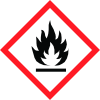
Symbole im Sicherheitsdatenblatt


Unternehmensinformationen
Unternehmen
WD-40 Company Limited
E-Mail-Addresse
info@chemical-check.de
GHS-Informationen
Signalwort
Gefahr
Hazard Codes
Gefahrenhinweise (CLP)
H222, H229, H304, H336
Gefahrenhinweise
Code
Hinweis
H222
Extrem entzündbares Aerosol.
H229
Behälter steht unter Druck: Kann bei Erwärmung bersten.
H304
Kann bei Verschlucken und Eindringen in die Atemwege tödlich sein.
H336
Kann Schläfrigkeit und Benommenheit verursachen.
Abschnitt 2
ABSCHNITT 2. MÖGLICHE GEFAHREN
2.1 Einstufung des Stoffs oder Gemischs
Einstufung
Gefahrenhinweise
STOT SE 3 H336-Kann Schläfrigkeit und Benommenheit verursachen. Aerosol 1 H222-Extrem entzündbares Aerosol. Asp. Tox. 1 H304-Kann bei Verschlucken und Eindringen in die Atemwege tödlich sein. Aerosol 1 H229-Behälter steht unter Druck: Kann bei Erwärmung bersten.
2.2. Kennzeichnungselemente
Kennzeichnung
2.3 Sonstige Gefahren
Das Gemisch enthält keinen vPvB-Stoff (vPvB = very persistent, very bioaccumulative) bzw. fällt nicht unter den Anhang XIII der Verordnung (EG)


