




Note: Ingredients listed on restricted chemical lists
EC/CAS
3844-45-9
Name of the chemical
Benzenemethanaminium, N-ethyl-N-[4-[[4-[ethyl-[(3-sulfophenyl)-methyl]-amino]-phenyl](2-sulfophenyl)methylene]-2,5-cyclohexadien-1-ylidene]-3-sulfo, inner salts, disodium salt and its ammonium and aluminium salts (17); (CI 42090)
Concentration
N/A
EC/CAS
223-339-8
Name of the chemical
Benzenemethanaminium, N-ethyl-N-[4-[[4-[ethyl-[(3-sulfophenyl)-methyl]-amino]-phenyl](2-sulfophenyl)methylene]-2,5-cyclohexadien-1-ylidene]-3-sulfo, inner salts, disodium salt and its ammonium and aluminium salts (17); (CI 42090)
Concentration
N/A
General Information
Revision date
2014-06-30
Product name
DECTOMAX
Icons in SDS
Company Information
company name
Zoetis Inc
e-mail address of the competent person responsible for the Safety Data Sheet
VMIPSrecords@zoetis.com
GHS Information
Signal word
Danger
Hazard Codes
Hazard statements (CLP)
H225, H303, H319, H336, H361, H362, H410
Hazard statements
Code
Statements
H225
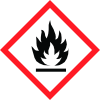
Highly Flammable liquid and vapour
Section 2
SECTION 2: Hazards identification
Appearance: Clear, colorless solution or clear, blue solution
2.1 Classification of the substance or mixture
Acute Oral Toxicity: Category 5 Serious Eye Damage/Eye Irritation: Category 2A Reproductive Toxicity: Category 2 Reproductive Toxicity: Effects on or via lactation Specific target organ systemic toxicity (single exposure): Category 3 Acute aquatic toxicity: Category 1 Chronic aquatic toxicity: Category 1 Flammable liquids- Category 2
EU Classification
EU Indication of danger: Flammable Irritant Dangerous for the Environment EU Symbol: F Xi N EU Risk Phrases: R11 - Highly flammable. R36 - Irritating to eyes. R67 - Vapors may cause drowsiness and dizziness. R50/53 - Very toxic to aquatic organisms, may cause long-term adverse effects in the aquatic environment.
Signal word
Danger
Hazard statements
H225 - Highly flammable liquid and vapor H319 - Causes serious eye irritation H303 - May be harmful if swallowed H336 - May cause drowsiness and dizziness H361 - Suspected of damaging fertility or the unborn child H362 - May cause harm to breast-fed children H410 - Very toxic to aquatic life with long lasting effects
Precautionary statements
P201 - Obtain special instructions before use P202 - Do not handle until all safety precautions have been read and understood P210 - Keep away from heat/sparks/open flames/hot surfaces. - No smoking P240 - Ground/Bond container and receiving equipment P233 - Keep container tightly closed P241 - Use explosion-proof electrical/ventilating/lighting/equipment P242 - Use only non-sparking tools P243 - Take precautionary measures against static discharge P280 - Wear protective gloves/protective clothing/eye protection/face protection P260 - Do not breathe dust/fume/gas/mist/vapors/spray P264 - Wash hands thoroughly after handling P263 - Avoid contact during pregnancy/while nursing P270 - Do not eat, drink or smoke when using this product P271 - Use only outdoors or in a well-ventilated area P273 - Avoid release to the environment P308 + P313 - IF exposed or concerned: Get medical attention/advice P312 - Call a POISON CENTRE/doctor/physician if you feel unwell P303 + P361 + P353 - IF ON SKIN (or hair): Take off immediately all contaminated clothing. Rinse skin with water/shower P305 + P351 + P338 - IF IN EYES: Rinse cautiously with water for several minutes. Remove contact lenses, if present and easy to do. Continue rinsing P337 + P313 - If eye irritation persists: Get medical advice/attention P304 + P340 - IF INHALED: Remove victim to fresh air and keep at rest in a position comfortable for breathing P370 + P378 - In case of fire: Use water spray, carbon dioxide, dry chemical, foam for extinction P391 - Collect spillage P405 - Store locked up P403 + P235 - Store in a well-ventilated place. Keep cool P501 - Dispose of contents/container in accordance with all local and national regulations
2.3 Other hazards
Short Term: May be absorbed through the skin and cause systemic effects. Breathing high vapor concentrations may cause central nervous system (CNS) depression resulting in dizziness, light-headedness, headache, nausea, and loss of coordination. Continued inhalation may result in unconsciousness and death. Long Term: Prolonged or repeated contact may cause defatting and drying of the skin. Repeat-dose studies in animals have shown a potential to cause adverse effects on the developing fetus. Australian Hazard Classification
Hazardous Ingredients
Dangerous Goods (NOHSC): Note: This document has been prepared in accordance with standards for workplace safety, which require the inclusion of all known hazards of the product or its ingredients regardless of the potential risk. The precautionary statements and warnings included may not apply in all cases. Your needs may vary depending upon the potential for exposure in your workplace.



