



Note: Ingredients listed on restricted chemical lists
EC/CAS
215-535-7/77-58-7
Name of the chemical
Dibutylzinndilaurat; Dibutyl[bis(dodecanoyloxy)]stannan (2017/776)
Concentration
>95%
General Information
Revision date
2017-07-31
Product name
PROTECTAKOTE ACCELERATOR
CAS No.
77-58-7
1.2.1 Relevant identified uses
catalyst for urethane
Emergency telephone
The Technical Manager Zest Polyurethanes
Icons in SDS


Company Information
company name
Zest Polyurethanes
e-mail address of the competent person responsible for the Safety Data Sheet
zest@duram.co.za
GHS Information
Signal word
Danger
Hazard Codes
Hazard statements (CLP)
H314, H317, H341, H360, H372
Hazard statements
Code
Statements
H314
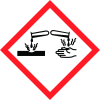
Causes severe skin burns and eye damage
Section 2
2.1 Classification of the substance or mixture
according to Regulation (EC) No 1272/2008 [CLP] Skin corrosion - Category 1C Serious Eye Damage - Category 1 Skin sensitization - Category 1 Germ cell mutagenicity - Category 2 Reproductive toxicity - Category 1B Specific target organ toxicity - repeated exposure - Oral Category 1
Signal word
Danger
Hazard statements
H314: Causes severe skin burns and eye damage. H317: May cause an allergic skin reaction. H341: Suspected of causing genetic defects H360: May damage fertility or the unborn child H372a: Causes damage to organs through prolonged or repeated exposure if swallowed.
Prevention
P201:Obtain special instructions before use. P260:Do not breathe dust/fume/gas/mist/vapours/spray. P264:Wash hands thoroughly after handling. P280:Wear protective gloves/protective clothing/eye protection/face protection. P281:Use personal protective equipment as required.
Response
P301 + P330 + P331 IF SWALLOWED rinse mouth. Do NOT induce vomiting P305 + P351 + P338 IF IN EYES Rinse cautiously with water for several minutes. Remove contact lenses, if present and easy to do. Continue rinsing. P308 + P313 IF exposed or concerned Get medical advice/attention P310: Immediately call a POISON CENTRE/doctor.
Storage
P405: Store locked up..
2.3 Other hazards
Corrosive Reproductive toxin. May cause sensitization by skin contact. Suspected of causing genetic defects.



