




Note: Ingredients listed on restricted chemical lists
EC/CAS
118-96-7
Name of the chemical
2,4,6-Trinitrotoluol (und Isomeren in technischen Gemischen)
Concentration
N/A
EC/CAS
204-289-6
Name of the chemical
2,4,6-Trinitrotoluol (und Isomeren in technischen Gemischen)
Concentration
N/A
General Information
Product name
Pressed TNT Boosters: TNT-44; TNT-45; TNT-75; TNT-160;
Chemical name
C7H5N3O6
CAS No.
118-96-7
REACH No
01-2119860061-49-0000
Icons in SDS
Company Information
company name
Zakłady Chemiczne „NITRO-CHEM” S.A.
e-mail address of the competent person responsible for the Safety Data Sheet
wasilewska@nitrochem.com.pl, t.soczka@nitrochem.com.pl
GHS Information
Signal word
Danger
Hazard Codes
Hazard statements (CLP)
H201, H301, H301+H311+H331, H311, H331, H373, H411
Hazard statements
Code
Statements
H201
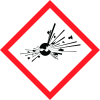
Explosive; mass explosion hazard
H301
Toxic if swallowed
H301+H311+H331
Toxic if swallowed, in contact with skin or if inhaled
H311
Toxic in contact with skin
H331
Toxic if inhaled
H373
May cause damage to organs through prolonged or repeated exposure
H411
Toxic to aquatic life with long lasting effects
Section 2
2.1 Classification of the substance or mixture
According to Regulation (EC) No 1272/2008 (CLP)
Hazard statements
read in section 16) Expl. 1.1 H201 Acute Tox. 3 H331 Acute Tox. 3 H311 Acute Tox. 3 H301 STOT RE 2 H373 Aquatic Chronic 2 H411 (H) and used contractions read in point 16 Data sheet updated Data sheet issued Version Substance Page 01.06.2015 06.12.2013 2.0 1 of 10
2.2 Label elements
2,4,6-trinitrotoluene; TNT EC No: 204-289-6 DANGER H201 Explosive; mass explosion hazard. H301+H311+H331 Toxic if swallowed, in contact with skin or if inhaled. H311 Toxic in contact with skin. H331 Toxic if inhaled. H373 May cause damage to organs (liver, eyes, nervous system, circulatory system) through prolonged or repeated exposure. H411 Toxic to aquatic life with long lasting effects. P210 Keep away from heat, hot surfaces, sparks, open flames and other ignition sources. No smoking. P273 Avoid release to the environment. P370+P380 In case of fire: Evacuate area. P373 DO NOT fight fire when fire reaches explosives. P312 Call a POISON CENTER/doctor/…/if you feel unwell. P501 Dispose of contents/container to an authorized organization.
2.3 Other hazards
High bursting explosive. Risk of explosion by shock, friction or fire. Burning of small amounts in the open is safe burning of small amounts in a closed area or burning of large amounts results in explosion Substance does not meets the criteria for PBT or vPvB in accordance with Annex XIII REACH Regulation. Toxic combustion products: Nitric oxides(NOx), Carbon oxides (CO, CO2).


