


Note: Ingredients listed on restricted chemical lists
EC/CAS
141-78-6
Name of the chemical
acetic acid, ethyl ester
Concentration
>=10-<20
EC/CAS
106-97-8
Name of the chemical
n-Butan, enthält 0,1% Butadien
Concentration
>=10-<20
EC/CAS
75-28-5
Name of the chemical
iso-Butan, enthält 0,1% Butadien
Concentration
>=1-<10 >=2.5-<10
EC/CAS
64742-95-6
Name of the chemical
Solvent naphtha (petroleum), light arom
Concentration
>=1-<2.5
EC/CAS
123-86-4
Name of the chemical
acetic acid, butyl ester
Concentration
>=1-<2.5
General Information
Version
12.0
Revision date
2026-06-09
Product name
Protective Engine Lacquer-400ml
1.2.1 Relevant identified uses
Paint Coatings
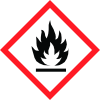
Icons in SDS


Company Information
company name
WURTH
e-mail address of the competent person responsible for the Safety Data Sheet
prodsafe@wuerth.com
GHS Information
Signal word
Danger
Hazard Codes
Hazard statements (CLP)
H222, H229, H316, H319, H336, H402
Hazard statements
Code
Statements
H222
Extremely flammable aerosol
Section 2
SECTION 2: Hazards identification
Emergency Overview Appearance : Aerosol containing a liquefied gas Colour : coloured Odour characteristic Extremely flammable aerosol. Pressurised container May burst if heated. Causes mild skin irrita- tion. Causes serious eye irritation. May cause drowsiness or dizziness. Harmful to aquatic life GHS Classification Aerosols Category 1 Skin corrosion/irritation Category 3 Serious eye damage/eye irri- tation Category 2A Specific target organ toxicity - Category 3 single exposure Short-term (acute) aquatic Category 3 hazard
Signal word
Danger
Hazard statements
H222 Extremely flammable aerosol. H229 Pressurised container: May burst if heated. H316 Causes mild skin irritation. H319 Causes serious eye irritation. H336 May cause drowsiness or dizziness. H402 Harmful to aquatic life.
Prevention
P210 Keep away from heat, hot surfaces, sparks, open flames and other ignition sources. No smoking. P211 Do not spray on an open flame or other ignition source. P251 Do not pierce or burn, even after use. P261 Avoid breathing spray. P264 Wash skin thoroughly after handling. P271 Use only outdoors or in a well-ventilated area. P273 Avoid release to the environment. P280 Wear eye protection/ face protection.
Response
P304 + P340 + P319 IF INHALED: Remove person to fresh air and keep comfortable for breathing. Get medical help if you feel unwell. P305 + P351 + P338 IF IN EYES: Rinse cautiously with water for several minutes. Remove contact lenses, if present and easy to do. Continue rinsing. P332 + P317 If skin irritation occurs: Get medical help. P337 + P317 If eye irritation persists: Get medical help.
Storage
P405 Store locked up. P410 + P412 Protect from sunlight. Do not expose to tempera- tures exceeding 50 °C/ 122 °F.
Disposal
P501 Dispose of contents/ container to an approved waste disposal plant.
Other physicochemical hazards
Extremely flammable aerosol. Pressurised container: May burst if heated.
Health hazards
Causes mild skin irritation. Causes serious eye irritation. May cause drowsiness or dizziness
Environmental hazards
Harmful to aquatic life
Other hazards which do not result in classification
Repeated exposure may cause skin dryness or cracking.
2.1 Classification of the substance or mixture
Aerosols : Category 1 Skin corrosion/irritation : Category 3 Serious eye damage/eye irri- : Category 2A tation Specific target organ toxicity - : Category 3 single exposure Short-term (acute) aquatic : Category 3 hazard



