




Note: Ingredients listed on restricted chemical lists
EC/CAS
265-151-9/64742-49-0
Name of the chemical
Naphtha (petroleum), hydrotreated light
Concentration
>=30-<50
EC/CAS
265-185-4/64742-82-1
Name of the chemical
Naphtha (petroleum), hydrodesulfurized heavy
Concentration
>=25-<30
EC/CAS
200-661-7/67-63-0
Name of the chemical
Propan-2-ol
Concentration
>=10-<20 >=10-<20
EC/CAS
204-696-9/124-38-9
Name of the chemical
Carbon dioxide CO2
Concentration
>=1-<10
General Information
Version
4.0
Revision date
2015-05-14
Product name
Tar remover
1.2.1 Relevant identified uses
Professional use product Cleaning agent, Detergent
Emergency telephone
00356 2149 4604, 00356 2144 1081
Icons in SDS


Company Information
company name
Würth Ltd
e-mail address of the competent person responsible for the Safety Data Sheet
prodsafe@wuerth.com
GHS Information
Signal word
Danger
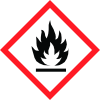
Hazard Codes
Hazard statements (CLP)
H222, H229, H315, H319, H336, H372, H411
Hazard statements
Code
Statements
H222
Extremely flammable aerosol
Section 2
SECTION 2: Hazards identification
Regulation (EC) No. 1272/2008 Classification of the substance or mixture
Signal word
Danger
Hazard statements
H222 Extremely flammable aerosol. H229 Pressurised container: May burst if heated. H315 Causes skin irritation. H319 Causes serious eye irritation. H336 May cause drowsiness or dizziness. H372 Causes damage to organs through prolonged or repeated exposure. H411 Toxic to aquatic life with long lasting effects.
Prevention
P210 Keep away from heat, hot surfaces, sparks, open flames and other ignition sources. No smoking. P211 Do not spray on an open flame or other ignition source. P251 Do not pierce or burn, even after use. P260 Do not breathe spray. P273 Avoid release to the environment.
Response
P391 Collect spillage.
Storage
P410 + P412 Protect from sunlight. Do not expose to tem- peratures exceeding 50 °C/ 122 °F.
Hazardous Ingredients
Naphtha (petroleum), hydrotreated light Naphtha (petroleum), hydrodesulfurized heavy Propan-2-ol Hydrocarbons, C9-C11, n-alkanes, isoalkanes, cyclics, <2% aromatics
2.3 Other hazards
This substance/mixture contains no components considered to be either persistent, bioaccumula- tive and toxic (PBT), or very persistent and very bioaccumulative (vPvB) at levels of 0.1% or higher.
ECOLOGICAL INFORMATION
The substance/mixture does not contain components considered to have endocrine disrupting properties according to REACH Article 57(f) or Commission Delegated regu- lation (EU) 2017/2100 or Commission Regulation (EU) 2018/605 at levels of 0.1% or higher.
TOXICOLOGICAL INFORMATION
The substance/mixture does not contain components considered to have endocrine disrupting properties according to REACH Article 57(f) or Commission Delegated regulation (EU) 2017/2100 or Commission Regulation (EU) 2018/605 at levels of 0.1% or higher. May displace oxygen and cause rapid suffocation.
2.1 Classification of the substance or mixture
Classification (REGULATION (EC) No 1272/2008) Aerosols, Category 1 H222: Extremely flammable aerosol. H229: Pressurised container: May burst if heated. Skin irritation, Category 2 H315: Causes skin irritation. Eye irritation, Category 2 H319: Causes serious eye irritation. Specific target organ toxicity - single ex- H336: May cause drowsiness or dizziness. posure, Category 3 Specific target organ toxicity - repeated H372: Causes damage to organs through pro- exposure, Category 1 longed or repeated exposure. Long-term (chronic) aquatic hazard, Cat- H411: Toxic to aquatic life with long lasting effects. egory 2



