

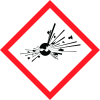



Note: Ingredients listed on restricted chemical lists
EC/CAS
57-50-1
Name of the chemical
Sucrose, pure C12H22O11
Concentration
25-50
EC/CAS
9004-70-0
Name of the chemical
Nitrocellulose
Concentration
<10
EC/CAS
592-87-0
Name of the chemical
Lead thiocyanate
Concentration
<0.1
General Information
Revision date
2016-06-23
Product name
AMMUNITION, TEAR-PRODUCING with burster, expelling charge or propelling charge
1.2.1 Relevant identified uses
Explosive product producing CS tear gas for crowd dispersal
Emergency telephone
0418 158 337 All hours
Icons in SDS


Company Information
company name
Winchester Australia Ltd
e-mail address of the competent person responsible for the Safety Data Sheet
aedmondson@olin.com.au
GHS Information
Signal word
Danger
Hazard Codes
Hazard statements (CLP)
H204, H240, H302, H315, H319, H332, H335, H341, H360Df, H411
Hazard statements
Code
Statements
H204
Fire or projection hazard
Section 2
2.1 Classification of the substance or mixture
HAZARDOUS CHEMICAL. DANGEROUS GOODS. According to the WHS Regulations and the ADG Code. CHEMWATCH HAZARD RATINGS Min Max Flammability 1 Toxicity 2 0 = Minimum Body Contact 2 1 = Low 2 = Moderate Reactivity 4 3 = High Chronic 2 4 = Extreme Poisons Schedule Not Applicable Explosive Division 1.4, Self Reactive Type A, Acute Toxicity (Oral) Category 4, Acute Toxicity (Inhalation) Category 4, Skin Corrosion/Irritation Category 2, [1] Eye Irritation Category 2A, Germ cell mutagenicity Category 2, Reproductive Toxicity Category 1A, Specific target organ toxicity - single exposure Category 3 (respiratory tract irritation), Chronic Aquatic Hazard Category 2 Legend: 1. Classified by Chemwatch; 2. Classification drawn from HCIS; 3. Classification drawn from Regulation (EU) No 1272/2008 - Annex VI
Signal word
DANGER
Hazard statements
H204 Fire or projection hazard. H240 Heating may cause an explosion. H302 Harmful if swallowed. H332 Harmful if inhaled. H315 Causes skin irritation. H319 Causes serious eye irritation. H341 Suspected of causing genetic defects. H360Df May damage the unborn child. Suspected of damaging fertility. H335 May cause respiratory irritation. H411 Toxic to aquatic life with long lasting effects.
Prevention
P201 Obtain special instructions before use. P210 Keep away from heat/sparks/open flames/hot surfaces. - No smoking. P234 Keep only in original container. P250 Do not subject to grinding/shock/sources of friction. P271 Use only outdoors or in a well-ventilated area. P280 Wear protective gloves/protective clothing/eye protection/face protection. P281 Use personal protective equipment as required. P220 Keep/Store away from clothing/organic material/combustible materials. P240 Ground/bond container and receiving equipment. P261 Avoid breathing dust/fumes. P270 Do not eat, drink or smoke when using this product. P273 Avoid release to the environment.
Response
P308+P313 IF exposed or concerned: Get medical advice/attention. P362 Take off contaminated clothing and wash before reuse. P370+P380 In case of fire: Evacuate area. P370+P380+P375 In case of fire: Evacuate area. Fight fire remotely due to the risk of explosion. P372 Explosion risk in case of fire. P374 Fight fire with normal precautions from a reasonable distance. P305+P351+P338 IF IN EYES: Rinse cautiously with water for several minutes. Remove contact lenses, if present and easy to do. Continue rinsing. P373 DO NOT fight fire when fire reaches explosives. P337+P313 If eye irritation persists: Get medical advice/attention. P391 Collect spillage. P301+P312 IF SWALLOWED: Call a POISON CENTER or doctor/physician if you feel unwell. P302+P352 IF ON SKIN: Wash with plenty of soap and water. P304+P340 IF INHALED: Remove victim to fresh air and keep at rest in a position comfortable for breathing. P330 Rinse mouth. P332+P313 If skin irritation occurs: Get medical advice/attention. P370+P378 In case of fire: Use water spray/fog for extinction.
Storage
P403+P235 Store in a well-ventilated place. Keep cool. P405 Store locked up. P411 Store at temperatures not exceeding 30°C/86°F (see storage requirements on SDS). P401 Store according to local regulations for explosives. P420 Store away from other materials.
Disposal
P501 Dispose of contents/container in accordance with local regulations.


