

Note: Ingredients listed on restricted chemical lists
EC/CAS
13463-67-7
Name of the chemical
Reaction mass of titanium dioxide and silver chloride
Concentration
N/A
EC/CAS
14808-60-7
Name of the chemical
Silica, crystalline
Concentration
N/A
General Information
Revision date
2015-07-15
Product name
Prep Coat
Product Synonyms
(on label / list)
1.2.1 Relevant identified uses
Interior Drywall Completion Coat System
Icons in SDS
Company Information
company name
Westpac Materials
GHS Information
Signal word
Danger
Hazard Codes
Hazard statements (CLP)
H350, H373, H402
Hazard statements
Code
Statements
H350
May cause cancer
Section 2
Classification (GHS-US)
Carc. 1A H350 STOT RE 2 H373 Aquatic Acute 3 H402
Hazard statements
see section 16 H350 - May cause cancer (Inhalation) H373 - May cause damage to organs (lungs/respiratory system) through prolonged or repeated exposure (Inhalation) H402 – Harmful to aquatic life
2.2 Label elements
GHS-US labeling
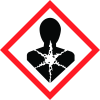
Hazard pictograms
GHS08
Signal word
Danger
Precautionary statements
P201 - Obtain special instructions before use P202 - Do not handle until all safety precautions have been read and understood P260 - Do not breathe dust, mist, spray, vapors P280 - Wear appropriate PPE (See Section 8) P308 + P313 - If exposed or concerned: Get medical advice/attention P314 - Get medical advice/attention if you feel unwell P405 - Store locked up P501 - Dispose of contents/container to comply with local/regional/national/international regulations
Other hazards which do not result in classification
Traces of formaldehyde and vinyl acetate monomer may be present. These materials are not added to this product. They may be present as residual trace chemicals in some commonly used raw materials. Any exposure to these chemicals during product use is expected to remain well below both ACGIH and OSHA limits. Other ingredients may be considered nuisance dusts regulated as Particulates Otherwise Not Regulated. Other constituents in this product are considered nuisance particles or dust. Exposure to dusts, mists, sprays or powders may cause mechanical irritation of the respiratory system, eyes, and skin. . Particulates Not Otherwise Regulated (Respirable Fraction) has an OSHA PEL of 5 mg/m3 (15 mppcf) TWA and ACGIH Guideline of 3 mg/m3 TWA. Particulates Not Otherwise Regulated (Total Dust) has an OSHA PEL of 15 mg/m3 (50 mppcf) TWA and ACGIH Guideline of 10 mg/m3 TWA.
Ingredient(s) with unknown acute toxicity
Not applicable



