


Note: Ingredients listed on restricted chemical lists
EC/CAS
13927-77-0
Name of the chemical
Nickel, bis(dibutylcarbamodithioato-S,S')-, (SP-4-1)
Concentration
97 %
General Information
Version
07/30/15
Revision date
2015-07-30
Product name
Westco NBC
Product Synonyms
Nickel-dibutyldithiocarbamate; NDBC, Accelerator NBC
Emergency telephone
1 800 424 9300
Icons in SDS


Company Information
company name
Western Reserve Chemical Corporation
GHS Information
Signal word
DANGER!
Hazard Codes
Hazard statements (CLP)
H317, H334, H351, H373
Hazard statements
Code
Statements
H317
May cause an allergic skin reaction
Section 2
SECTION 2: Hazards identification
Classification of the chemical in accordance with CFR 1910.1200(d)(f)
Signal word
DANGER!
Hazard statements
May cause allergy or asthma symptoms or breathing difficulties if inhaled. May cause an allergic skin reaction. Suspected of causing cancer . May cause damage to organs, (respiratory tract) through prolonged or repeated exposure. May form combustible dust concentrations in air.
Precautionary statements
Obtain special instructions before use. Do not handle until all safety precautions have been read and understood. Avoid breathing dust or mist. In case of inadequate ventilation wear respiratory protection: NIOSH approved dust respirator is recommended. Contaminated work clothing must not be allowed out of the workplace. Wear protective gloves/protective clothing and eye protection. Wash hands thoroughly after handling. Contaminated work clothing should not be allowed out of the workplace Do not eat, drink or smoke when using this product. Hazards not otherwise classified that have been identified during the classification process: Emergency Overview Classification of Substance COMBUSTIBLE DUST SENSITIZATION - RESPIRATORY - Category 1 SENSITIZATION - SKIN - Category 1 CARCINOGENICITY - Category 1A SPECIFIC TARGET ORGAN (REPEATED EXPOSURE) - Respiratory - Category 1
Principle Routes of Exposure
Inhalation. Dermal - skin Eye Causes mild eye irritation. Signs/symptoms can include redness, swelling, pain and tearing. Skin May cause an allergic skin reaction. May be absorbed through the skin and product effects similar to those caused by inhalation and/or ingestion. Inhalation Exposure to dust particles generated from this material may cause irritation of the respiratory tract. Inhalation may cause alcohol intolerance. May cause allergy or asthma symptoms or breathing difficulties if inhaled. Exposure to decomposition products may cause a health hazard. Serious effects may be delayed following exposure. Ingestion May cause alcohol intolerance (Antabuse Effect) May cause headache, dizziness, nausea, vomiting, gastrointestinal irritation. Carcinogenicity Nickel and certain nickel compounds: There is sufficient evidence of the carcinogenicity of nickel and nickel compounds (NTP-1985). (IARC 1976, vol 11) states there is sufficient evidence for the carcinogenicity of certain nickel compounds. Nickel subsulfide is carcinogenic in rats by inhalation, producing lung cancer. Nickel compounds (nickel powder, subsulfide, oxide, carbonate and nickelocene) produced local sarcomas in mice, rats and hamsters when given intramuscularly. Inhalation of nickel carbonyl produced low incidence of lung tumours in rats. NOTE: May react with nitrosating agents during rubbers vulcanization to form nitrosamines. Some nitrosamines are suspect human carcinogens. OTHER: THE CARCINOGENIC POTENTIAL OF THIS PRODUCT, NICKEL DIBUTYLDITHIOCARBAMATE, HAS NOT BEEN DETERMINED. “Nickel Compounds”, as a generic category, and some specific members of that category, are recognized as possible human carcinogens.
2.1 Classification of the substance or mixture
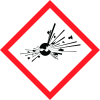
GHS Pictograms: Signal Word: DANGER! Hazard Statements: May cause allergy or asthma symptoms or breathing difficulties if inhaled. May cause an allergic skin reaction. Suspected of causing cancer . May cause damage to organs, (respiratory tract) through prolonged or repeated exposure. May form combustible dust concentrations in air.


