


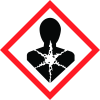
General Information
Revision date
2015-05-30
Product name
Type
Icons in SDS
Company Information
company name
Welding Material Sales
e-mail address of the competent person responsible for the Safety Data Sheet
info@weldingmaterialsales.com
GHS Information
Signal word
Warning
Section 2
SECTION 2: Hazards identification
1272/2008 EMERGENCY TELEPHONE NUMBER: 800-424-9300 IMPORTANT ‐ This section covers the hazardous materials from which this product is manufactured. The fumes and gases produced during welding with normal use of this product are also addressed in Section 8. The term "hazardous" in this section should be interpreted as a term required and defined in OSHA Hazard Communication Standard (29 CFR Part 1910.1200). REGULATORY HAZARD CLASSIFICATION/DESIGNATION
Hazardous Ingredients
CAS EINECS Γ
67/548/EEC
Δ Η IARC Ε NTP Ζ OSHA 65 Θ ALUMINUM 7429‐90‐5 231‐072‐3 F ‐ R10, R15, R17 ‐‐‐ ALUMINUM OXIDE 1344‐28‐1 215‐691‐6 None ‐‐‐ ‐‐‐ ANTIMONY TRIOXIDE 1309‐64‐4 215‐175‐0 Carc 3 Φ ‐ R40 2B ‐‐‐ X BARIUM COMPOUNDS 7440‐39‐3 231‐149‐1 None ‐‐‐ (as Barium) BARIUM FLOURIDE 7787‐32‐8 232‐108‐0 None ‐‐‐ CALCIUM CARBONATE 1317‐65‐3 215‐279‐6 None ‐‐‐ CERIUM OXIDE 1306‐38‐3 215‐150‐4 None ‐‐‐ CHROMIUM 7440‐47‐3 231‐157‐5 O ‐ R9; Carc 1 Φ ‐ R45; Muta 2 ‐ R46; Repr 3 ‐ R62; T+ ‐ R26; T ‐ R24/25, 1 ΣΣ, 3 Σ K ΣΣ X ΣΣ R48/23; C ‐ R35, R42/43; N ‐ R50, R53 ΣΣΣ COBALT 7440‐48‐4 231‐158‐0 Xn; R42/43, R53 2B ‐‐‐ X COPPER 7440‐50‐8 231‐159‐6 None ‐‐‐ ‐‐‐ FLUORSPAR 7789‐75‐5 232‐188‐7 None ‐‐‐ IRON 7439‐89‐6 231‐096‐4 None ‐‐‐ IRON OXIDE 1309‐37‐1 215‐168‐2 None 3 ‐‐‐ LITHIUM CARBONATE 554‐13‐2 209‐062‐5 F ‐ R14/15; C ‐ R34 Τ ‐‐‐ LITHIUM FLUORIDE 7789‐24‐4 232‐152‐0 F ‐ R14/15; C ‐ R34 Τ ‐‐‐ LITHIUM OXIDE 12057‐24‐8 235‐019‐5 F ‐ R14/15; C ‐ R34 Τ ‐‐‐ MAGNESIUM 7439‐95‐4 231‐104‐6 F ‐ R11, R15, R17 ‐‐‐ MAGNESIUM OXIDE 1309‐48‐4 215‐171‐9 None ‐‐‐ MANGANESE 7439‐96‐5 231‐105‐1 Xn ‐ R20/22 Y ‐‐‐ MANGANESE OXIDE 1344‐43‐0 215‐171‐9 None ‐‐‐ MOLYBDENUM 7439‐98‐7 231‐107‐2 Xn ‐ R48/20/22; Xi ‐ R36/37 Χ ‐‐‐ NICKEL 7440‐02‐0 231‐111‐4 Crc 3 Φ ‐ R40; T ‐ R43, R48/23 1 K X SILICA 14808‐60‐7 238‐878‐4 Xn ‐ R48/20, R40/20 1 Ψ K X (Amorphous Silica Fume) 69012‐64‐2 273‐761‐5 None 3 K ‐‐‐ X SILICON 7440‐21‐3 231‐130‐8 None ‐‐‐ STRONTIUM FLUORIDE 7783‐48‐4 232‐000‐3 None ‐‐‐ TITANIUM 7440‐32‐6 231‐142‐3 None ‐‐‐ TITANIUM DIOXIDE 13463‐67‐7 236‐675‐5 None 2B ‐‐‐ X ZIRCONIUM 7440‐67‐7 231‐176‐9 F ‐ R15, R17 ‐‐‐ Γ – European INventory of Existing Chemical Substances Number Δ ‐ European Union Directive 67/548/EEC – Annex 1 Ε – International Agency for Research on Cancer (1 – Human Carcinogen, 2A – Probably Carcinogenic to Humans, 2B – Possibly Carcinogenic to Humans, 3 – Unclassifiable as to Carcinogenicity in Humans, 4 Probably Not Carcinogenic to Humans) Ζ – US National Toxicology Program (K – Known Carcinogen, S – Suspected Carcinogen) Η – OSHA Known Carcinogen List Θ – California Proposition 65 (X – On Proposition 65 list) ‐‐‐ Dashes indicate the ingredient is not listed with the IARC, NTP, OSHA or 65 Φ – Carcinogen, Mutagen or Reproductive Category per European Council Directive 67/548/EEC Annex I Σ – Metal and Chromium III Compounds ΣΣ – Chromium VI Compounds ΣΣΣ – Chromium (VI) Trioxide EU 67/548/EEC Classification/Designation Y – Manganese Dioxide EU 67/548/EEC Classification/Designation X – Molybdenum Trioxide EU 67/548/EEC Classification/Designation Τ – Lithium EU 67/548/EEC Classification/Designation Ψ – Silica Crystalline α‐Quartz The following symbols correspond with the EU 67/548/EEC column above are in European Union Directive 67/548/EEC Annex 1 and EC 1272/2008 Annex VI – Table 3.2: F – Flammable Xn – Harmful Xi – Irritant O ‐ Oxidizer C – Corrosive N – Dangerous for the Environment T – Toxic T+ ‐ Extremely Toxic WARNING! ‐ Avoid breathing welding fumes and gases, they may be dangerous to your health. Always use adequate ventilation. Always use appropriate personal protective equipment.
Principle Routes of Exposure
Respiratory System, Eyes and/or Skin ARC RAYS: The welding arc can injure eyes and burn skin. ELECTRIC SHOCK: Arc welding and associated processes can kill. See Section 8. FUMES AND GASES: Can be dangerous to your health. Welding fumes and gases cannot be classified simply. The composition and quantity of both are dependent upon the metal being welded, the process, procedures and electrodes used. Most fume ingredients are present as complex oxides and compounds and not as pure metals. When the electrode is consumed, the fume and gas decomposition products generated are different in percent and form from the ingredients listed in Section 3. Decomposition products of normal operation include those originating from the volatilization, reaction or oxidation of the materials shown in this section, plus those from the base metal and coating, etc., as noted above. Monitor for the materials identified in the list within this section. Fumes from the use of this product may contain complex oxides or compounds of the following elements and molecules: amorphous silica fume, antimony trioxide, barium, calcium oxide, chromium, cobalt, copper, fluorspar or fluorides, lithium, manganese, nickel, silica and strontium. Other reasonably expected constituents of the fume would also include complex oxides of iron, titanium, silicon and molybdenum. Gaseous reaction products may include carbon monoxide and carbon dioxide. Ozone and nitrogen oxides may be formed by the radiation from the arc. Other conditions which also influence the composition and quantity of the fumes and gases to which workers may be exposed include: coatings on the metal being welded (such as paint, plating or galvanizing), the number of welders and the volume of the work area, the quality and amount of ventilation, the position of the welder's head with respect to the fume plume, as well as the presence of contaminants in the atmosphere (such as chlorinated hydrocarbon vapors from cleaning and degreasing activities). One recommended way to determine the composition and quantity of fumes and gases to which workers are exposed is to take an air sample inside the welder's helmet if worn or in the worker's breathing zone. See ANSI/AWS F1.1 and F1.3, available from the "American Welding Society", 8669 Doral Blvd., Suite 130, Doral, FL 33166.



