



Note: Ingredients listed on restricted chemical lists
EC/CAS
8052-41-3
Name of the chemical
Stoddard Solvent; Naphtha (petroleum), hydrodesulfurized heavy
Concentration
N/A
EC/CAS
111-42-2
Name of the chemical
N,N-Diethanolamine (Ethanol, 2,2'-iminobis-)
Concentration
N/A
EC/CAS
61789-86-4
Name of the chemical
Sulfonic acids, petroleum, calcium salts
Concentration
N/A
General Information
Revision date
2018-02-20
Product name
Wire Coat
1.2.1 Relevant identified uses
Chain and Cable Lubricant Protectant
Manufacturer Name
Wechem, Inc
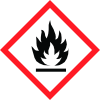
Icons in SDS
Company Information
company name
Wechem, Inc
GHS Information
Signal word
Danger
Hazard Codes
Hazard statements (CLP)
H222, H317, H372
Hazard statements
Code
Statements
H222
Extremely flammable aerosol
Section 2
OSHA HCS Classification
Physical, Flammable Aerosols, 1 Health, Respiratory or skin sensitization, 1 Skin Health, Specific target organ toxicity - Repeated exposure, 1
Signal word
DANGER
Hazard statements
H222 - Extremely flammable aerosol H317 - May cause an allergic skin reaction H372 - Causes damage to organs through prolonged or repeated exposure
Precautionary statements
P210 - Keep away from heat/sparks/open flames/hot surfaces. No smoking P211 - Do not spray on an open flame or other igntion source. P251 - Pressurized container: Do not pierce or burn, even after use. P260 - Do not breathe gas. P270 - Do not eat, drink or smoke when using this product. P272 - Contaminated work clothing should not be allowed out of the workplace. P280 - Wear protective gloves/protective clothing/eye protection/face protection. P302 - IF ON SKIN: Wash with plenty of water. SDS Page 2 of 8 P308+313 - IF exposed or concerned: Get medical advice/attention. P321 - Specific treatment (see this label). P333 - If skin irritation or a rash occurs: Get medical advice/attention. P363 - Wash contaminated clothing before reuse. P410 - Protect from sunlight. P412 - Do not expose to temperatures exceeding 50 °C/122 °F P501 - Dispose of contents/container in accordance with local/regional/national/international regulations.
Principle Routes of Exposure
Inhalation, eye, ingestion, skin absorption Target Organs: Lungs Inhalation: May cause damage to organs through prolonged or repeated exposure by inhalation. Skin Contact: May cause an allergic skin reaction. Eye Contact: Direct contact with eyes may cause temporary irritation. Ingestion: Expected to be a low ingestion hazard.



