



Note: Ingredients listed on restricted chemical lists
EC/CAS
13463-67-7
Name of the chemical
Reaction mass of titanium dioxide and silver chloride
Concentration
7-13%%
EC/CAS
14807-96-6
Name of the chemical
Talc
Concentration
5-10%%
EC/CAS
101-68-8
Name of the chemical
4,4’-Methylenediphenyl diisocyanate
Concentration
1-5%%
EC/CAS
9016-87-9
Name of the chemical
4,4'-Methylendiphenyldiisocyanat tech. (Polymeres) MDI, pMDI (in Form atembarer Aerosole, A-Fraktion)
Concentration
1-5%%
EC/CAS
64742-95-6
Name of the chemical
Solvent naphtha (petroleum), light arom
Concentration
1-5%%
EC/CAS
26471-62-5
Name of the chemical
m-Tolylidendiisocyanat
Concentration
0.1-1%%
EC/CAS
64742-82-1
Name of the chemical
Naphtha (petroleum), hydrodesulfurized heavy
Concentration
0.1-1%%
EC/CAS
64741-65-7
Name of the chemical
Petroleum, coal, tar and natural gas and their derivatives generated using distillation and/or other processing methods if they contain ≥ 0,1 % w/w benzene
Concentration
0.1-1%%
EC/CAS
872-50-4
Name of the chemical
N-Methyl-2-Pyrrolidone; 1-methyl-2-pyrrolidone (NMP)
Concentration
0.1-1%%
General Information
Revision date
2021-01-01
Product name
MC-CR 100
Emergency telephone
1-800 424-9300, 1-703 527-3887
Icons in SDS


Company Information
company name
Wasser Technologies
GHS Information
Signal word
Danger
Hazard Codes
Hazard statements (CLP)
H225, H315, H317, H319, H334, H335, H340, H350, H360, H373
Hazard statements
Code
Statements
H225
Highly Flammable liquid and vapour
Section 2
SECTION 2: Hazards identification
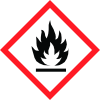
NFPA Rating Classification of the substance or mixture Flame Flam. Liq. 2 H225 Highly flammable liquid and vapor
Health hazards
Resp. Sens. 1 H334 May cause allergy or asthma symptoms or breathing difficulties if inhaled Muta. 1B H340 May cause genetic defects Carc. 1B H350 May cause cancer Repr. 1B H360 May damage fertility or the unborn child STOT RE 2 H373 May cause damage to organs through prolonged or repeated exposure Skin Irrit. 2 H315 Causes skin irritation Eye Irrit. 2A H319 Causes serious eye irritation Skin Sens. 1 H317 May cause an allergic skin reaction STOT SE 3 H335 May cause respiratory irritation
2.2 Label elements
The product is classified and labeled according to the Globally Harmonized System (GHS).
Hazard pictograms
~ ~ ~ GHS02 GHS07 GHS08
Signal word
Danger
Hazardous Ingredients
titanium dioxide 4,4'-methylenediphenyl diisocyanate (Contd. of page 1) Solvent naphtha (petroleum), light arom. Talc (Mg3H2(SiO3)4)
Hazard statements
H225 Highly flammable liquid and vapor. H315 Causes skin irritation. H319 Causes serious eye irritation. H334 May cause allergy or asthma symptoms or breathing difficulties if inhaled. H317 May cause an allergic skin reaction. H340 May cause genetic defects. H350 May cause cancer. H360 May damage fertility or the unborn child. H335 May cause respiratory irritation. H373 May cause damage to organs through prolonged or repeated exposure.
Precautionary statements
Keep out of reach from children. P210 Keep away from heat/sparks/open flames/hot surfaces. - No smoking. P241 Use explosion-proof electrical/ventilating/lighting/equipment. P260 Do not breathe dust/fume/gas/mist/vapors/spray. P284 Wear respiratory protection. P280 Wear protective gloves / eye protection / face protection. P280 Wear protective gloves. P280 Wear eye protection / face protection. P240 Ground/bond container and receiving equipment. P242 Use only non-sparking tools. P243 Take precautionary measures against static discharge. P264 Wash thoroughly after handling. P271 Use only outdoors or in a well-ventilated area. P272 Contaminated work clothing must not be allowed out of the workplace. P201 Obtain special instructions before use. P202 Do not handle until all safety precautions have been read and understood. P303+P361+P353 IF ON SKIN (or hair): Remove/Take off immediately all contaminated clothing. Rinse skin with water/shower. P305+P351+P338 If in eyes: Rinse cautiously with water for several minutes. Remove contact lenses, if present and easy to do. Continue rinsing. P321 Specific treatment (see on this label). P342+P311 If experiencing respiratory symptoms: Call a poison center/doctor. P304+P340 IF INHALED: Remove victim to fresh air and keep at rest in a position comfortable for breathing. P312 Call a poison center/doctor if you feel unwell. P363 Wash contaminated clothing before reuse. P308+P313 IF exposed or concerned: Get medical advice/attention. P333+P313 If skin irritation or rash occurs: Get medical advice/attention. P337+P313 If eye irritation persists: Get medical advice/attention. P314 Get medical advice/attention if you feel unwell. P370+P378 In case of fire Use for extinction CO2, powder or water spray P362+P364 Take off contaminated clothing and wash it before reuse. P405 Store locked up. P403+P233 Store in a well-ventilated place. Keep container tightly closed. P403+P235 Store in a well-ventilated place. Keep cool. P501 Dispose of contents/container in accordance with local/regional/national/international regulations.
Classification system
· NFPA ratings (scale 0 - 4) Health = 3 3 Fire = 3 3 0 Reactivity = 0 (Contd. of page 2) · HMIS-ratings (scale 0 - 4) HEALTH *3 Health = *3 FIRE 3 Fire = 3 REACTIVITY 0 Reactivity = 0
PBT Substances
Not applicable
vPvB Substances
Not applicable
2.1 Classification of the substance or mixture
~ Flame Flam. Liq. 2 H225 Highly flammable liquid and vapor. ~ Health hazard Resp. Sens. 1 H334 May cause allergy or asthma symptoms or breathing difficulties if inhaled. Muta. 1B H340 May cause genetic defects. Carc. 1B H350 May cause cancer. Repr. 1B H360 May damage fertility or the unborn child. STOT RE 2 H373 May cause damage to organs through prolonged or repeated exposure. ~ Skin Irrit. 2 H315 Causes skin irritation. Eye Irrit. 2A H319 Causes serious eye irritation. Skin Sens. 1 H317 May cause an allergic skin reaction. STOT SE 3 H335 May cause respiratory irritation.



