


Note: Ingredients listed on restricted chemical lists
EC/CAS
112-57-2
Name of the chemical
3,6,9-triazaundecamethylenediamine
Concentration
N/A
General Information
Revision date
2019-01-17
Product name
CAT.190CL
CAS No.
112-57-2
Icons in SDS
Company Information
company name
Wakefield-Vette
GHS Information
Signal word
Danger
Hazard Codes
Hazard statements (CLP)
H302, H312, H314, H317
Hazard statements
Code
Statements
H302
Harmful if swallowed
Section 2
2.1 Classification of the substance or mixture
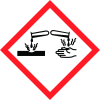
GHS05 Corrosion Skin Corr. 1B H314 Causes severe skin burns and eye damage. GHS07 Acute Tox. 4 H302 Harmful if swallowed. Acute Tox. 4 H312 Harmful in contact with skin. Skin Sens. 1 H317 May cause an allergic skin reaction.
2.2 Label elements
The substance is classified and labeled according to the Globally Harmonized System (GHS).
Hazard pictograms
GHS05, GHS07
Signal word
Danger
Hazardous Ingredients
tetraethylenepentamine
Hazard statements
Harmful if swallowed or in contact with skin. Causes severe skin burns and eye damage. May cause an allergic skin reaction.
Precautionary statements
If medical advice is needed, have product container or label at hand. Keep out of reach of children. Read label before use. Do not breathe dusts or mists. Wash thoroughly after handling. Do not eat, drink or smoke when using this product. Contaminated work clothing must not be allowed out of the workplace. Wear protective gloves/protective clothing/eye protection/face protection. If swallowed: Call a poison center/doctor if you feel unwell. If swallowed: Rinse mouth. Do NOT induce vomiting. If on skin (or hair): Take off immediately all contaminated clothing. Rinse skin with water/shower. IF INHALED: Remove person to fresh air and keep comfortable for breathing. If in eyes: Rinse cautiously with water for several minutes. Remove contact lenses, if present and easy to do. Continue rinsing. Immediately call a poison center/doctor. Specific treatment (see on this label). Take off contaminated clothing and wash it before reuse. If skin irritation or rash occurs: Get medical advice/attention. Wash contaminated clothing before reuse. Store locked up. Dispose of contents/container in accordance with local/regional/national/international regulations.
Classification system
NFPA ratings (scale 0 - 4) Health = 3 1 Fire = 1 3 0 Reactivity = 0 · HMIS-ratings (scale 0 - 4) HEALTH 3 Health = 3 FIRE 1 Fire = 1 REACTIVITY 0 Reactivity = 0
2.3 Other hazards
Additional Health Hazards:Corrosive to the eyes, skin, and respiratory tract. May be toxic if absorbed through skin. Inhalation: May cause severe eye, skin, and respiratory tract burns. May cause nose, throat, and lung irritation. Inhalation of vapors and/or aerosols in high concentration may cause irritation of the respiratory system. Eye Contact: Causes eye burns. May cause blindness. Severe eye irritation. Skin contact: Causes skin burns. Ingestion: Causes Severe burns of the mouth and throat, as well as a danger of perforation of the oesophagus and the stomach.
PBT Substances
Not applicable
vPvB Substances
Not applicable



