

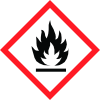

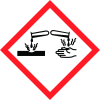

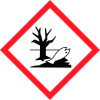
Note: Ingredients listed on restricted chemical lists
EC/CAS
200-857-2/75-28-5
Name of the chemical
iso-Butan, enthält 0,1% Butadien
Concentration
>= 30 - < 50
EC/CAS
64742-49-0
Name of the chemical
Naphtha (petroleum), hydrotreated light
Concentration
<5%
EC/CAS
265-150-3/64742-48-9
Name of the chemical
Naphtha (petroleum), hydrotreated heavy
Concentration
>=1-<10
EC/CAS
203-448-7/106-97-8
Name of the chemical
n-Butan, enthält 0,1% Butadien
Concentration
>=1-<10
EC/CAS
200-662-2/67-64-1
Name of the chemical
acetone
Concentration
=1-<2,5
EC/CAS
203-777-6/110-54-3
Name of the chemical
n-Hexan (790/2009)
Concentration
>=1-<10
General Information
Version
5.5
Revision date
2026-02-03
Product name
Wire cable spray
Product Synonyms
The complete designation of a standardization document or an information-technical document
Icons in SDS


Company Information
company name
VNTED code (HS Code)
e-mail address of the competent person responsible for the Safety Data Sheet
prodsafe@wuerth.com
GHS Information
Signal word
Danger
Hazard Codes
Hazard statements (CLP)
H222, H229, H314, H317, H336, H361fd, H373, H411
Hazard statements
Code
Statements
H222
Extremely flammable aerosol
Section 2
SECTION 2: Hazards identification
2.1 Hazard level of chemical products in general [data on the hazard classification as set forth in GOST 12.1.007 and GHS (GOST 32419, GOST 32423, GOST 32424, GOST 32425)]. Classification according to GOST 12.1.007-76 GHS Classification Aerosols, Category 1 Skin corrosion, Sub-category 1B Serious eye damage, Category 1 Skin sensitisation, Category 1 Reproductive toxicity, Category 2 Specific target organ toxicity - single exposure, Category 3 Specific target organ toxicity - repeated exposure, Category 2 Short-term (acute) aquatic hazard, Category 2 Long-term (chronic) aquatic hazard, Category 2 Additional hazards not stipulated in Corrosive to the respiratory tract. GOST 32419 Data on safety marking as per GOST 31340
Signal word
Danger Hazard symbols (signs)
Hazard statements
(H- H222 Extremely flammable aerosol. phrases) H229 Pressurised container: May burst if heated. H314 Causes severe skin burns and eye damage. H317 May cause an allergic skin reaction. H336 May cause drowsiness or dizziness. H361fd Suspected of damaging fertility. Suspected of damaging the unborn child. H373 May cause damage to organs through prolonged or repeated exposure. H411 Toxic to aquatic life with long lasting effects.
Precautionary statements
P202 Do not handle until all safety precautions have been read and understood. P210 Keep away from heat, hot surfaces, sparks, open flames and other igni- tion sources. No smoking. P211 Do not spray on an open flame or other ignition source. P251 Do not pierce or burn, even after use. P260 Do not breathe spray. P273 Avoid release to the environment. P280 Wear protective gloves/ protective clothing/ eye protection/ face protec- tion.
Response
P304 + P340 + P310 IF INHALED: Remove person to fresh air and keep com- fortable for breathing. Immediately call a POISON CENTER/ doctor. P305 + P351 + P338 + P310 IF IN EYES: Rinse cautiously with water for sev- eral minutes. Remove contact lenses, if present and easy to do. Continue rins- ing. Immediately call a POISON CENTER/ doctor. P362 + P364 Take off contaminated clothing and wash it before reuse. P391 Collect spillage.
Storage
P410 + P412 Protect from sunlight. Do not expose to temperatures exceeding 50 °C/ 122 °F.
2.1 Classification of the substance or mixture
Aerosols, Category 1 Skin corrosion, Sub-category 1B Serious eye damage, Category 1 Skin sensitisation, Category 1 Reproductive toxicity, Category 2 Specific target organ toxicity - single exposure, Category 3 Specific target organ toxicity - repeated exposure, Category 2 Short-term (acute) aquatic hazard, Category 2 Long-term (chronic) aquatic hazard, Category 2 Additional hazards not stipulated in Corrosive to the respiratory tract. GOST 32419 2.2 Data on safety marking as per GOST 31340



