



Note: Ingredients listed on restricted chemical lists
EC/CAS
205-500-4/141-78-6
Name of the chemical
acetic acid, ethyl ester
Concentration
>= 30 - < 50
EC/CAS
202-966-0/101-68-8
Name of the chemical
4,4’-Methylenediphenyl diisocyanate
Concentration
>=0,1-<1 88-3
General Information
Version
5.0
Revision date
2026-03-05
Product name
Varioprimer safe + easy
Product Synonyms
The complete designation of a standardization document or an information-technical document
1.2.1 Relevant identified uses
Professional use product Primers
Icons in SDS


Company Information
company name
VNTED code (HS Code)
e-mail address of the competent person responsible for the Safety Data Sheet
prodsafe@wuerth.com
GHS Information
Signal word
Danger
Hazard Codes
Hazard statements (CLP)
H225, H305, H317, H319, H334, H336, H351
Hazard statements
Code
Statements
H225
Highly Flammable liquid and vapour
Section 2
SECTION 2: Hazards identification
2.1 Hazard level of chemical products in general [data on the hazard classification as set forth in GOST 12.1.007 and GHS (GOST 32419, GOST 32423, GOST 32424, GOST 32425)]. Classification according to GOST 12.1.007-76 GHS Classification Flammable liquids, Category 2 Respiratory sensitisation, Category 1 Skin sensitisation, Category 1 Carcinogenicity, Category 2 Aspiration hazard, Category 2 Eye irritation, Category 2A Specific target organ toxicity - single exposure, Category 3 Additional hazards not stipulated in Excessive exposure may aggravate preexisting asthma and GOST 32419 other respiratory disorders (e.g. emphysema, bronchitis, reac- tive airways dysfunction syndrome). Vapours may form explosive mixture with air. Repeated exposure may cause skin dryness or cracking Data on safety marking as per GOST 31340
Signal word
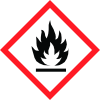
Danger Hazard symbols (signs)
Hazard statements
(H- H225 Highly flammable liquid and vapour. phrases) H305 May be harmful if swallowed and enters airways. H317 May cause an allergic skin reaction. H319 Causes serious eye irritation. H334 May cause allergy or asthma symptoms or breathing difficulties if inhaled. H336 May cause drowsiness or dizziness. H351 Suspected of causing cancer.
Precautionary statements
P202 Do not handle until all safety precautions have been read and understood. P210 Keep away from heat, hot surfaces, sparks, open flames and other igni- tion sources. No smoking. P261 Avoid breathing mist or vapours. P280 Wear protective gloves/ protective clothing/ eye protection/ face protec- tion.
Response
P301 + P310 IF SWALLOWED: Immediately call a POISON CENTER/ doctor. P342 + P311 If experiencing respiratory symptoms: Call a POISON CENTER/ doctor.
2.1 Classification of the substance or mixture
Flammable liquids, Category 2 Respiratory sensitisation, Category 1 Skin sensitisation, Category 1 Carcinogenicity, Category 2 Aspiration hazard, Category 2 Eye irritation, Category 2A Specific target organ toxicity - single exposure, Category 3 Additional hazards not stipulated in Excessive exposure may aggravate preexisting asthma and GOST 32419 other respiratory disorders (e.g. emphysema, bronchitis, reac- tive airways dysfunction syndrome). Vapours may form explosive mixture with air. Repeated exposure may cause skin dryness or cracking. 2.2 Data on safety marking as per GOST 31340



