


Note: Ingredients listed on restricted chemical lists
EC/CAS
270-115-0/68411-30-3
Name of the chemical
Benzenesulfonic acid,C10-13-alkyl derivs., sodium salts
Concentration
>=3-<10
EC/CAS
235-186-4/12125-02-9
Name of the chemical
Ammonium chloride
Concentration
=1-<2,5
EC/CAS
231-159-6/7440-50-8
Name of the chemical
Copper
Concentration
>=1-<10
EC/CAS
231-141-8/7440-31-5
Name of the chemical
Tin
Concentration
>= 50 - < 70
EC/CAS
231-791-2/7732-18-5
Name of the chemical
Water, distilled, conductivity or of similar purity H2O
Concentration
>= 10 - < 20
General Information
Version
4.0
Revision date
2025-12-08
Product name
Bodywork tinning paste, lead-free
Product Synonyms
The complete designation of a standardization document or an information-technical document
1.2.1 Relevant identified uses
Solder Professional use product
Icons in SDS


Company Information
company name
VNTED code (HS Code)
e-mail address of the competent person responsible for the Safety Data Sheet
prodsafe@wuerth.com
GHS Information
Signal word
Danger
Hazard Codes
Hazard statements (CLP)
H303, H314, H335, H400, H411
Hazard statements
Code
Statements
H303
May be harmful if swallowed
Section 2
SECTION 2: Hazards identification
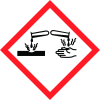
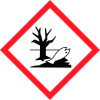
2.1 Hazard level of chemical products in general [data on the hazard classification as set forth in GOST 12.1.007 and GHS (GOST 32419, GOST 32423, GOST 32424, GOST 32425)]. Classification according to GOST 12.1.007-76 GHS Classification Acute toxicity (Oral), Category 5 Skin corrosion, Sub-category 1B Serious eye damage, Category 1 Specific target organ toxicity - single exposure, Category 3 Short-term (acute) aquatic hazard, Category 1 Long-term (chronic) aquatic hazard, Category 2 Additional hazards not stipulated in May cause thermal burns. GOST 32419 Data on safety marking as per GOST 31340
Signal word
Danger Hazard symbols (signs)
Hazard statements
(H- H303 May be harmful if swallowed. phrases) H314 Causes severe skin burns and eye damage. H335 May cause respiratory irritation. H400 Very toxic to aquatic life. H411 Toxic to aquatic life with long lasting effects.
Precautionary statements
P260 Do not breathe dust or mist. P264 Wash skin thoroughly after handling. P273 Avoid release to the environment. P280 Wear protective gloves/ protective clothing/ eye protection/ face protec- tion.
Response
P304 + P340 + P310 IF INHALED: Remove person to fresh air and keep com- fortable for breathing. Immediately call a POISON CENTER/ doctor. P305 + P351 + P338 + P310 IF IN EYES: Rinse cautiously with water for sev- eral minutes. Remove contact lenses, if present and easy to do. Continue rins- ing. Immediately call a POISON CENTER/ doctor. P363 Wash contaminated clothing before reuse. P391 Collect spillage.
2.1 Classification of the substance or mixture
Acute toxicity (Oral), Category 5 Skin corrosion, Sub-category 1B Serious eye damage, Category 1 Specific target organ toxicity - single exposure, Category 3 Short-term (acute) aquatic hazard, Category 1 Long-term (chronic) aquatic hazard, Category 2 Additional hazards not stipulated in May cause thermal burns. GOST 32419 2.2 Data on safety marking as per GOST 31340



