


Note: Ingredients listed on restricted chemical lists
EC/CAS
68476-85-7
Name of the chemical
Petroleum gases, liquefied
Concentration
>99%
General Information
Revision date
2022-02-18
Product name
LPG
CAS No.
68476-85-7
1.2.1 Relevant identified uses
Fuel
supplier name
U.S. Production
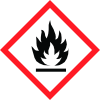
Icons in SDS


Company Information
company name
U.S. Production
GHS Information
Signal word
Danger
Hazard Codes
Hazard statements (CLP)
H220, H280
Hazard statements
Code
Statements
H220
Extremely flammable gas
Section 2
SECTION 2: Hazards identification
None as defined under 29 CFR 1910.1200 This material is hazardous according to regulatory guidelines (see (M)SDS Section 15).
2.1 Classification of the substance or mixture
Flammable gas Category 1. Gas under pressure Liquefied gas Simple Asphyxiant LABEL:
Signal word
Danger
Hazard statements
H220 Extremely flammable gas. H280 Contains gas under pressure; may explode if heated May displace oxygen and cause rapid suffocation.
Precautionary statements
P210 Keep away from heat/sparks/open flames/hot surfaces. -- No smoking.P377 Leaking gas fire Do not extinguish, unless leak can be stopped safely. P381: Eliminate all ignition sources if safe to do so.P410 + P403: Protect from sunlight. Store in a well-ventilated place.
Contains
LIQUEFIED PETROLEUM GAS
2.3 Other hazards
None as defined under 29 CFR 1910.1200
Other physicochemical hazards
Contact with liquefied gas can cause damage (frostbite) due to rapid evaporative cooling. Suffocation (asphyxiant) hazard - if allowed to accumulate to concentrations that reduce oxygen below safe breathing levels. Material can accumulate static charges which may cause an ignition. Material can release vapors that readily form flammable mixtures. Vapor accumulation could flash and/or explode if ignited.
Health hazards
High-pressure injection under skin may cause serious damage. Continued exposure to odorized gas may reduce or eliminate ability to smell the odorant. People with impaired ability to detect odor due to colds, allergies, injuries, etc. must be especially cautious. Odor must not be used exclusively as a safety measure. Proper respiratory protection and fire/explosion precautions should be utilized when odor is first detected. Excessive exposure may result in eye, skin, or respiratory irritation. May cause central nervous system depression.
Environmental hazards
No significant hazards. NFPA Hazard ID: Health: 1 Flammability: 4 Reactivity: 0 HMIS Hazard ID: Health: 1 Flammability: 4 Reactivity: 0 NOTE: This material should not be used for any other purpose than the intended use in Section 1 without expert advice. Health studies have shown that chemical exposure may cause potential human health risks which may vary from person to person.



