

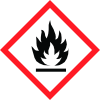
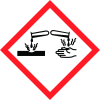

Note: Ingredients listed on restricted chemical lists
EC/CAS
80-62-6
Name of the chemical
methacrylic acid, methyl ester
Concentration
N/A
EC/CAS
103-11-7
Name of the chemical
acrylic acid, 2-ethylhexyl ester
Concentration
N/A
EC/CAS
85-68-7
Name of the chemical
Benzylbutylphthalat
Concentration
N/A
EC/CAS
99-97-8
Name of the chemical
N,N-dimethyl-p-toluidine
Concentration
N/A
General Information
Revision date
2018-06-04
Product name
Quick Patch Part A
1.2.1 Relevant identified uses
Methyl Methacrylate Resin
1.2.2. Uses advised against
No Data
supplier name
including Address
Emergency telephone
InfoTrac
Icons in SDS
Company Information
company name
Tri-Chem
GHS Information
Signal word
Danger
Hazard Codes
Hazard statements (CLP)
H225, H302, H312, H315, H317, H318, H332, H335, H412
Hazard statements
Code
Statements
H225
Highly Flammable liquid and vapour
Section 2
SECTION 2: Hazards identification
GHS Classification Emergency Overview
2.3 Other hazards
Highly Flammable Liquid and vapor, Causes serious eye damage, Causes skin irritation, May cause respiratory irritation, May cause an allergic skin reaction, Harmful if inhaled, swallowed or in contact with skin. Harmful to aquatic life with long lasting effects Target Organs: Eyes, Skin, Respiratory System None Known
2.1 Classification of the substance or mixture
Flammable Liquids Category 2 Acute Toxicity – Oral – Category 4 Acute Toxicity – Dermal – Category 4 Acute Toxicity – Inhalation – Category 4 Eye Damage/Irritation Category 1 Skin Corrosion/Irritation Category 2 Sensitization – Skin – Category 1B Specific target organ toxicity – single exposure, Inhalation - Category 3, Respiratory system Hazardous to the Aquatic Environment – Short Term (Acute) Hazard – Category 3 Hazardous to the Aquatic Environment – Long Term (Acute) Hazard – Category 3 Label Elements, including precautionary statements
Signal word
Danger
Hazard statements
H225 Highly Flammable Liquid and Vapour H302 Harmful if swallowed H312 Harmful in contact with skin H332 Harmful if inhaled H315 Causes skin irritation H317 May cause an allergic skin reaction H318 Causes serious eye damage H335 May cause respiratory irritation H412 Harmful to aquatic life with long lasting effects
Prevention
P210 Keep away from heat, hot surfaces, sparks, open flames and other ignition sources. No smoking P233 Keep container tightly closed. P240 Ground and bond container and receiving equipment. P241 Use explosion-proof electrical/ventilating/lighting equipment. P242 Use non-sparking tools. P243 Take action to prevent static discharges. P261 Avoid breathing dust/fume/gas/mist/vapours/spray. P264 Wash hands and exposed skin thoroughly after handling. P270 Do not eat, drink or smoke when using this product. P271 Use only outdoors or in a well-ventilated area. P272 Contaminated work clothing should not be worn out of the workplace. P273 Avoid release to the environment. P280 Wear protective gloves/protective clothing/eye protection/face protection.
Response
P314 General Advice: Get medical advice/attention if you feel unwell. P302+P352+P353 IF ON SKIN: Wash with plenty of soap & water. P333+P313 If skin irritation or rash occurs: Get medical advice or attention. P362+P364 Take off contaminated clothing and wash it before reuse. P305+P351+P338 IF IN EYES: Rinse cautiously with water for several minutes. Remove contact lenses, if present and easy to do. Continue rinsing. P310 Immediately call a POISON CENTER/doctor. P304+P340+P312 IF INHALED: Remove person to fresh air and keep comfortable for breathing. Call a P301+P312+P330 IF SWALLOWED: Call a POISON CENTER/doctor if you feel unwell. Rinse mouth. P370+P378 In case of fire use, “alcohol resistant” foam, dry chemical, halon or carbon dioxide to extinguish.
Storage
P403+P235+P233 Store in a well-ventilated place. Keep cool. Keep container tightly closed. P405 Store Locked Up
Disposal
P501 Dispose of contents/container in accordance with local/regional/national regulations.



