



Note: Ingredients listed on restricted chemical lists
EC/CAS
7440-50-8
Name of the chemical
Copper
Concentration
N/A
EC/CAS
7789-75-5
Name of the chemical
Calcium fluoride
Concentration
N/A
General Information
Revision date
2021-03-17
Product name
Cadweld Plus
1.2.1 Relevant identified uses
Exothermic welding material
supplier name
TransNet NZ Ltd
Icons in SDS
Company Information
company name
TransNet NZ Ltd
GHS Information
Signal word
Danger
Hazard Codes
Hazard statements (CLP)
H302, H318, H332, H373, H400, H410
Hazard statements
Code
Statements
H302
Harmful if swallowed
Section 2
SECTION 2: Hazards identification
Notice 2017 Cadweld Plus is classified as a Dangerous Good for Transport. Cadweld Plus is classified as hazardous according to criteria in the EPA Hazardous Substances (Hazard Classification) Notice 2020 and based on ingredient classifications in the European Chemical Database and NZ Chemical Classification Database. Classified under the group standard “Metal Industry Products (Subsidiary Hazard) Group Standard 2020” HSNO APPROVAL NUMBER: HSR002612
HSNO Classifications
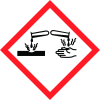
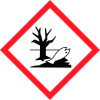
6.1D – Acutely toxic, oral 6.1D – Acutely toxic, inhalation 8.3A – Corrosive to eyes 6.9B – Harmful to human target organs or systems, repeated exposure 9.1A – Very ecotoxic in the aquatic environment, acute and chronic
2.1 Classification of the substance or mixture
Acute toxicity, oral – Category 4 Acute toxicity, inhalation – Category 4 Serious eye damage/eye irritation - Category 1 Specific target organ toxicity, repeated exposure – Category 2 1 Aquatic toxicity (acute) – Category 1 Aquatic toxicity (chronic) – Category 1
Hazard statements
H302 Harmful if swallowed H332 Harmful if inhaled H318 Causes serious eye damage H373 May cause damage to organs (lungs, liver, kidneys) through prolonged or repeated exposure via inhalation or ingestion. H400 Very toxic to aquatic life H410 Very toxic to aquatic life with long lasting effects
Hazard pictograms
DANGER
Prevention
P102 – Keep out of reach of children. P260 – Do not breathe dust/fume. P264 - Wash hands, exposed skin, thoroughly after handling. P270 – Do not eat, drink, or smoke when using this product. P271 – Use only outdoors or in a well-ventilated area. P273 - Avoid release to the environment. P280 - Wear protective gloves, protective clothing, eye protection, face protection.
Response
P301 + P312 – IF SWALLOWED: Call a POISON CENTRE or doctor/physician if you feel unwell. P330 – Rinse mouth. P304 + P340 + P312 – IF INHALED: Remove to fresh air and keep at rest in a position comfortable for breathing. Call a POISON CENTRE or doctor/physician if you feel unwell. P305 + P351 + P338 - IF IN EYES: Rinse cautiously with water for several minutes. Remove contact lenses, if present and easy to do. Continue rinsing. P310 – Immediately call a POISON CENTER or doctor/physician. P391 – Collect spillage.
Disposal
P501 - In accordance with the Consolidated EPA Hazardous Substances (Disposal) Notice 2017. Refer to Section 13 of this SDS. Other: Accumulation of dust in air may cause dust explosion. Inhalation of dust or fumes may cause metal fume fever. Improper use of the product or inadequate preparation of the conductors, moulds or surroundings can result in aggressive reactions. High temperatures above ignition temperature can result in self-propagating reaction. Molten product can cause serious burns. 1



