




Note: Ingredients listed on restricted chemical lists
EC/CAS
203-777-6/110-54-3
Name of the chemical
n-Hexan (790/2009)
Concentration
<3
General Information
Revision date
2020-08-17
Product name
SOLANE ISOHEXANE
Product Synonyms
Hydrocarbons C6, isoalkanes, <5% n-hexane
CAS No.
110-54-3
REACH No
01-2119484651-34
supplier name
TOTAL BELGIUM
Emergency telephone
24h/24h +33 (0)1 41 35 65 00
Icons in SDS


Company Information
company name
TOTAL BELGIUM
e-mail address of the competent person responsible for the Safety Data Sheet
rm.be-reach-belgium-msds@total.com, rmfs.fds@total.com
GHS Information
Signal word
Danger
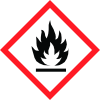
Hazard Codes
Hazard statements (CLP)
H225, H304, H336, H411
Hazard statements
Code
Statements
H225
Highly Flammable liquid and vapour
Section 2
2.1 Classification of the substance or mixture
REGULATION (EC) No 1272/2008 For the full text of the H-Statements mentioned in this Section, see Section 2.2. Flammable liquids - Category 2 - (H225) Aspiration toxicity - Category 1 - (H304) Specific target organ toxicity (single exposure) - Category 3 - (H336) Chronic aquatic toxicity - Category 2 - (H411)
2.2 Label elements
Labelled according to REGULATION (EC) No 1272/2008
Contains
Hydrocarbons, C6, isoalkanes, <5% n-hexane EC-No 931-254-9
Signal word
DANGER
Hazard statements
H225 - Highly flammable liquid and vapour H304 - May be fatal if swallowed and enters airways H336 - May cause drowsiness or dizziness H411 - Toxic to aquatic life with long lasting effects
Precautionary statements
P280 - Wear protective gloves and eye/face protection P273 - Avoid release to the environment P301 + P310 - IF SWALLOWED: Immediately call a POISON CENTER or doctor/physician P210 - Keep away from heat, hot surfaces, sparks, open flames and other ignition sources. No smoking P243 - Take precautionary measures against static discharge P331 - Do NOT induce vomiting P403 + P235 - Store in a well-ventilated place. Keep cool
Supplemental label elements
EUH066 - Repeated exposure may cause skin dryness or cracking
2.3 Other hazards
Physical-Chemical Properties Vapours may form explosive mixtures with air. The material can accumulate static charge and can therefore cause electrical ignition.
Potential health effects
Repeated exposure may cause skin dryness or cracking.
Environmental effects
Should not be released into the environment. The product may form an oil film on the water surface that may stop the oxygen exchange.



